

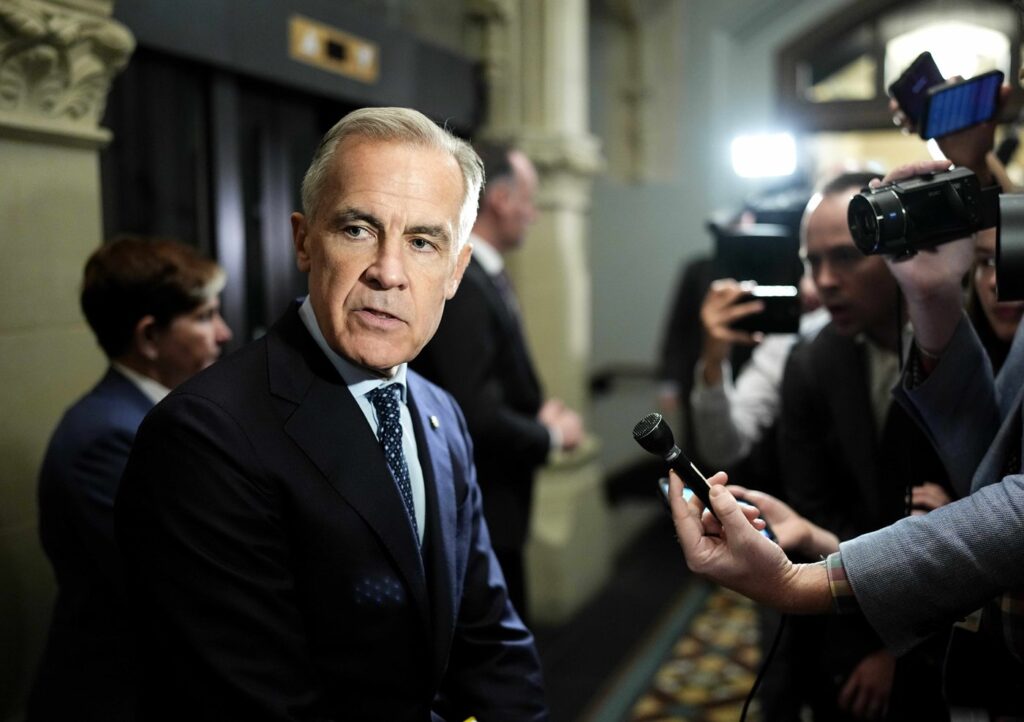
Canadian Prime Minister Mark Carney responded on Thursday to the endorsement of provincial separation movements by tech industrialist Elon Musk, asserting that the future of Canada will be determined by its citizens, not by large American tech companies. Speaking at a news conference in Sherbrooke, Quebec, Carney emphasized that Canadians deserve to live their lives free from external interference, particularly from foreign governments and tech firms that presume to dictate Canadian affairs.
During the conference, Carney noted, “The future of Canada will be decided by Canadians and the priorities of Canadians, the priorities of the people of Quebec.” His comments were made in response to questions regarding Musk's proclamations. Carney outlined the priorities he believes are essential for Canadians, which include affordability, social justice, and nurturing a robust Quebec within a more self-sufficient and prosperous Canadian federation.
Elon Musk had tweeted via his platform X on Wednesday, suggesting that Quebec would be better off if it separated from Canada, and similarly proposed that Alberta and Saskatchewan consider doing the same. Musk stated, “Quebec should separate. They would be better off. Alberta and Saskatchewan should separate too.” This statement sparked immediate reactions from provincial leaders, notably Saskatchewan Premier Scott Moe, who succinctly responded with a firm “No” to Musk's assertions.
In the wake of Musk's commentary, Alberta and Saskatchewan's leaders quickly dismissed the idea of separation. Premier Danielle Smith of Alberta stated that sentiment for separation had diminished as she and the federal government, led by Carney, worked collaboratively to address issues important to Albertans. Smith claimed that the federal government’s change in approach, characterized by willingness to work together, has addressed concerns that previously fueled separatist sentiment.
Carney recently facilitated a significant $2.3 billion contract with Telesat aimed at providing low-Earth orbit satellite connectivity for military use. This initiative positions Telesat as a potential competitor to Musk's Starlink, a dominant player in the global market for satellite internet services. As issues surrounding satellite connectivity and provincial separations unfold, discussions about Quebec's future and the region's relationship within Canada continue to evolve.
The political climate was further complicated when Quebec's voters elected a separatist government by granting the Parti Québécois (PQ) a minority government earlier this week. PQ Leader Paul St-Pierre Plamondon emphasized during the election campaign that the party would refrain from initiating a referendum on separation while U.S. President Donald Trump is in office. Carney has aimed to leverage his ambitious economic agenda to appeal to Quebec and its newly elected government, pledging benefits of cooperative federalism to the province.
In discussions with St-Pierre Plamondon, Carney described their first conversation as “cordial” and focused on substantial investments, immigration, and other critical topics pertinent to Quebec. However, the PQ's opposition to Carney's Alto project, a proposed high-speed rail connection between Quebec and Ontario, poses challenges to the viability of this infrastructure initiative. Carney reaffirmed the importance of the Alto project during the news conference, stating that it could generate tens of thousands of jobs in Quebec and reiterating his commitment to collaborate with the provincial government to advance the project.
Looking ahead, Alberta's upcoming separation referendum is set for October 19, raising further questions about the province's future relations with the federal government. As the political landscape continues to shift and separatist sentiments are tested, the narratives surrounding Canadian unity and provincial interests remain dynamic and central to discussions within Canada.








