

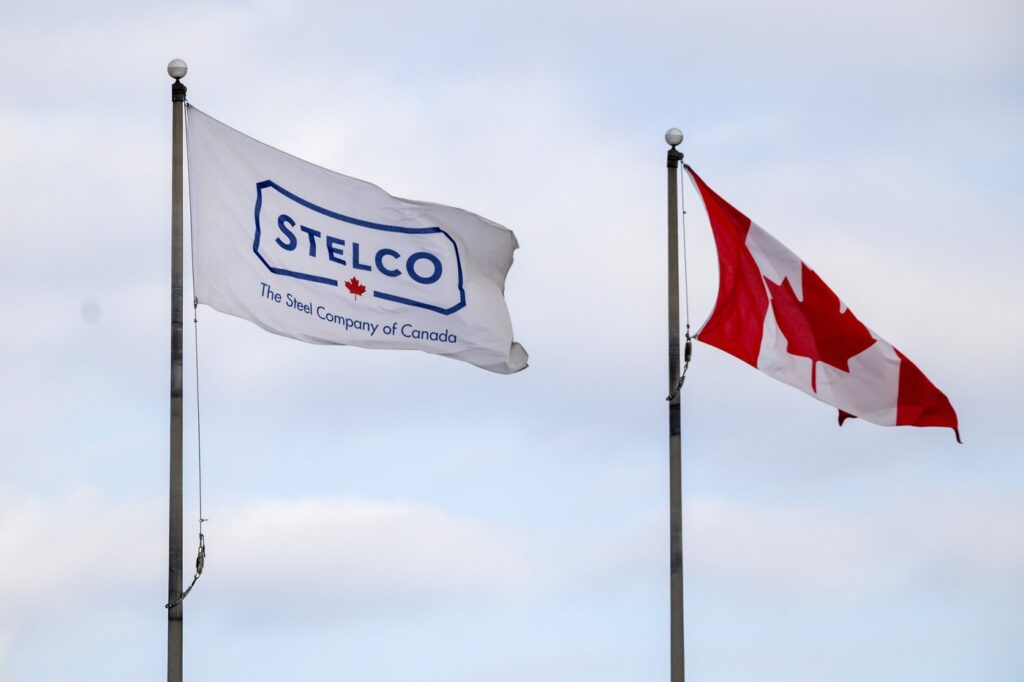
Conservative Leader Pierre Poilievre is demanding that the Canadian government take legal action against Cleveland-Cliffs, the American owner of Stelco, as part of a five-point plan designed to safeguard Canada's struggling steel industry. Poilievre's announcement comes in the wake of significant layoffs at Stelco's Hamilton operations, where up to 500 workers are expected to lose their jobs following Cleveland-Cliffs' decision to downsize.
At a press conference held in Burlington, Ontario, Poilievre emphasized the urgency of the situation, stating that the lawsuit should aim to bring back the laid-off workers and restart production at Stelco. He suggested that if Cleveland-Cliffs is unwilling to resume operations, the Canadian government should force the sale of the company to a Canadian entity committed to restoring the workforce and production levels. “The only thing that we would accept is these workers getting their paycheques, making Canadian steel to build our country,” Poilievre declared.
Industry Minister Mélanie Joly has also taken a firm stance on this issue. She sent a letter to Stelco president Paul Simon, demanding a comprehensive plan within five business days detailing how Cleveland-Cliffs intends to uphold its commitments, which include maintaining current employment levels. Joly made it clear that failure to comply with these commitments could result in legal action, stating, “They need to comply. If not, we will use the full force of the law.”
The Conservative Leader's plan consists of several critical measures to protect the steel industry in Canada. In addition to the legal action against Cleveland-Cliffs, Poilievre proposed the elimination of the industrial carbon tax, increased regulations on Chinese steel imports, acceleration of liquefied natural gas projects, and efforts to negotiate a tariff-free trade agreement with the United States.
Poilievre asserted that Cleveland-Cliffs made binding commitments during its acquisition of Stelco, promising to maintain union jobs and retain the majority of non-union positions for five years. Thus, he believes the company should be held accountable for these commitments. He referenced remarks from Cleveland-Cliffs CEO Lourenco Goncalves, who indicated that laid-off workers could be reinstated contingent upon a trade deal between Canada and the United States. Poilievre urged Prime Minister Mark Carney to “get back to the negotiating table to get the deal you promised.”
This escalating situation highlights the urgent need for action to support the Canadian steel industry, which is facing significant challenges amidst ongoing economic pressures. With significant job losses looming and the industry under threat, the call for both legislative and regulatory measures is becoming increasingly critical.








