

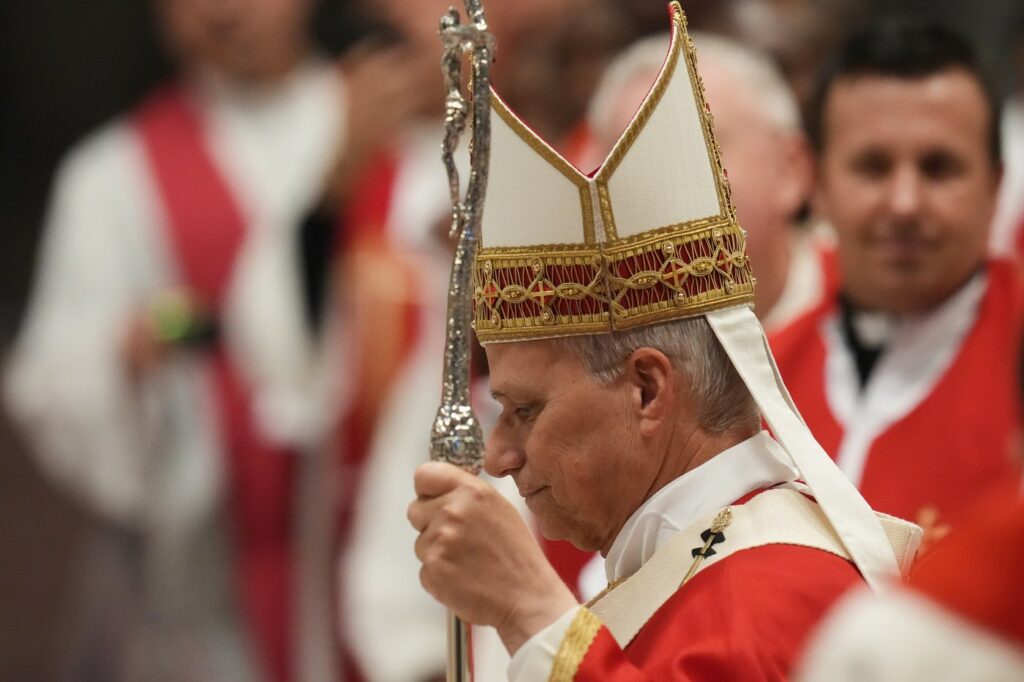
ROME (AP) – On Saturday, Pope Leo XIV proclaimed capital punishment as "inadmissible" during the observance of the World Day Against the Death Penalty, coinciding with the announcement from the United States about plans to livestream an execution by firing squad. This development has sparked significant ethical discussions regarding the death penalty within the context of both modern justice systems and religious teachings.
In a post on X, the American pope referenced the revised Catholic doctrine concerning capital punishment, originally articulated by Pope Francis, which asserts that the death penalty "attacks the inherent dignity of a human being." The pope emphasized that ensuring the common good and satisfying justice do not necessitate resorting to capital punishment. His social media message highlighted the effectiveness of detention systems that protect society while still allowing individuals to seek redemption.
The post concluded with the hashtag #NoDeathPenalty, underscoring the Church's longstanding opposition to such practices.
The U.S. Defense Department had previously announced that the execution of Nidal Malik Hasan, who was convicted of killing 13 people and injuring 32 others during a 2009 shooting at Fort Hood military base, would take place on December 3 and be livestreamed. Hasan's case brings renewed attention to the broader implications and ethical considerations surrounding capital punishment. While Pope Leo did not directly address the impending execution in his statement, his post aligns with the growing criticism of public executions and the methods employed to carry them out.
Notably, Pope Leo’s comments come shortly after Cardinal Pietro Parolin, the Vatican secretary of state, explicitly condemned the decision to livestream the execution, labeling it as "unacceptable." Parolin articulated a strong Church stance against the death penalty, declaring it incompatible with human dignity, regardless of the circumstances of individual cases.
Pope Francis had amended the official Catholic teaching in 2018 to declare capital punishment "inadmissible" under any circumstances, a significant shift from the previous stance articulated in the Catechism of the Catholic Church. The earlier teachings allowed for the death penalty in cases where it was the only viable way to defend human lives from unjust aggressors, a position that had been upheld by previous popes.
However, as highlighted by St. John Paul II, the recognition of the inherent dignity of both innocent and guilty individuals has gradually shifted the focus away from capital punishment. Pope Leo XIV has continued this emphasis on dignity and redemption through his papal visits to prisons, indicating a commitment to promoting a message of hope and ethical justice within the Church.
During his visit to Bata prison in Equatorial Guinea earlier this year, Leo emphasized to inmates that they are not abandoned by God and reaffirmed the Church's solidarity with them. As part of his upcoming Latin America tour, Pope Leo is also expected to visit a prison in Buenos Aires, further underscoring his focus on prison visits as a crucial aspect of his papacy.
The planned livestream of Hasan's execution drew sharp criticism from Church leaders in the United States. Archbishop Paul Coakley, head of the U.S. bishops conference, expressed profound shock and sorrow over the Pentagon's decision, condemning it as "a barbaric promotion of a culture of death." He argued that public executions undermine the moral fabric of society and tarnish the nation's conscience.
Cardinal Parolin’s remarks about the execution reflect a broader ethical concern about the spectacle of death in the modern age, indicating that even in cases where guilt is established, the methodology and public nature of executions warrant serious scrutiny and moral reconsideration.
The ongoing discussions around capital punishment, particularly in the context of the Pope’s teachings and changing societal attitudes, continue to highlight the complex interplay between justice, human dignity, and the role of the Church in advocating for ethical standards in governance and law.








