

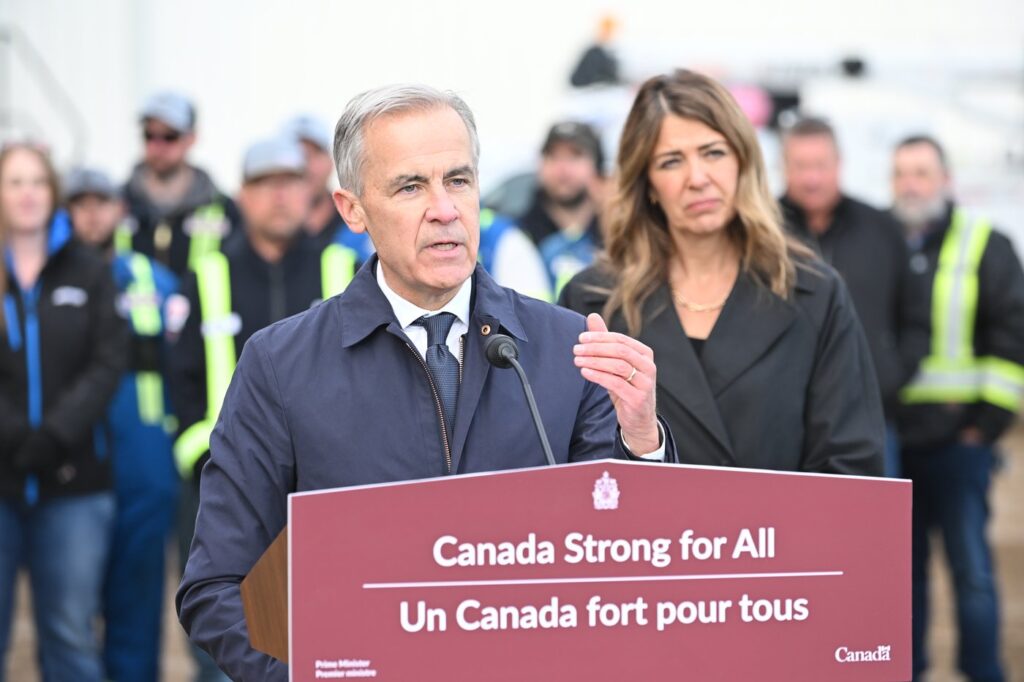
OTTAWA — In a poignant Thanksgiving Day address, Prime Minister Mark Carney underscored the importance of national unity in light of Alberta's upcoming separation referendum. With the vote set for October 19, 2026, Albertans will decide whether their province should remain a part of Canada or hold a subsequent, binding referendum on separation.
Carney emphasized that Canada is “worth fighting for,” expressing his belief that the federal government is committed to building significant infrastructure projects in Alberta, including a new pipeline to the West Coast. He argued that such ambitious undertakings cannot be realized if the nation is divided. The Prime Minister's remarks highlight the government's dedication to ensuring that all provinces benefit from national projects and the collective strength that comes from unity.
In his address, Carney made a clarion call for solidarity as Canada faces various threats to its economy, security, and cultural identity. He asserted, “We are stronger together,” a sentiment aimed at rallying support for a unified Canada during these challenging times. His comments are timely as the nation grapples with uncertainties, and his appeal seeks to encourage dialogue around the critical nature of maintaining ties among the provinces.
In contrast to Carney's message, Conservative Leader Pierre Poilievre is slated to deliver a speech in Calgary, where he will advocate for Alberta's continued membership in Canada. The dichotomy of views leading up to the referendum underscores the heated debate surrounding provincial autonomy and national unity. With politicians on both sides mobilizing efforts to influence voter sentiment, the outcome of the referendum could have profound implications for Alberta's future and for the fabric of the nation as a whole.
As the referendum date approaches, attention is focused on how Albertans will respond to the federal government's overtures. The outcome not only affects Alberta’s relationship with the rest of Canada but also sets a precedent for other provinces considering their standing within the federation. In light of the upcoming vote, the nation watches closely to see if Carney’s calls for unity will resonate with voters or if there will be a shift towards separatism.
The coming days will be pivotal for both the Prime Minister's administration and Alberta as they navigate the complexities of identity, governance, and unity. The issues at stake are not simply political; they delve into the heart of what it means to be Canadian and how provinces relate to one another in the broader national narrative.








