

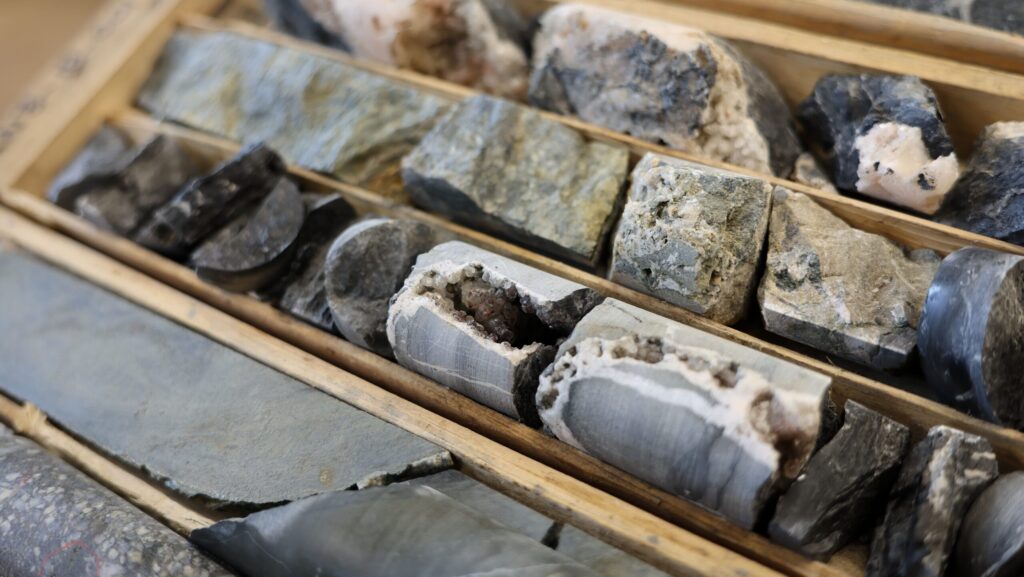
The Nova Scotia government is actively investing in the mining industry by bringing closed mines back into operation and promoting further exploration. Recent funding initiatives have been announced that support several projects aimed at enhancing understanding of the province's mineral resources. These efforts are part of the Mineral Resources Development Fund, which is backing a total of 17 projects from 2026 through the following year.
Among the funded projects is GeoLearns, a small business located in Cumberland County that creates educational kits focused on hands-on learning in earth sciences for students and teachers. The Nova Scotia government has allocated $8,000 to GeoLearns, which aims to harness outdoor experiences for educational purposes. The foundation of the business occurred when Louise Leslie, a geologist, was inspired by her son's Grade 3 class where students exhibited immense curiosity about rocks, minerals, and fossils.
The company was officially launched in 2020, with the mission to engage young learners through interactive earth science education. In a statement, Tory Rushton, the Minister of Natural Resources, emphasized the importance of developing local resources responsibly, highlighting that fostering exploration and research can attract investment and create good-paying jobs for Nova Scotians.
In Hants County, Military Metals Corp., a long-standing business, is receiving a significant contribution of $100,000 to support drilling efforts at the West Gore Antimony Project. This project is located approximately 50 kilometers north of Halifax and covers an area of 5.85 square kilometers. The deposit, which has historical significance dating back to its discovery in 1883, has been a considerable producer of minerals and even supplied resources to England during World War One. Exploration was restricted from the 1950s until the 1980s due to regulatory constraints from both other companies and the provincial government.
Additionally, a professor from Saint Mary’s University, Jacob Hanley, is awarded a grant of $61,130 for research focused on critical mineral deposits. His research aims to better understand lithium deposits in southwestern Nova Scotia, leveraging funds from the Mineral Resources Development Fund to advance knowledge concerning the province's mineral inventory. Hanley emphasized that this funding is crucial for creating opportunities for undergraduate and graduate students, equipping them with essential hands-on training and applied geoscience experience.
Despite these advancements, there are concerns from environmental critics regarding the ongoing impacts mining operations have on Nova Scotia's land. A report from Dalhousie University revealed significant flaws in the environmental review process for mining projects across Canada. Researchers noted that about 20 percent of the data analyzed from the projects reviewed was either incomplete or missing from public records, raising alarms about the potential consequences of insufficient baseline data for assessing environmental impacts accurately.
The report collected information from environmental impact assessments dating back to 1974, encompassing a total of 266 assessments across 227 mining projects over 50 years. However, researchers faced difficulties in accessing evaluations conducted before the year 2000 since those assessments were performed manually. Dr. Alana Westwood, the lead author of the report, emphasized the importance of having adequate baseline data to gauge initial conditions and understand the potential environmental ramifications.
Mining remains a crucial industry, contributing approximately six percent to Canada’s economy. However, the lingering environmental consequences of mining activities present a stark reality, with estimates suggesting over 10,000 abandoned mines across the country that continue to pollute ecosystems without regulatory oversight. This situation underscores the need for careful consideration as Nova Scotia moves forward with its mining operations.








