

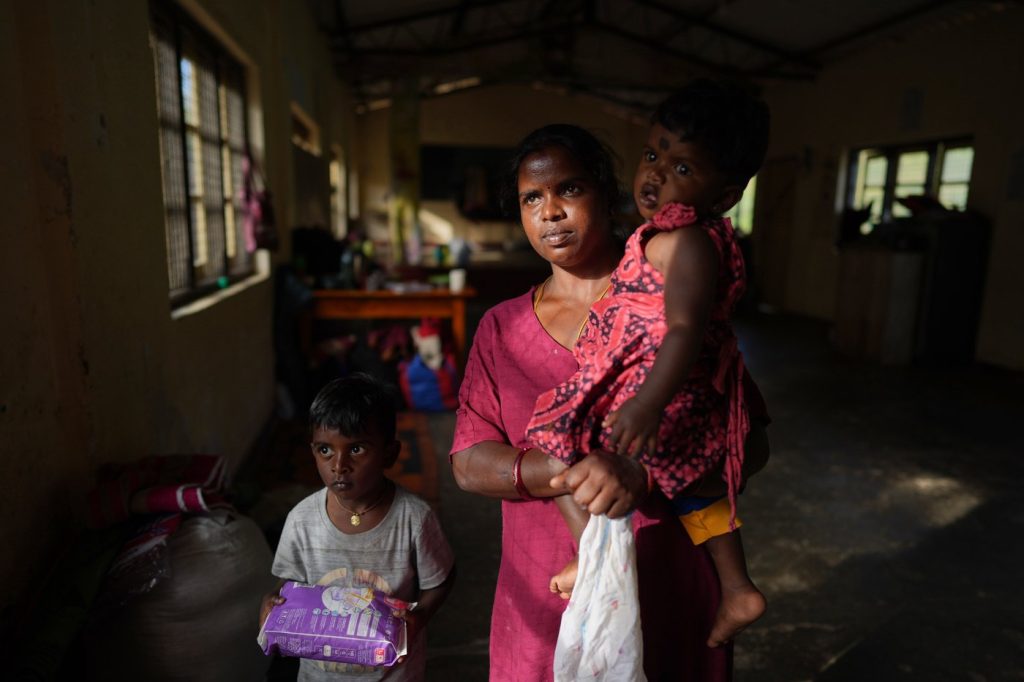
In Craighead Estate, Sri Lanka, heavy rains and rumbling earth due to Cyclone Ditwah forced tea worker Arumugam Manikavalli to flee her home for a nearby temple. Meanwhile, Kumaran Elumugam faced a tragic fate as a landslide destroyed his house, claiming the lives of six family members, leaving him and a daughter as the only survivors.
Elumugam expressed his devastation, stating, “My wife, son-in-law, daughter, mother-in-law, two grandsons are all dead. The small one (granddaughter) is still under the mud.” The cyclone's impact was severe, leading to floods and landslides across Sri Lanka, which resulted in over 640 fatalities and left more than a hundred missing. Entire villages were submerged, covered in debris, and remnants of daily life such as clothing, schoolbooks, and toys were scattered amidst the ruins.
The tea plantation workers in Sri Lanka, particularly those in the hilly regions, were among the most affected. Many lived in primitive quarters dating back 150 years, which were easily washed away by the floods and collapsed in landslides. Social workers reported that these already marginalized workers are now facing heightened distress and precarious living conditions.
Most tea plantation workers belong to the Malaiyaha Tamil ethnic group, descendants of indentured laborers brought from southern India by British colonists over two centuries ago. Despite Sri Lanka’s status as a leading tea producer, the workers earn below the minimum wage of 1,200 rupees (approximately $4) per day, and they lack access to basic needs such as education and health care. Many of them live in quarter-sized homes not exceeding 100 square feet, often housing large families without adequate sanitation facilities.
While some plantations on flatter grounds escaped damage, workers’ homes located near mountain slopes were decimated. Melanie Gunathilaka, a climate researcher, emphasized, “The settlements were in much more dangerous areas. This shows the amount of value placed on the lives of these people.”
The Sri Lankan government reported that more than 100,000 houses were either destroyed or damaged nationwide. In response, they have promised compensation packages to assist displaced families in rebuilding homes or relocating to safer areas. Sundaralingam Pradeep, the deputy minister for plantations and community infrastructure, mentioned ongoing negotiations with tea companies to identify safer lands for rebuilding. An Indian-assisted project aiming to construct 7,000 homes is also in progress for the impacted workers.
Tea workers urgently expressed the need for immediate assistance. Karuppiah Kamani voiced concerns for her family's safety, stating they felt unsafe living among potentially hazardous landscapes. Sellamuttu Darshani Devi explained that her family has been regularly asked to evacuate due to landslides, increasing their anxiety whenever it rains. Despite the ongoing danger, tea workers are compelled to return to labor as plantation owners refuse to offer support without work. Devi lamented, “When it gets sunny, the authorities tell us to go back. We need a home desperately.”
Sri Lanka, although contributing less than 1% of global greenhouse gas emissions, is highly vulnerable to climate change, which exacerbates the frequency and intensity of extreme weather events. The United Nations indicates that the nation incurs more than $300 million annually because of climate-related disasters, affecting around 750,000 people each year. Almost 19 million of Sri Lanka's population of 23 million reside in areas prone to landslides and other hazards.
Building resilience to such disasters is increasingly challenging due to Sri Lanka’s significant debt, which limits the government’s capacity to prioritize disaster preparedness and adaptation strategies. With financial obligations to the International Monetary Fund, multilateral development banks, and various countries, the focus remains on economic stability rather than investing in climate-resilient structures and early warning systems. Activist Gunathilaka highlighted that without the burden of this debt, the country could better allocate resources towards disaster response and sustainable development.
For those residing in the hill regions of Sri Lanka, the urgency of finding secure housing and support is paramount. Chellaya Pathmanathan, a tea worker whose home was damaged, expressed fear of further occurrences, stating, “We are so scared; anything can happen anytime here. We want to create a safe future for our kids. I hope someone can help us.”








