

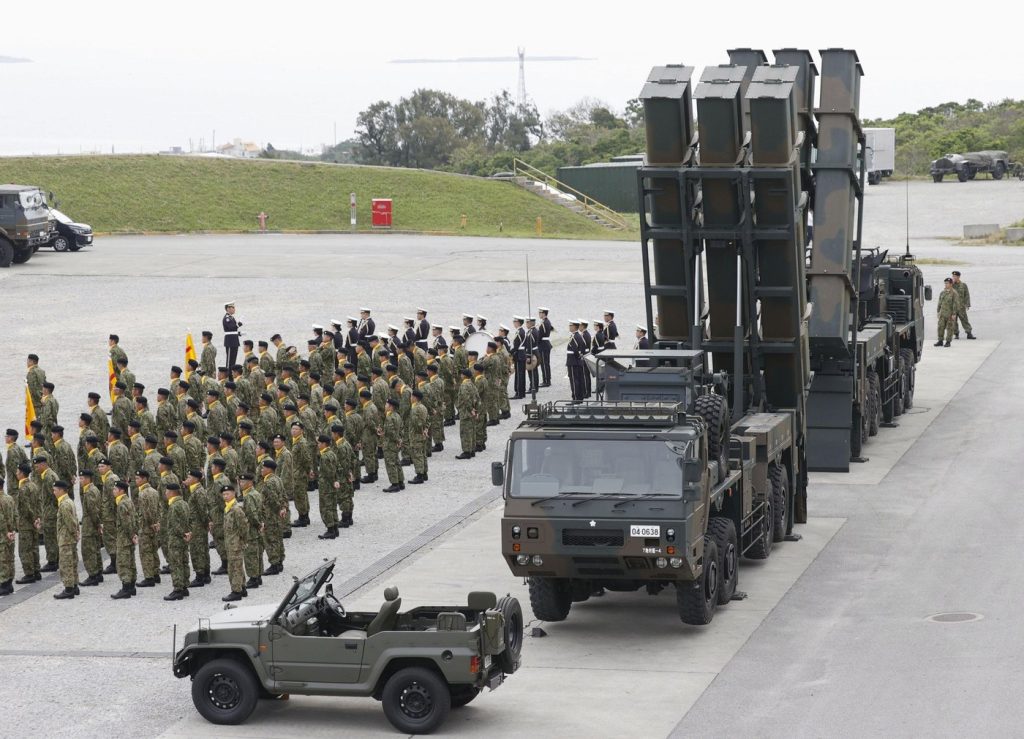
TOKYO (AP) — Japan's Cabinet has recently approved a record defense budget plan surpassing 9 trillion yen (approximately $58 billion) for the upcoming fiscal year, beginning in April 2026. This budget represents a 9.4% increase from 2025 and is part of Japan's ongoing five-year initiative to double its annual arms expenditure to 2% of its gross domestic product (GDP). This increase is set against a backdrop of growing regional tensions, particularly concerning China.
Amid escalating tensions with China, Japanese Prime Minister Sanae Takaichi has indicated that Japan's military could potentially intervene if China takes aggressive actions against Taiwan, a self-governing island that Beijing considers part of its territory. Under pressure from the United States, Takaichi's administration has pledged to meet the 2% target by March 2026, which is two years ahead of the original schedule. Furthermore, Japan plans to revise its security and defense policies by December 2026 to enhance its military capabilities.
The proposed budget allocates over 970 billion yen (about $6.2 billion) towards enhancing Japan’s "standoff" missile capabilities. This includes a planned purchase of 177 billion yen (approximately $1.13 billion) worth of domestically developed Type-12 surface-to-ship missiles, which have a range of about 1,000 kilometers (620 miles). The deployment of these missiles will begin in Kumamoto prefecture in southwestern Japan, ahead of schedule, by March 2026, as part of the country’s broader strategy to bolster its regional defenses.
As a response to Japan’s aging and shrinking workforce and the challenges of maintaining a fully staffed military, the government emphasizes the importance of unmanned weapons. An allocation of 100 billion yen ($640 million) is earmarked for the development of a system called "SHIELD," which aims to deploy advanced unmanned air, sea-surface, and underwater drones for surveillance and defense by March 2028. To expedite this deployment, Japan plans to initially rely on foreign imports, potentially from Turkey or Israel.
Heightened tensions with China have further influenced Japan's defense strategy. Notably, Prime Minister Takaichi’s comments in November about potential military involvement in Taiwan have fueled diplomatic disputes, particularly following recent Chinese military exercises and aerial maneuvers near Japan. In one incident, Chinese aircraft reportedly locked radar onto Japanese jets, leading to protests from Tokyo over what is perceived as a potential prelude to missile launches.
In response to concerns about China's increasing military activities in the Pacific, Japan's Defense Ministry is establishing a dedicated office to examine operational strategies, equipment, and necessary preparations to counter China's activities in the region. Furthermore, two Chinese aircraft carriers were spotted operating near Iwo Jima in June, highlighting Japan's anxiety regarding China's expanding military presence beyond its borders.
Japan is also working to enhance its domestic defense industry through collaborative initiatives with allied nations. For the 2026 budget, Japan has allocated over 160 billion yen ($1 billion) towards the joint development of a next-generation fighter jet with the UK and Italy, aiming for deployment in 2035. Additionally, efforts are underway for research and development of AI-operated drones that can work in tandem with the fighter jet. A significant contract was awarded to Mitsubishi Heavy Industries to upgrade Australia's Mogami-class frigates, indicating Japan's commitment to strengthening its defense manufacturing capabilities.
Approval from Japan's parliament is required by March for this budget plan, which is integrated into a broader national budget bill of 122.3 trillion yen ($784 billion). The ongoing five-year defense buildup program is projected to elevate Japan’s annual defense spending to around 10 trillion yen ($64 billion), positioning it as the world’s third-largest military spender, following the U.S. and China. However, funding future military expenditures poses challenges, as the government expects to finance its increased spending by raising corporate taxes and implement an income tax increase beginning in 2027.








