

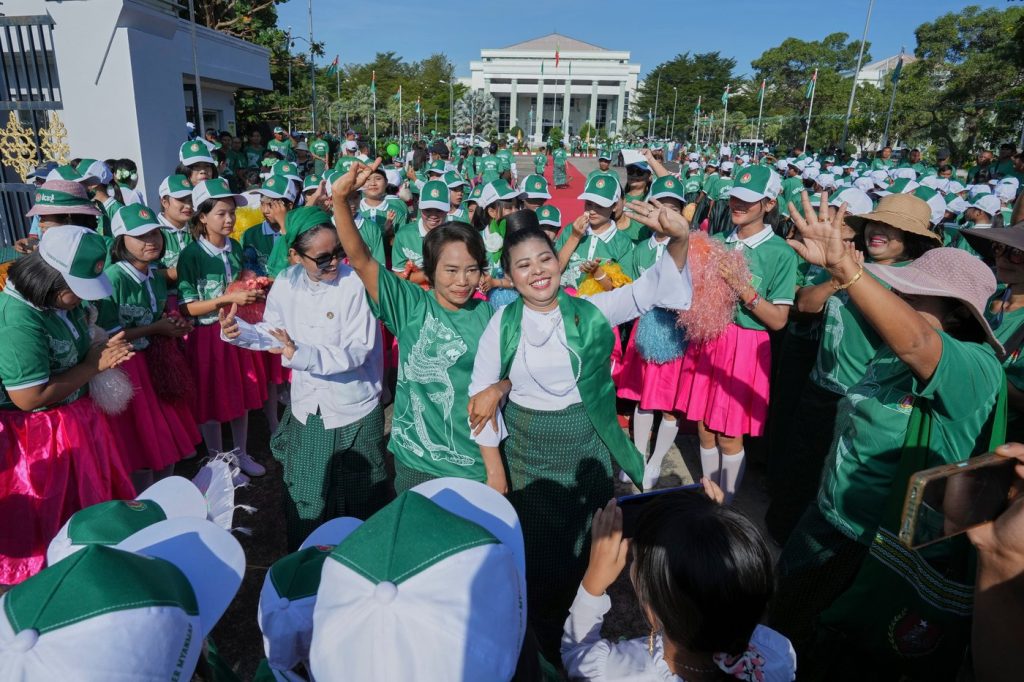
BANGKOK (AP) - Myanmar will hold the first phase of its general election on Sunday, marking the first vote in five years. Critics argue that this exercise will neither restore the fragile democracy disrupted by the 2021 army takeover nor put an end to the civil war resulting from harsh military rule. The military has framed the elections as a return to multi-party democracy, likely seeking to add a facade of legitimacy to its governance that began after the army ousted the elected government of Aung San Suu Kyi four years ago.
The military's takeover, which occurred on February 1, 2021, triggered widespread opposition, escalating into a civil war. The ongoing conflict has complicated the organization of the elections in many contested regions. Voting will take place in different locations across the country in three phases; the second phase is scheduled for January 11, and the final phase will occur on January 25. However, due to the ongoing conflict with ethnic guerrilla groups, there will be no voting in 65 townships.
Human rights and opposition groups have expressed skepticism regarding the election's legitimacy, asserting that power will likely remain in the hands of military leader Senior General Min Aung Hlaing. Richard Horsey, an analyst from the International Crisis Group, noted that the elections are being organized by the same military responsible for the 2021 coup, asserting that "these elections are not credible at all." He added that the elections do not include political parties that performed well in previous elections.
The military's strategy appears to be positioning its preferred party, the Union Solidarity and Development Party (USDP), for a significant victory. This would facilitate a transition from direct military rule to a government that maintains a "civilian veneer," thereby sustaining military control while allowing the army to claim progress towards inclusivity in line with a peace proposal from the Association of Southeast Asian Nations (ASEAN).
As the polls approach, the human cost of the ongoing conflict remains staggering. According to the Assistance Association for Political Prisoners, more than 22,000 individuals are currently detained for political offenses, and over 7,600 civilians have been killed by security forces since the coup. There are also more than 3.6 million internally displaced persons, predominantly due to warfare, marking a significant humanitarian crisis.
Aung San Suu Kyi, who is currently serving a 27-year prison term on charges widely regarded as politically motivated, and her party, the National League for Democracy (NLD), will not participate in the election. The NLD was dissolved after refusing to comply with the military's new regulations. Other political parties have boycotted the election or chosen not to run, citing unfair conditions. The military has enacted an Election Protection Law, which imposes strict penalties for public criticism of the polls, further stifling dissent.
Despite 57 parties fielding candidates, most are restricted to their own regions. Only six parties are contesting at a national level, while the rules suggest that the military-backed USDP is poised to dominate the vote. A total of nearly 5,000 candidates will vie for more than 1,100 seats across the national legislature and state and regional governments, although the actual number of filled seats will be lower due to constituencies not participating in the elections.
The Union Election Commission has not released the total number of eligible voters, but there were over 37 million registered voters in 2020. Analysts believe that following the elections, increased conflict can be expected as opposition groups seek to undermine the military's claims of legitimacy. The international community, particularly Western nations, has maintained sanctions against Myanmar's ruling generals due to their anti-democratic actions and brutal repression against their opponents.
As the election date nears, the U.N. Human Rights Office has highlighted a climate of intensified violence and repression as civilians face threats from both military authorities and armed opposition groups concerning their participation in the elections.








