

In January of last year, a cold night at the Canadian Embassy in Washington served as an unassuming prelude to a tumultuous year characterized by escalating trade tensions and significant diplomatic fallout between Canada and the United States. At that time, the already turbulent relationship, exacerbated by former President Donald Trump’s tariff threats and outlandish suggestions of annexing Canada, seemed poised for further deterioration.
On January 20, the day of Trump’s second inauguration, he reaffirmed his “America First” trade policy, swiftly leading to the imposition of extensive tariffs on Canadian imports. By February, it became evident that the camaraderie Canadians assumed existed with their closest neighbor was irreparably damaged. In response, former Minister of Foreign Affairs Mélanie Joly urged all political leaders in Canada to unite in the face of these challenges for the preservation of national interests.
This diplomatic crisis unfolded concurrently with a notable shift in Canadian domestic politics. On January 6, Prime Minister Justin Trudeau announced his resignation amid diminishing approval ratings and inciting internal dissent within the Liberal Party. Mark Carney ascended to party leadership in March and quickly transitioned into an election campaign that revolved around the dynamics with Trump’s administration, resulting in a minority government.
As tariffs began to affect various sectors in Canada starting in March, they escalated to 35 percent in August due to Trump’s grievances regarding retaliatory actions taken by Canada and issues in the dairy sector. The impact was felt across Canadian industries, with Trump's separate Section 232 tariffs on steel, aluminum, automobiles, copper, and lumber also leaving significant scars.
Trump's trade war shifted focus in April to include almost every country globally with reciprocal tariffs, leading to a flurry of reactions from world leaders who sought to forge trade frameworks that promised investments in the U.S. in exchange for lower tariffs. This unprecedented speed and magnitude of Trump's trade strategies caught many experts, including Fen Osler Hampson, a Carleton University professor, by surprise.
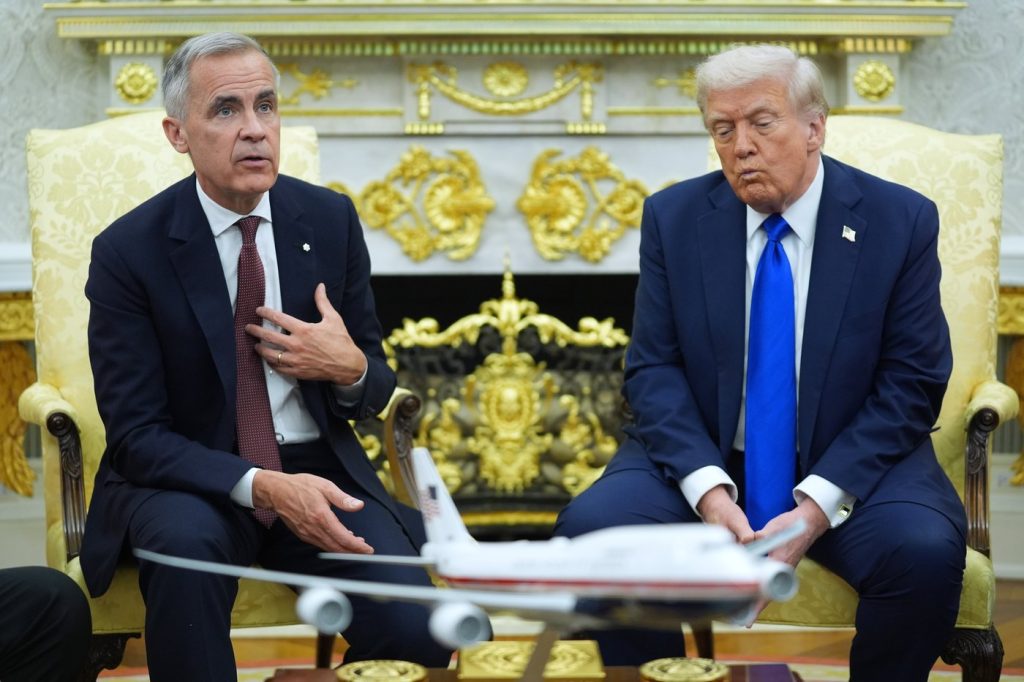
Despite some hints of collaboration and camaraderie during meetings between Carney and Trump, negotiations quickly faltered. Tensions boiled over in October when a television ad from Ontario quoting former U.S. President Ronald Reagan sparked an angry response from Trump, effectively halting any trade discussions. Hampson noted that despite historical disagreements, the expectation for deeper integration post-North American Free Trade Agreement now seemed misplaced.
For Canadians, the past year felt like a profound crisis of sovereignty, marked by incessant threats from the U.S. The impact of this fractured relationship appeared muted in the U.S., where supporters of the Trump administration considered the actions consistent with their electoral mandate. In contrast, Trump's detractors expressed alarm over his administration's sweeping changes that frequently disregarded constitutional checks and balances.
The drastic measures taken by the Trump administration, including a massive deportation campaign and controversial foreign and domestic policies, prompted significant public and academic scrutiny. Alasdair Roberts, a public policy professor, articulated that while there was a marked dysfunction in Washington, it did not necessarily equate to a crisis for American democracy. He pointed to the recent elections, where a considerable portion of Americans voted without incident, signaling a potential disconnect between the national government’s dysfunction and grassroots democracy.
As the year progressed, Canada was compelled to reckon with a sobering reality: the United States’ perception of its neighbor had undergone a fundamental transformation. The evolving dynamics outlined a new operational reality for Canada, as Roberts noted, it was this year that the implications of changing political tides became starkly apparent.








