

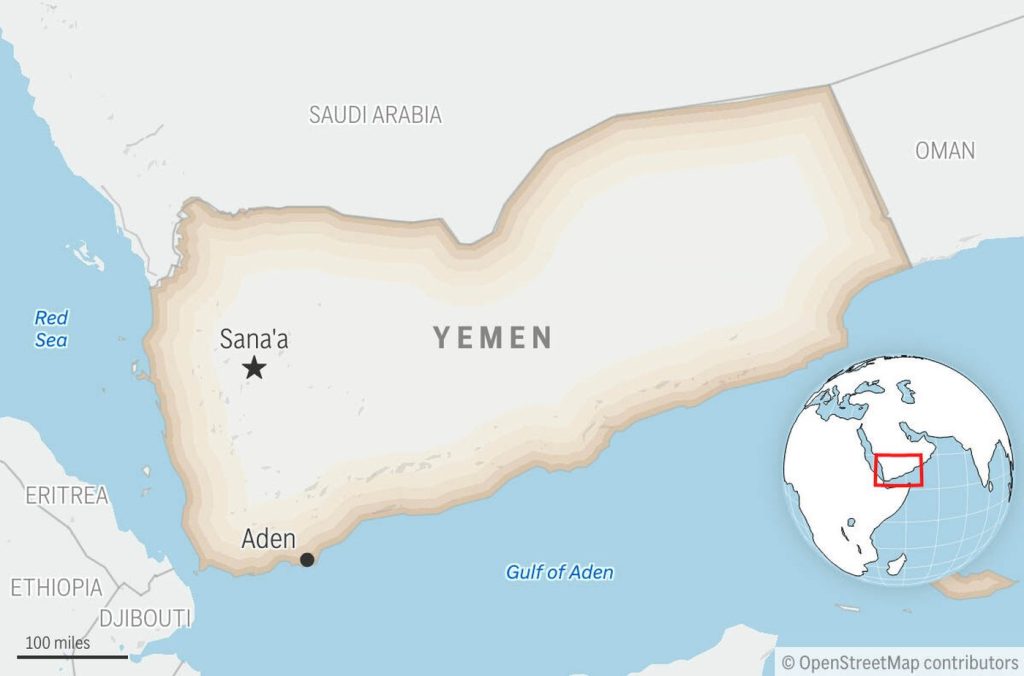
ADEN, Yemen (AP) – On Friday, separatists in southern Yemen accused Saudi Arabia of targeting their forces with airstrikes, a claim that was not immediately confirmed by the kingdom. This come after Saudi Arabia issued warnings for the forces, backed by the United Arab Emirates (UAE), to withdraw from governorates they had recently claimed control over.
The Southern Transitional Council (STC) stated that the airstrikes occurred in Hadramout governorate. The exact number of casualties resulting from the strikes remains unclear, but they significantly heighten the already tense situation in Yemen, which has been embroiled in conflict for nearly a decade. The ongoing war is primarily between a Saudi-led coalition, which includes the UAE, and the Iran-backed Houthi rebels operating in the north.
Amr Al Bidh, the STC's foreign affairs representative, informed the Associated Press that its fighters engaged in operations in eastern Hadramout on Friday following “multiple ambushes” from gunmen. These attacks reportedly led to the deaths of two STC fighters and injuries to 12 others. Al Bidh indicated that the Saudi airstrikes followed these earlier confrontations.
Faez bin Omar, a leading figure among tribal groups in Hadramout, speculated that the airstrikes were a warning for the STC to pull back its military presence from the region. An eyewitness, Ahmed al-Khed, recounted seeing destroyed military vehicles believed to belong to the STC’s allied forces after the airstrikes.
Footage aired by the STC's satellite channel AIC seemed to corroborate their claim, showing what they asserted were the aftermath of the airstrikes. A man in one of the videos could be heard blaming the attack on Saudi aircraft. Despite these allegations, Saudi officials did not respond to requests for comments following the reports. Just a day prior, Saudi Arabia had called for the Emirati-backed separatists to withdraw from the contested territories.
The STC recently advanced into Yemen’s Hadramout and Mahra governorates, effectively displacing forces linked to the Saudi-backed National Shield Forces, another group within the coalition opposing the Houthis. Supporters of the STC have increasingly showcased the flag of South Yemen, which existed as an independent country from 1967 to 1990. Demonstrations took place in Aden on Thursday, with participants advocating for the secession of South Yemen.
The relationship between Saudi Arabia and the UAE is under strain due to the actions of the separatists. Both countries, while maintaining close ties, have been competing for influence and business interests in the region. The UAE welcomed Saudi efforts to foster security and stability in Yemen, reiterating its commitment to initiatives aimed at supporting the nation’s development and prosperity.
In addition, violence has escalated in Sudan, where the two nations back opposing factions in an ongoing conflict, further complicating regional dynamics.
Since the onset of the civil war in Yemen in September 2014, when the Iranian-backed Houthis captured the capital, Sanaa, and forced the internationally recognized government into exile, the country has faced severe humanitarian crises. The Saudi-led coalition intervened in March 2015, aligning with Yemen's exiled government, but years of fighting have not led to a decisive outcome. The war has claimed over 150,000 lives, including both fighters and civilians, and has resulted in one of the world’s most dire humanitarian situations, pushing millions toward famine.
Amid these developments, the Houthis have targeted numerous ships in the Red Sea, significantly disrupting regional shipping activities. A deteriorating situation in Yemen could potentially draw the United States back into the conflict, as Washington previously conducted intense bombing campaigns targeting the rebels earlier this year. Past U.S. airstrikes, including those executed by B-2 bombers, aimed to hit what were described as Houthi-controlled underground facilities.








