

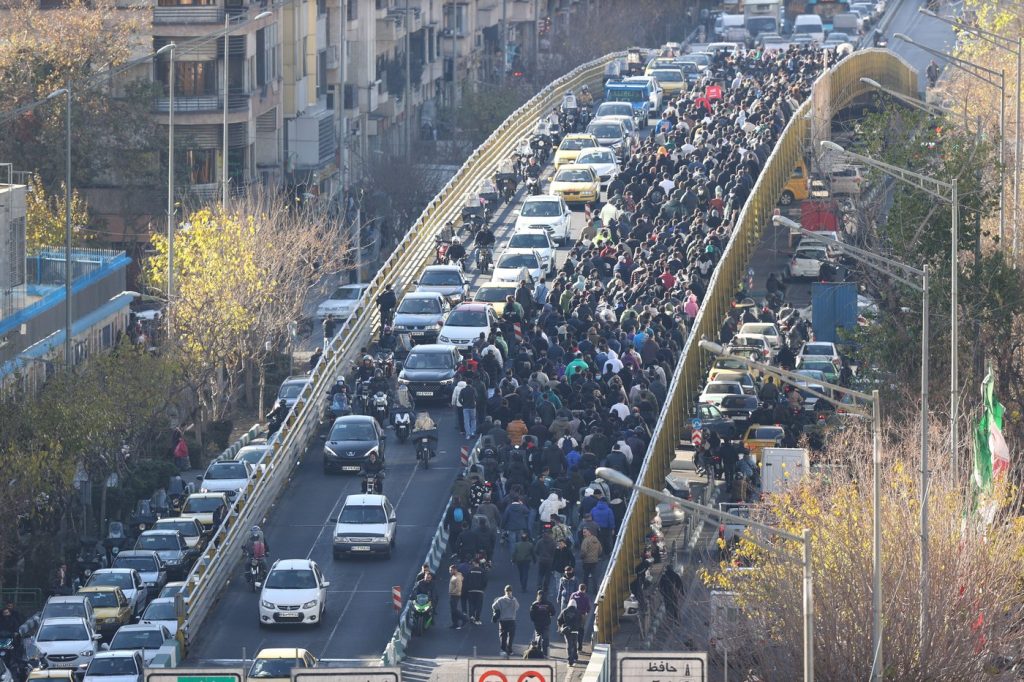
DUBAI, United Arab Emirates (AP) — Widening protests in Iran, rooted in the Islamic Republic's ailing economy, are intensifying pressure on its theocratic regime. The unrest has grown following a 12-day war launched by Israel in June, which involved U.S. bombing of nuclear sites in Iran. Economic woes have been exacerbated by the return of United Nations sanctions in September, causing Iran's rial to plummet to approximately 1.4 million to $1.
In addition, Iran's self-described "Axis of Resistance," a coalition of countries and militant groups supported by Tehran, has faced significant setbacks since the outbreak of the Israel-Hamas war in 2023. Tensions have escalated with recent comments from U.S. President Donald Trump, who warned Iran that the U.S. would intervene if the government violently suppresses peaceful protesters. This warning carries new weight after American troops captured Venezuelan President Nicolás Maduro, a long-time ally of Tehran.
The protests have reportedly spread to over 170 locations across 25 of Iran's 31 provinces. According to the U.S.-based Human Rights Activists News Agency, at least 15 people have died, and more than 580 individuals have been arrested. However, the Iranian state media has remained largely silent on the matter, complicating the understanding of the protests' true scale. Online videos provide limited glimpses into the demonstrations, often depicting shaky scenes of participants along with the sounds of gunfire. Journalists face stringent restrictions on reporting and risk harassment or arrest from authorities.
Despite Supreme Leader Ayatollah Ali Khamenei's declaration that "rioters must be put in their place," the demonstrations continue unabated. These protests initially began among merchants in Tehran, focusing on economic issues, but they quickly evolved to include anti-government chants. The economic crisis is largely driven by the collapse of the rial, soaring prices on essential goods, and an annual inflation rate of approximately 40%. In December, the Iranian government implemented a new pricing tier for nationally subsidized gasoline, further straining the populace.
The financial turmoil ignited public anger, especially following the death of 22-year-old Mahsa Amini in police custody in 2022, which incited widespread protests. Additionally, Iran's "Axis of Resistance" has been considerably weakened. Israel has effectively decimated Hamas in Gaza, and Hezbollah has suffered significant losses in leadership due to Israeli strikes. The fall of President Bashar Assad's regime in Syria, Iran's enduring ally, and setbacks for the Iranian-backed Houthi rebels in Yemen, have all further diminished Iran's influence in the region.
While China remains a significant purchaser of Iranian crude oil, it has refrained from providing overt military assistance. Russia, although relying on Iranian drones amid its war in Ukraine, has not extended military support either. Concerns regarding Iran’s nuclear ambitions continue to loom large. Although Iranian officials assert their nuclear program is strictly peaceful, recent threats to pursue a nuclear weapon have heightened tensions. Enrichment activities were reportedly undertaken at elevated levels before the U.S. attack in June, which positioned Iran uniquely in the international landscape. The International Atomic Energy Agency has warned that Iran could potentially develop up to ten nuclear weapons if it chooses to pursue this path.
U.S. intelligence agencies have indicated that while Iran has not yet initiated a weapons program, it has engaged in activities that could pave the way for such a development. Recently, Iran claimed it had ceased uranium enrichment at any site, attempting to signal openness to negotiations to alleviate sanctions, yet meaningful dialogue has stalled since the June conflict. Historical animosities between Iran and the U.S. trace back to the 1979 Islamic Revolution and have seen many fluctuations, including a peak in relations during the 2015 nuclear deal, which was upended by Trump's withdrawal in 2018, exacerbating regional tensions.








