

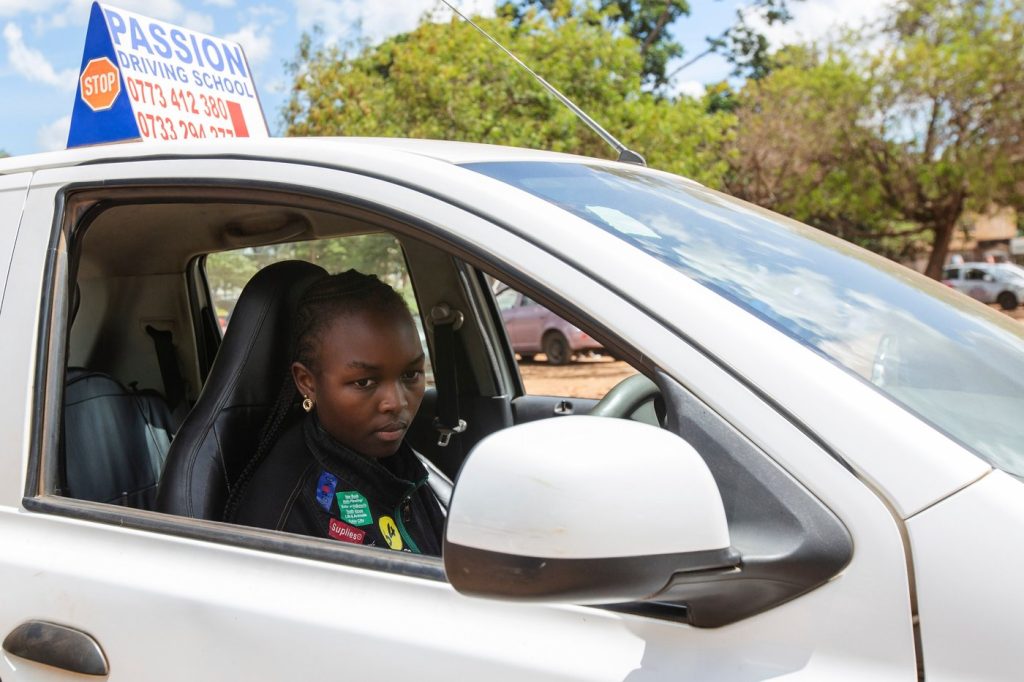
HARARE, Zimbabwe (AP) – Tafara Muvhevhi, a driving instructor in Zimbabwe, witnessed a shift in focus during his 16 years of teaching. Initially, his role was to prepare learners for driving tests by strictly adhering to the highway code. Nowadays, his primary concern has transformed into ensuring that his students can survive on some of the world's most hazardous roads. This evolution in priorities is critical in a nation where road traffic accidents are among the leading causes of death, as reported by the national statistics agency.
According to Zimbabwe's traffic safety agency, a crash occurs every 15 minutes, resulting in five fatalities and 38 injuries each day. "Back then we were teaching by the book; it was all by the book," Muvhevhi commented while instructing a student in parallel parking on a worn-out training ground on the outskirts of Harare, the capital city.
Since the 2000s, Zimbabwe's road safety has progressively declined. The economic downturn has led to inadequate road maintenance, the rise of informal public transport, and weakened enforcement of traffic regulations. Although there have been recent efforts to repair roads and enhance policing, dangerous driving remains ingrained in the culture. “Other drivers are no longer patient with us; they hoot, they overtake illegally,” Muvhevhi explained, noting that students must contend with reckless behaviors from fellow road users.
For 19-year-old Winfrida Chipashu, a university accounting major, navigating the roads of Harare is more daunting than her academic challenges. "You cannot really compare it to accounting because (in accounting) you have all the concepts," she said. "When you are driving in the jungle, you are confused by other people who are not following the road rules."
The roads in Zimbabwe can be especially perilous during festive seasons and holidays. However, daily hazards are fueled primarily by a culture of reckless driving, which the government considers alarmingly prevalent. Zimbabwe boasts one of the highest road accident fatality rates in Africa, with the World Health Organization estimating nearly 30 deaths per 100,000 people.
Conditions on the roads illustrate the stark contradictions of traffic rules being blatantly ignored. Minibus taxis with "safety first" signs recklessly swerve into pedestrian lanes and oncoming traffic, while fare collectors dangle off moving vehicles advertising for customers. Additionally, vehicles packed with more passengers than allowed, including those transported in trunks, defy safety limits.
A shocking 94% of road accidents in Zimbabwe, which has a population of 15 million, are attributed to human error. Distracted driving, particularly from cellphone use, accounts for about 10% of fatalities, according to Munesu Munodawafa, head of the Traffic Safety Council of Zimbabwe. "That is frightening," Munodawafa remarked, highlighting the troubling statistics for such a small population.
The road safety crisis in Zimbabwe parallels a broader issue across Africa, where approximately 300,000 people lose their lives annually to road traffic accidents. The continent has the highest fatality rate globally at 26.6 deaths per 100,000 people, despite representing only about 3% of the world's total vehicle population. This upward trend in road deaths has risen sharply, with fatalities increasing by 17% from 2010 to 2021, according to the World Health Organization.
Factors contributing to this surge include weak road safety regulations, reckless driving, and rapid urbanization. The rise in vehicle registrations in Africa—almost tripling from 2013 to 2021—is largely driven by the influx of used cars and a notable increase in motorcycles and three-wheeled vehicles. Half of all road fatalities involve pedestrians, cyclists, and riders of two- and three-wheelers.
Countries like Uganda and Kenya face similar challenges, with reckless driving and frequent accidents prompting demands for stricter road safety regulations. In response to the crisis, police in Zimbabwe have recently equipped themselves with body cameras and breathalyzers. They are advocating for a review of the driver licensing system, including the introduction of point deductions for offenders and updates to driver training programs.
"Drivers are not licensed to be killers; they are licensed to practice road safety and safeguard lives on the road, but sadly that is not the case,” stated police spokesperson Paul Nyathi. For instructors like Muvhevhi, the focus has shifted to teaching survival skills amidst the chaos. “When we are teaching our students, it's no longer an issue of just obtaining the driver's license. We teach them to stay alive in spite of the incorrect actions of other road users,” he emphasized.








