

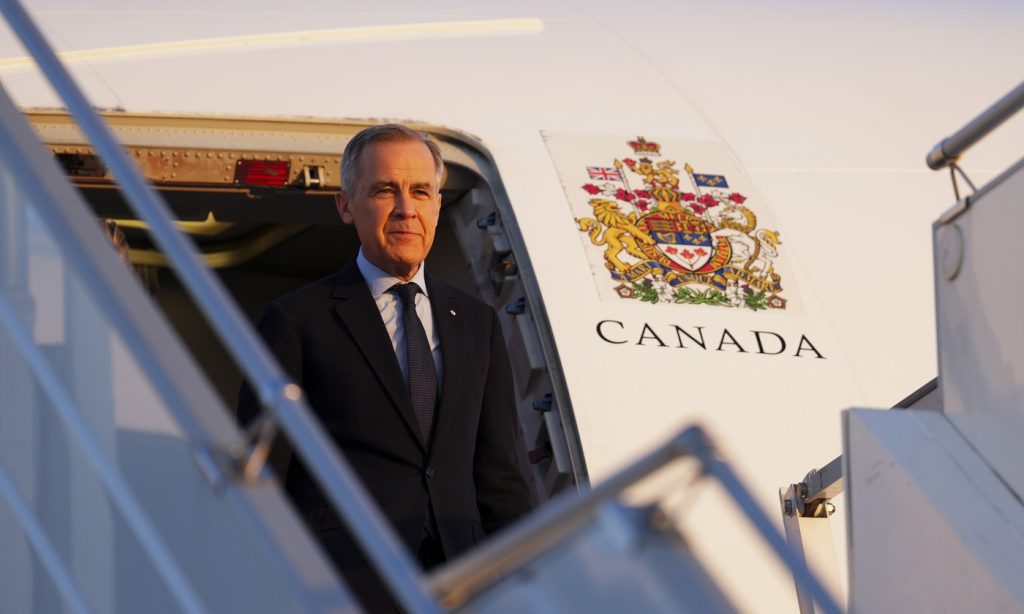
OTTAWA — Prime Minister Mark Carney is set to attend a meeting in Paris today with Ukraine's allies, aiming to find a resolution to the nearly four-year-long conflict caused by Russia's invasion of Ukraine. This gathering, referred to as the “coalition of the willing,” includes representatives from Canada, France, and several other European nations, and focuses on accelerating a negotiated peace plan for Ukraine.
In a media statement released on Friday, Carney emphasized his commitment to strengthening Ukraine's defense capabilities while simultaneously deterring any future aggression from Russia. He mentioned that Ukraine is actively pursuing security guarantees from the United States as well as other nations to ensure its safety amid ongoing tensions.
According to Carney's office, Canada is collaborating with its coalition allies to enhance Ukraine's defense mechanisms and facilitate the nation’s long-term recovery efforts. Furthermore, the Prime Minister underscored the importance of addressing the issue of "unlawfully deported" Ukrainian children during the conflict with Russia.
Canada has positioned itself as one of the largest per capita contributors to Ukraine's recovery. At a meeting with Ukrainian President Volodymyr Zelenskyy in Halifax at the end of last month, Carney announced a significant financial commitment, pledging $2.5 billion in financing and loan guarantees dedicated to Ukraine’s recovery.
In a related context, U.S. President Donald Trump, who met with Zelenskyy shortly after Carney, proclaimed that Ukraine and Russia were "closer than ever before" to finalizing a peace agreement. However, he did acknowledge existing challenges that might impede the negotiation process.
Benjamin Zyla, a professor from the University of Ottawa specializing in international development and global studies, indicated that the ongoing peace plan presents vital considerations for Ukraine, particularly in terms of maintaining its territorial integrity. He stressed that the decision-making authority lies solely with the Ukrainians and reaffirmed that Canada respects their agency in this matter.
Moreover, Zyla identified the necessity of an international peace force to uphold any agreements reached between Ukraine and Russia. This force, according to Zyla, would need to operate more like an enforcement mission rather than traditional peacekeeping, ensuring compliance with any accord made between the two nations.
The Paris meeting arrives shortly after the U.S. executed a military operation to extract Venezuelan President Nicolás Maduro and his wife from Venezuela, an event marked by significant violence as low-flying aircraft navigated the capital amid explosions. Zyla suggested that the implications of this operation could be on the agenda for discussion among leaders, specifically concerning its potential influence on the dynamics of the Russia-Ukraine negotiations.
Reacting to the developments in Venezuela, Carney expressed his government’s position on social media, where he outlined that Canada had imposed further sanctions on Maduro’s regime, which he described as "brutally oppressive and criminal." Carney noted that Canada has refused to recognize Maduro's governance since the alleged illegitimate election in 2018.
Furthermore, he reaffirmed Canada's stance supporting a peaceful, negotiated transition in Venezuela that respects the will of its people, while calling on all parties involved to adhere to international law. Carney concluded by emphasizing that Canada stands with the people of Venezuela in their pursuit of a sovereign future rooted in peace and democracy.
This report was first published on January 5, 2026.








