

OTTAWA — A political accountability group, Democracy Watch, is pushing for the courts to review the federal ethics ruling concerning former Prime Minister Justin Trudeau's involvement in the WE Charity decision. The organization has filed an appeal to the Supreme Court of Canada, arguing that the Federal Court of Appeal should be allowed to scrutinize a 2021 report by the ethics watchdog about Trudeau's actions.
The Federal Court of Appeal previously ruled that the Conflict of Interest Act precludes judicial review of the ethics commissioner's findings. Federal lawyers have requested that the Supreme Court dismiss Democracy Watch's appeal, asserting that the Act is designed to prevent the Court of Appeal from examining the ethics report.
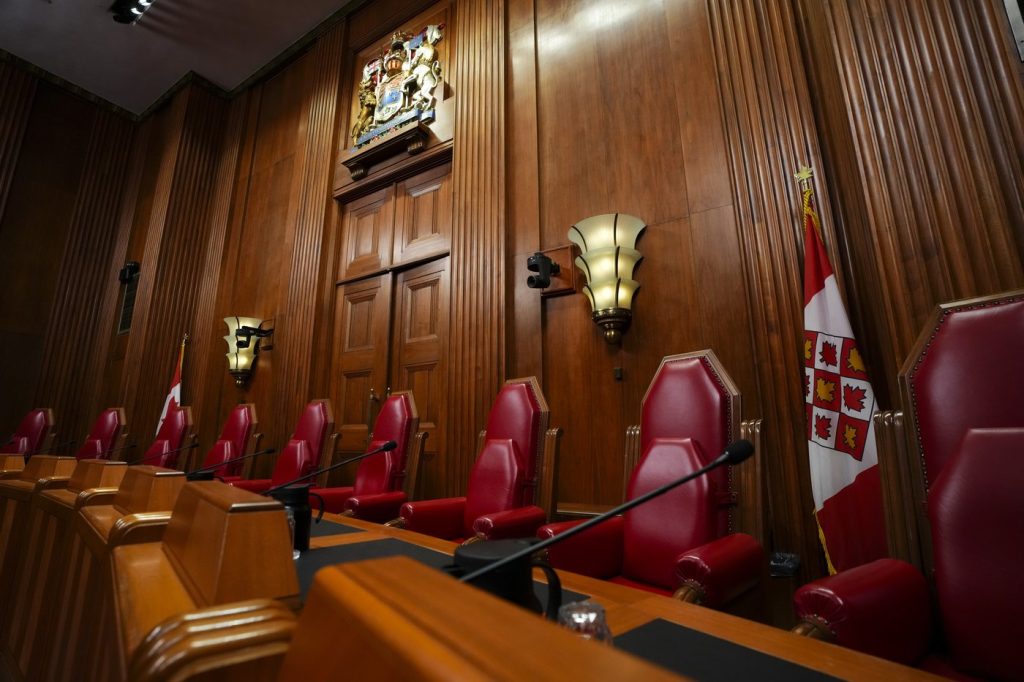
The Supreme Court is scheduled to hear oral arguments on the case, which includes various intervening parties, on Wednesday and Thursday. The controversy originated in May 2021, when Mario Dion, the then-federal ethics commissioner, concluded that Trudeau did not breach the Conflict of Interest Act while participating in the government’s decision to engage WE Charity to manage a significant program aimed at encouraging students to volunteer during the COVID-19 pandemic.
WE Charity was chosen by the Liberal government to administer a multimillion-dollar initiative to foster volunteerism among students. However, the decision sparked controversy due to Trudeau's familial connections to the organization. The Prime Minister had participated in multiple WE Day events since 2007, while his wife served as an honorary ambassador. Additionally, Trudeau’s mother and brother engaged in paid activities associated with WE Charity.
In light of the perceived conflict of interest, Trudeau acknowledged he should have recused himself from involvement in the decision-making process. Dion noted that while it is advisable to recuse oneself in such situations, there is no statutory requirement to do so as per the Conflict of Interest Act.
Following the decision, Democracy Watch filed for a judicial review in June 2021, asserting that there were legal misinterpretations concerning the Act and factual inaccuracies regarding Trudeau's connection to one of WE Charity's founders. However, federal lawyers contended that the Act limits judicial review on matters of fact and law.
The Federal Court of Appeal dismissed the application, stating that the political oversight offered through legislative measures serves as a sufficient alternative to judicial review. The appellate court asserted in its 2024 decision that the Conflict of Interest Act establishes a dual oversight system involving both parliamentary and judicial controls, thereby indicating that the responsibility for accountability primarily rests with the legislative branch. Thus, the court should exercise judicial restraint in this context.
Democracy Watch escalated the matter to the Supreme Court, which agreed to hear the appeal in May. In its written filing, the group emphasized the historical role of common law courts in safeguarding public administration against encroachments by legislative and executive powers. The group urges the Supreme Court to maintain this protective stance.
In response, federal lawyers reiterated that the Conflict of Interest Act reflects Parliament's intent to limit the circumstances under which the courts may intervene, specifically reserving judicial action for cases where the commissioner exceeds jurisdictional limits, acts unjustly, or relies on fraudulent or perjured evidence.
This legal battle continues to unfold, drawing attention to the balance of power and accountability within the Canadian political landscape.








