

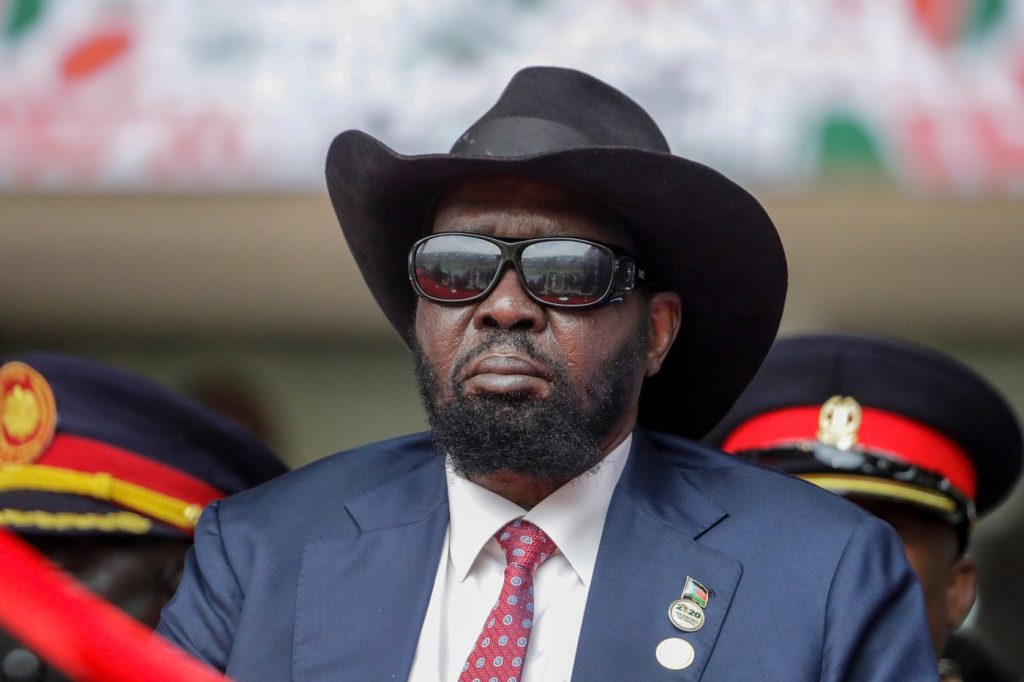
JUBA, South Sudan (AP) — A former South Sudan finance minister, Bak Barnaba Chol, has become the latest high-profile official detained amid a wave of arrests that observers suggest expose vulnerabilities within President Salva Kiir's government. Chol was apprehended on Friday while attempting to cross the border into Uganda. His detention follows that of another former finance minister, Marial Dongrin Ater, who was dismissed from his position in August.
In the past week, several other significant figures have been arrested, including a former central bank governor, a former undersecretary for the ministry of petroleum, and a general from the domestic intelligence agency who had previously served in the same ministry. The motivations behind these arrests remain ambiguous, stirring concerns among political analysts.
Government spokesman Ateny Wek Ateny addressed the situation, stating to the local media outlet Eye Radio that the arrests were "not political" but rather a "direct response to irregularities identified within the monetary system." Ateny mentioned that a committee is investigating potential "financial malpractices" related to these officials.
The atmosphere in Juba has turned tense, particularly among politicians who now fear possible detentions. Prominent civic leader Edmund Yakani remarked on the situation, indicating that while the arrests have thus far focused on financial institutions, an extension into the security sectors could provoke serious unrest.
Analysts believe these arrests reveal a constriction of President Kiir's traditionally broad coalition, which he has maintained for years to govern a politically fragmented landscape. According to Daniel Akech from the International Crisis Group, this narrowing coalition might signify deeper internal strife within the administration.
The backdrop of this political turbulence is the ongoing war in Sudan, which is severely affecting South Sudan's economy that heavily relies on oil exports. Virtually all of South Sudan's oil passes through pipelines in Sudan, and since the conflict began, ruptures in these pipelines have intermittently disrupted over 60% of the country's oil production. The World Bank reported a staggering 24% contraction in South Sudan's economy over the past year.
Looking ahead, the International Crisis Group has cautioned that continued disruptions in oil production could fuel broader political violence as President Kiir struggles to maintain monetary support for rival factions within the military and political spheres. The regime is already grappling with an armed rebellion, and opposition leader Riek Machar remains under house arrest, facing charges of alleged subversion, claims he steadfastly denies. Following Machar's suspension as Kiir's deputy in September, many of his allies were also arrested or expelled from the government.
Machar's ouster has coincided with a marked uptick in violence across the nation. The U.N. has estimated that thousands have been killed recently, and approximately 280,000 people have been displaced since December. A U.N. investigation has revealed that South Sudan's leadership appears to be "systematically dismantling" the 2018 peace agreement, originally intended to cement Machar's return to a unity government with Kiir. In light of these developments, the United States has renewed calls for peace negotiations.
___
Joseph Falzetta And Deng Machol, The Associated Press








