

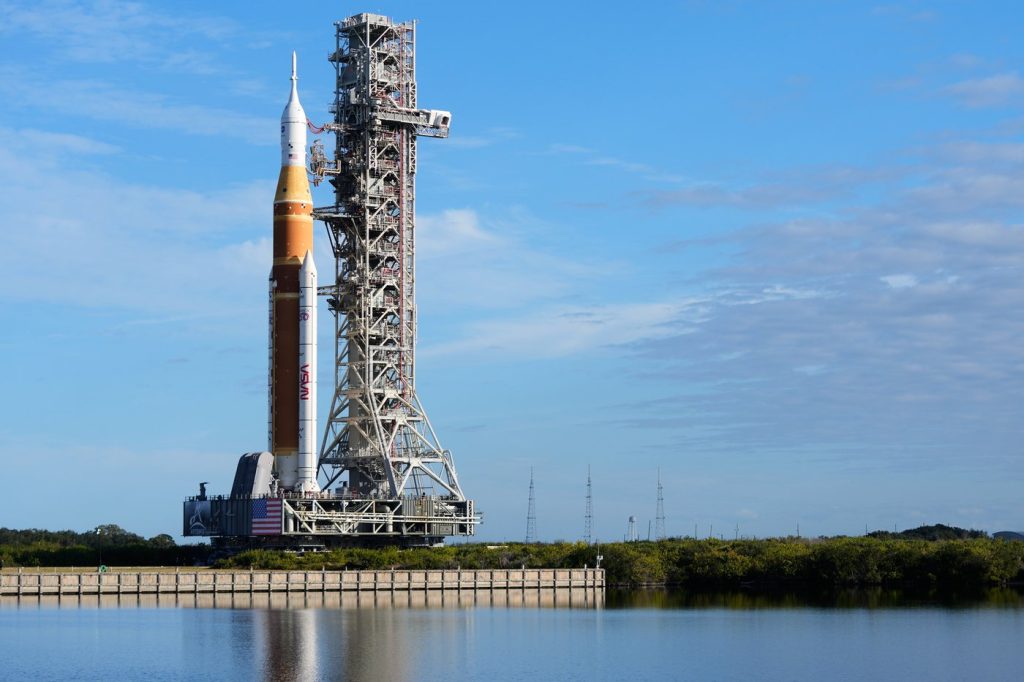
Canadian astronaut Jeremy Hansen has expressed his belief that sending humans to fly around the far side of the moon is a significant advancement for humanity. During a press conference at the Kennedy Space Center in Florida, as NASA prepared the Artemis II rocket for its launch, Hansen shared his excitement about the upcoming mission.
Hansen, a 49-year-old astronaut originally from London, Ontario, will serve as the mission specialist for Artemis II. This mission marks a historic achievement for Canada, as it makes Hansen the first non-American to travel beyond low Earth orbit. The Artemis II mission is set to be the first crewed mission to the moon since the last Apollo mission in 1972, underscoring its historical significance.
The Artemis II mission will be launched aboard the Space Launch System (SLS) rocket, which is designed to carry the Orion spacecraft. The rocket, weighing approximately five million kilograms, has begun its significant rollout from NASA's vehicle assembly building to the launch pad at Kennedy Space Center, a distance of about 6.5 kilometers. This process is expected to take around 12 hours.
Hansen's crew includes NASA astronauts Reid Wiseman, Victor Glover, and Christina Koch. Reflecting on the momentous journey ahead, Hansen noted, "I’m actually pretty pumped to see that, because, you know, in just a few weeks you’re going to see four humans fly around the moon." He highlighted the collaborative efforts of the Canadian Space Agency, which was invited by NASA to participate in the Artemis mission and is currently developing new robotic systems for deep space exploration.
Prior to the end of this month, the crew, along with the mission team, will perform a wet dress rehearsal—a simulated launch at the space center. This exercise will allow the management team to finalize their assessment of the launch timeframe. NASA has identified several potential launch dates within the upcoming months, with the earliest being February 6. The mission is planned to take place at the latest by April.
The mission, which is expected to last about ten days, will conclude with the craft splashing down in the Pacific Ocean. Alongside Hansen, Canadian astronaut Jenni Gibbons, aged 37, from Calgary, will serve as his backup, contributing with ground control support during the mission.
This ambitious project follows the previous launch of Artemis I in late November 2022, which had involved an uncrewed Orion spacecraft that successfully orbited the moon before returning to Earth. The Artemis missions signify not only a return to lunar exploration but also a renewed commitment to international cooperation in space endeavors, with countries like Canada leading the way in technological development and collaboration.
As preparations progress, excitement builds around the prospect of humans venturing beyond low Earth orbit, advancing further into the unknowns of space exploration.








