

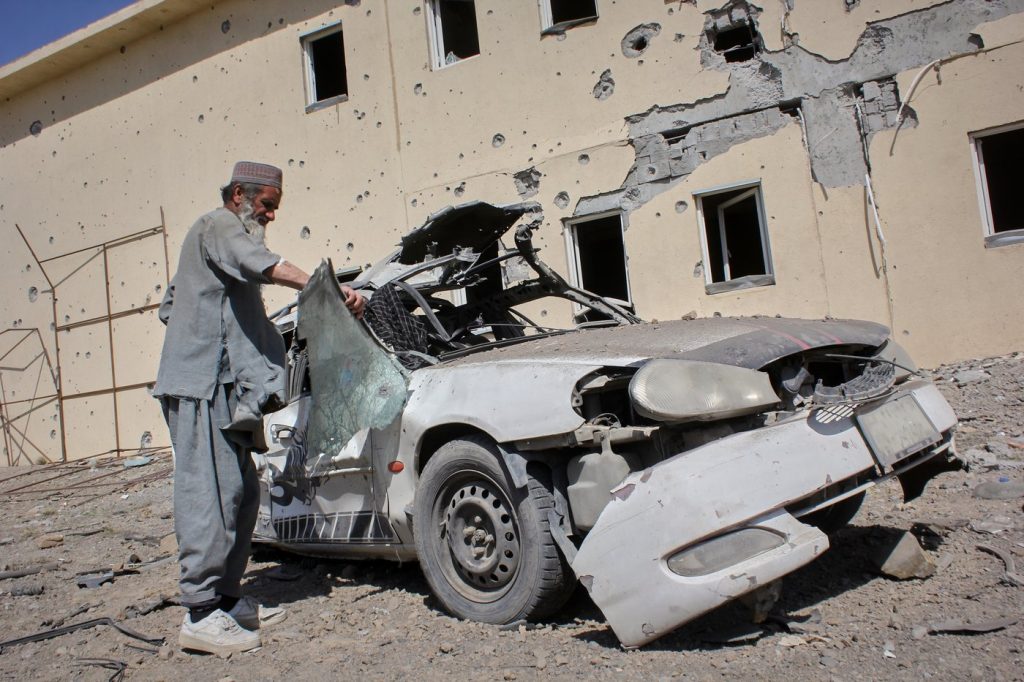
ISLAMABAD (AP) — Early Tuesday, Afghanistan's ground forces launched attacks on 16 military positions of Pakistan along the southwestern border, igniting intense clashes that have now entered their fifth consecutive day. Reports indicate that 67 Afghan security forces and one Pakistani soldier lost their lives in the confrontations, showcasing the escalating violence between the two nations.
Pakistan's Information Minister Attaullah Tarar confirmed that Pakistani troops "successfully repelled these multiple attacks" from Afghan forces. Tarar elaborated that the Afghan forces conducted operations in the southwestern districts of Qilla Saifullah, Nushki, and Chaman in Balochistan province. In Pakistan's counteroffensive, the military reportedly killed 27 Afghan security personnel in these encounters.
Additionally, Afghan forces targeted at least 25 locations in the northwestern region of Khyber Pakhtunkhwa, leading to further retaliatory actions by Pakistani troops that resulted in the deaths of another 40 Afghan security forces, according to Tarar. There has been no immediate comment from authorities in Kabul regarding these claims.
The ongoing violence follows a series of exchanges starting last Thursday when Afghanistan initiated attacks in response to Pakistani airstrikes conducted the previous Sunday. Pakistan's operations along the border have intensified since then, with Tarar claiming on Monday that 435 Afghan security force members had been killed, alongside the capture of 31 positions in the conflict.
In the aftermath of these clashes, Kabul has also asserted that its forces have inflicted significant losses on Pakistan's military, highlighting a tit-for-tat narrative that both countries have adopted in their communications. The situation reflects long-standing tensions regarding cross-border militant activities, with accusations flying back and forth concerning safe havens for terrorists.
Pakistani President Asif Ali Zardari defended the military actions in Afghanistan, stating that Islamabad has exhausted all diplomatic avenues before resorting to force against militants operating from Afghan territory. He further called on Kabul to disarm groups that are perceived to be responsible for the persistent attacks inside Pakistan.
The conflict has raised alarms within the international community, particularly as Pakistan has categorized its military engagements as an "open war" with Afghanistan. The border region is known to be a haven for various militant organizations, including al-Qaida and the Islamic State group. Pakistan has reported a worrying surge in violence attributed to the outlawed Tehreek-e-Taliban Pakistan (TTP), which operates both within Pakistan and from bases in Afghanistan. Islamabad accuses the Taliban government in Afghanistan of harboring the TTP, a claim that Kabul categorically denies.
This latest episode of cross-border fighting has effectively terminated a ceasefire that had been brokered by Qatar and Turkey in October. Efforts at initiating peace talks in Istanbul were unsuccessful in yielding a permanent resolution. Pakistani officials have made it clear that military actions will persist until concrete measures are taken by Afghanistan's Taliban government to control the TTP and halt the proliferation of violence targeting Pakistan from Afghan soil.
In this complex and evolving conflict, the humanitarian and geopolitical ramifications continue to deepen, emphasizing the urgent need for a sustainable resolution to ensure regional stability.








