

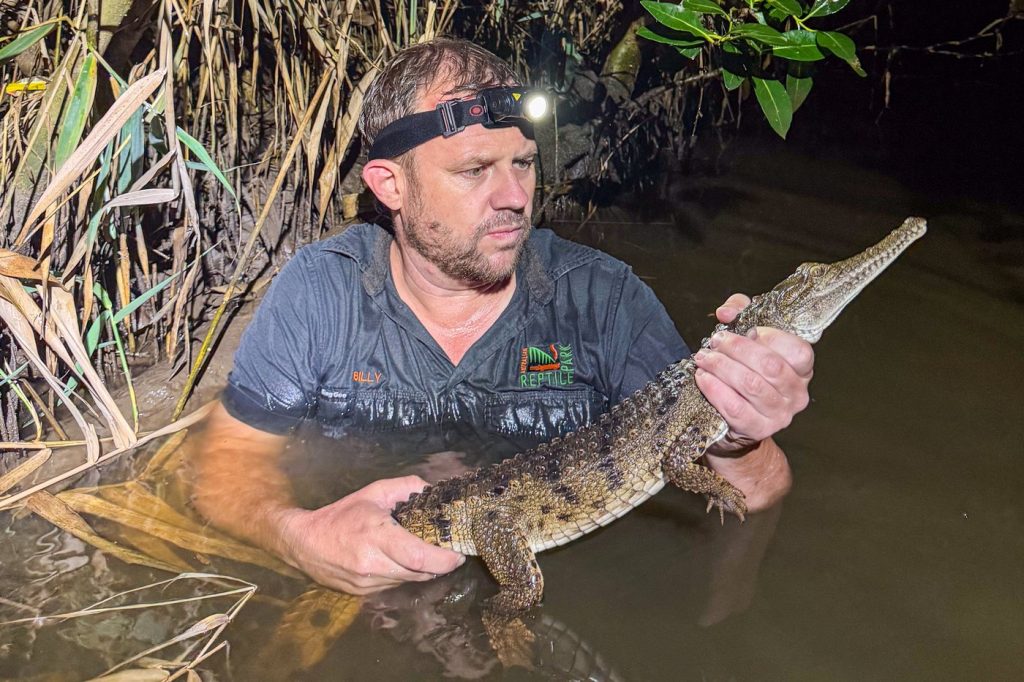
MELBOURNE, Australia (AP) – In an unusual incident, Stephanie Kirsop found herself questioning her son’s claims when he alerted her about a crocodile spotted in a creek near their home in Newcastle, a city located 2,000 kilometers (1,200 miles) south of Australia’s typical crocodile habitat in the tropical north. The story began when Lionel Saunders, 12, along with his friends, discovered a juvenile freshwater crocodile measuring about a meter long (39 inches) in Ironbark Creek on a Saturday afternoon.
Initially doubtful, Kirsop dismissed the reports, thinking it was just a trick her son was playing on her. “My son took videos because he was trying to convince me it was real and I didn’t believe him,” she recounted later. Even upon driving to the creek, she remained skeptical, bracing for a potential joke. However, her disbelief vanished when she arrived and saw the crocodile “swimming around in the creek where local kids go to fish and sometimes swim.” Unable to believe the sight before her, she contacted a wildlife rescue service, who were initially skeptical, claiming that crocodiles do not inhabit the area.
Realizing the urgency of the situation, Kirsop provided the rescue service with photos and videos as evidence, which eventually led to being referred to the Australian Reptile Park. Billy Collett, the park manager, expressed his initial suspicion regarding the authenticity of the images, suspecting they might have been artificially generated. However, local police confirmed the presence of the crocodile in Ironbark Creek, validating Kirsop's claims.
Collett identified the creature as an Australian freshwater crocodile, known scientifically as Crocodylus johnstoni. This species is smaller and less dangerous than the saltwater crocodile but can still inflict serious injuries. With the chilly autumn season approaching in the Southern Hemisphere, Collett and his team focused on safely capturing the crocodile, which they eventually did on Sunday night, approximately 3 kilometers (2 miles) from where it was first observed.
Collett emphasized the importance of removing the crocodile from its creek habitat. He noted, “I just wanted to get him out of there because he would’ve perished in winter.” The crocodile, now healthy, will remain at the Australian Reptile Park until authorities determine its permanent placement, as crocodiles are protected under Australian law.
Collett speculated that the crocodile was likely a discarded pet, released into the wild after becoming too large for a home aquarium or too dangerous for its owner to manage. This incident highlights the unexpected presence of wildlife in non-traditional habitats and raises awareness about responsible pet ownership and the implications of releasing exotic animals into the wild.








