

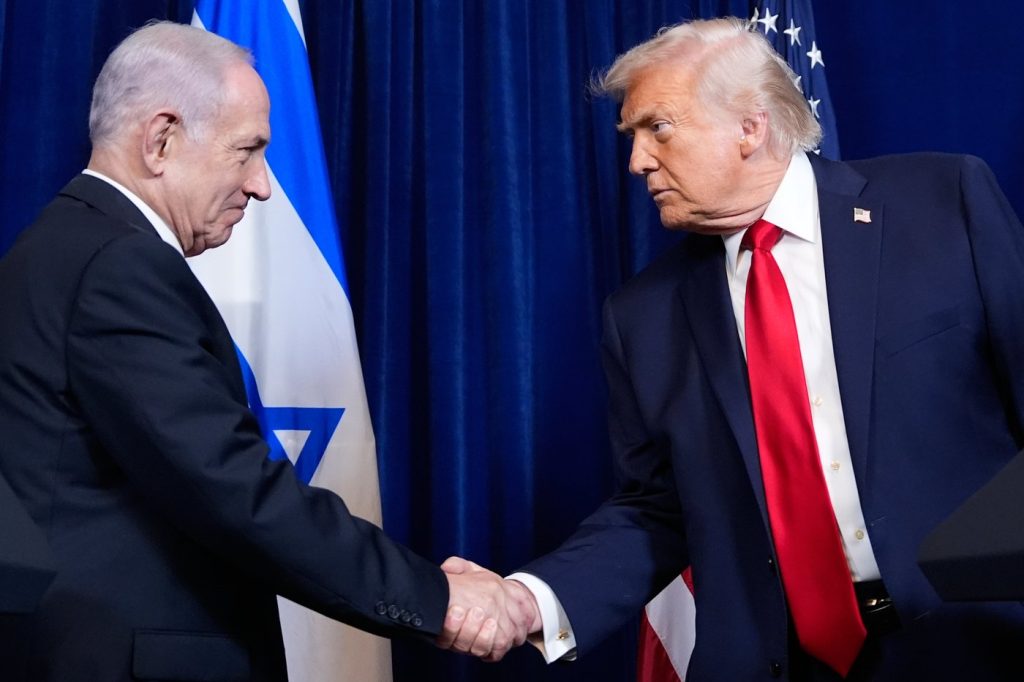
Israeli Prime Minister Benjamin Netanyahu's political career has been characterized by two key foreign policy pillars: a steadfast alliance with the United States and a continuous diplomatic and covert effort against the Islamic Republic of Iran. As the U.S. and Israel find themselves engaged together in a military confrontation against Iran's leadership, the dynamics of this alliance face potential strain.
Netanyahu’s strategy of involving President Donald Trump in what he perceives as Israel's existential battle against Iran could lead to complications, particularly if the conflict escalates into a protracted war with significant consequences. While a successful campaign might achieve their mutual objective of overthrowing the Iranian government, a prolonged engagement risked jeopardizing U.S.-Israel relations.
Ofer Shelah, a research fellow at the Institute for National Security Studies in Tel Aviv, noted that a segment of the American public might view this as Israel leading the U.S. into an unnecessary war. Such perceptions could lead to a decline in American support for Israel, which might have serious ramifications in the medium to long term. However, Shelah remarked that Netanyahu’s political ambitions likely prioritize immediate results over future consequences.
Historically, Netanyahu has successfully cultivated a close relationship with multiple American presidents, portraying himself as a vital link between Israel and the U.S. Yet, recent Gallup polling indicates a noticeable decline in support for Israel among the American populace, particularly driven by changing sentiments among Democrats and some Republicans who have voiced opposition to continued U.S. support during Israel's ongoing military actions.
As Netanyahu embarks on a second war against Iran, he faces a formidable enemy that many in Israel perceive as an existential threat due to its regional influence and nuclear ambitions. With this backdrop, Netanyahu expressed optimism that U.S. involvement would enable a decisive blow against what he termed a "terror regime." However, the conflict's early days revealed complications, including casualties among U.S. troops, disruptions in regional travel, and rising oil prices—all of which trigger wider economic concerns in the U.S.
Uncertainty about the war's objectives looms large, posing questions about whether airstrikes will suffice to dismantle Iran's leadership and what the future governance in Iran would entail. Observers warn that Israel could shoulder the blame if the situation deteriorates badly. Nadav Eyal, a commentator for the Israeli publication Yediot Ahronoth, underscored the critical importance of maintaining American public support.
Amidst the backdrop of these geopolitical tensions, Aaron David Miller, a former Middle East adviser, pointed out that Netanyahu may use the war as a diversion from Israel's challenges, particularly following the failures experienced during the October 7, 2023, attacks by Hamas. Netanyahu can leverage the narrative of being a decisive wartime leader committed to confronting Iran, a stance that aligns with Trump's support.
As the situation unfolds, there remains a chance for the American president to de-escalate the conflict based on changing conditions. Miller noted that if Trump perceives the war is heading in an unfavorable direction, he could prompt a shift in strategy, with Netanyahu likely agreeing to follow the lead.
This evolving scenario places both leaders at a critical juncture, balancing immediate military objectives against the long-term restructuring of their diplomatic relationship amid shifting public opinion and regional instability.








