

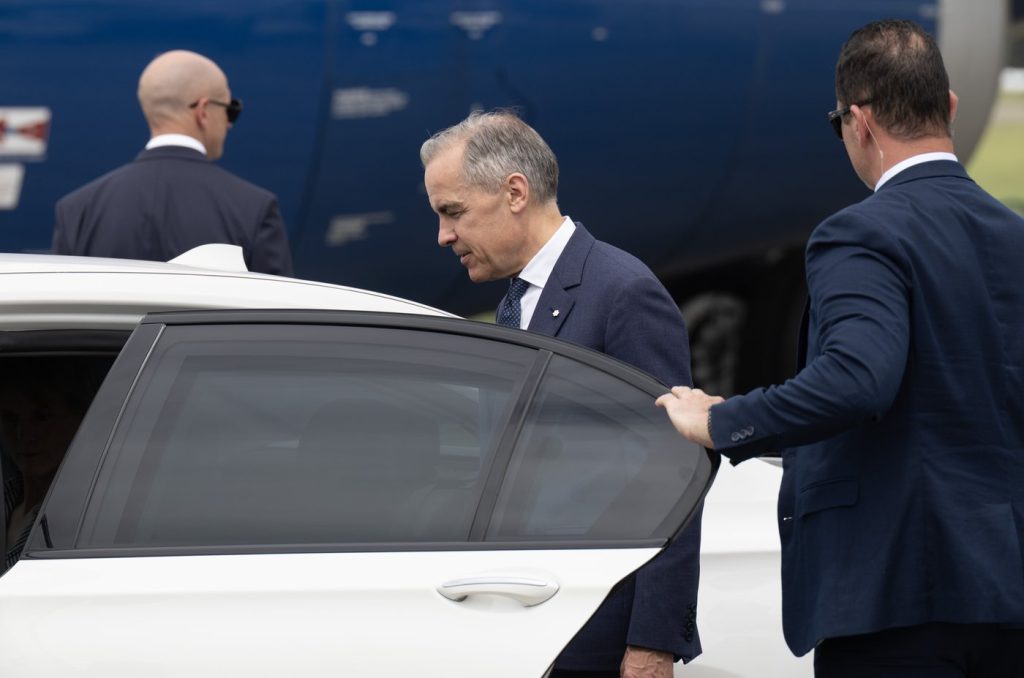
SYDNEY — Prime Minister Mark Carney is currently in Australia as Canada aims to enhance its already robust intelligence ties through expanded collaboration in trade and defense. Carney arrived in Sydney on Tuesday, local time, which corresponds to Monday evening in Canada. His itinerary includes meetings with local business leaders.
Defence Minister David McGuinty, accompanying Carney, emphasized the significance of strengthening the relationship between Canada and Australia, stating it is based on years of collaboration. During a media availability, McGuinty noted Canada is focusing on two main areas of cooperation: a deeper economic connection and enhanced defense and security collaboration.
According to McGuinty, there is a “new openness” in Australia to work together with Canada. He highlighted that Carney's outreach sends a strong message regarding the potential for middle powers to unite and collaborate on economic, defense, and security matters.
While McGuinty addressed the media shortly after their arrival in Sydney, Prime Minister Carney has refrained from meeting with reporters in recent days. His office had previously called off a press conference scheduled for Monday in India following his meeting with Prime Minister Narendra Modi. Press inquiries regarding Carney’s availability for questions on Tuesday were declined by his office.
On Thursday, Carney is set to travel to Canberra to deliver a speech to the Australian Parliament before departing for Tokyo. During his visit, he will meet with Australian Prime Minister Anthony Albanese, who has been in power since 2022. Both Canada and Australia are Commonwealth nations and members of the Five Eyes intelligence-sharing alliance, which also includes the United States, United Kingdom, and New Zealand.
Asia Pacific Foundation Vice-President Vina Nadjibulla described Australia as a pivotal partner for Canada in the Indo-Pacific region. Notably, both countries are major commodity exporters, and Nadjibulla pointed out historical instances where China has shifted its sourcing between the two nations during diplomatic disputes, highlighting their intertwined economic fates.
Nadjibulla further observed that Australia has been the predominant source of foreign direct investment for Canada among Indo-Pacific nations, particularly benefiting Canadian pension funds. Australia has also engaged in several initiatives launched by Canada aimed at reinforcing supply chains for critical minerals, reflecting a mutual desire to reduce reliance on China.
At the G20 summit in South Africa held in November 2023, Carney initiated a partnership focusing on emerging technologies with India and Australia, though the specifics of this collaboration remain largely undisclosed. Additionally, an agreement was signed last year for Canada to procure an over-the-horizon radar system from Australia for Arctic use, with potential for further defense-industrial projects, including cybersecurity and quantum technology.
As part of his visit, Carney is also advocating for the European Union to explore partnerships within the Comprehensive and Progressive Agreement for Trans-Pacific Partnership (CPTPP), a trade bloc that includes Australia. Canada is a member of this bloc and currently maintains a trade agreement with the EU.
This strategy aims to circumvent the challenges posed by the dysfunction seen in the World Trade Organization, particularly involving Beijing and Washington. Nadjibulla noted that in the absence of a comprehensive multilateral framework, smaller coalitions of like-minded countries committed to rules-based trade could emerge as beneficial alternatives.
Nadjibulla further stated that Australia is less affected by the unpredictability of former U.S. President Donald Trump's policies compared to Canada, which has closer economic ties to the U.S. She emphasized that while public opinion in Australia is concentrated on regional issues relating to China, Canada could significantly benefit from learning from Australia’s robust relationships in Southeast Asia, where Canada also has various trade agreements.
In summary, the trajectory of increased collaboration between Canada and Australia reflects a broader strategy to enhance economic and security partnerships in the Indo-Pacific, amidst evolving global trade dynamics and regional challenges.








