

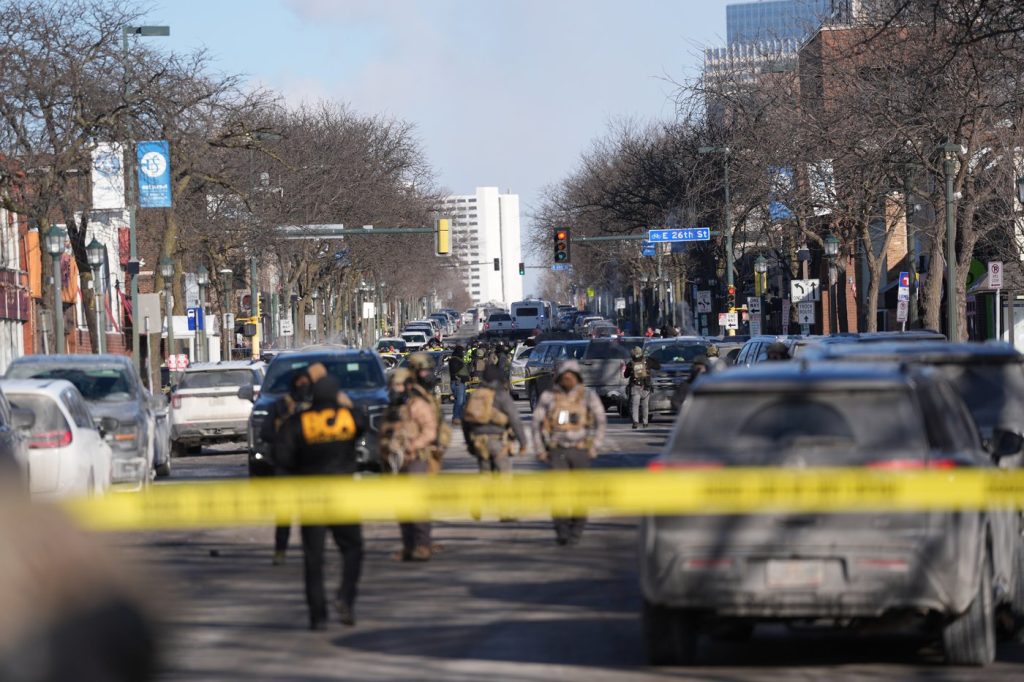
MINNEAPOLIS (AP) — On Saturday, federal officers shot an individual in Minneapolis, coinciding with the Trump administration's intensified immigration enforcement initiatives. Minnesota Governor Tim Walz commented on the incident, stating that the circumstances surrounding the shooting remain unclear. The event unfolded amidst ongoing protests in the Twin Cities, which have been taking place daily since January 7, when 37-year-old Renee Good was fatally shot by an Immigration and Customs Enforcement (ICE) officer who fired into her vehicle.
In a social media post, Governor Walz, a Democrat, expressed his concern over the incident and revealed that he had been in contact with officials at the White House. He urged President Donald Trump to halt what the Department of Homeland Security (DHS) has termed its "largest-ever immigration enforcement operation." Walz's message included a pointed request for the removal of "thousands of violent, untrained officers" from Minnesota without delay.
DHS spokeswoman Tricia McLaughlin provided some details to The Associated Press, stating that the individual who was shot was in possession of a firearm and two magazines, indicating that the situation was "evolving." The DHS also released a photograph of the handgun allegedly found with the individual who suffered the shooting. Following the incident, a large and agitated crowd gathered nearby, directing angry chants and insults towards the federal officers, labeling them "cowards" and demanding they leave the area. One officer's response to the demonstrators was dismissive, as he mockingly said, "Boo hoo," while walking away.
The shooting transpired just a day after thousands of demonstrators had taken to the streets of Minneapolis to protest the crackdown on immigrant communities, braving extremely cold weather in their calls for federal law enforcement to withdraw. This public outcry reflects the heightened tensions surrounding immigration enforcement in the region and the increasingly visible presence of federal officers.
The escalation of protests and incidents associated with federal immigration enforcement has raised significant concerns among community leaders, activists, and politicians. As tensions continue to rise, both local and federal officials are under increasing pressure to address the safety and rights of residents in Minnesota in light of these recent events. The ongoing situation in Minneapolis illustrates the complexity and divisiveness surrounding immigration policy and law enforcement in the United States at this time.








