

In a series of crucial meetings held across three Asian capitals, government leaders have taken significant steps to strengthen international partnerships, with an underlying motivation stemming from concerns over the current U.S. administration. Despite rarely mentioning President Donald Trump directly, his influence on global dynamics appears to be a catalyst for these new alliances.
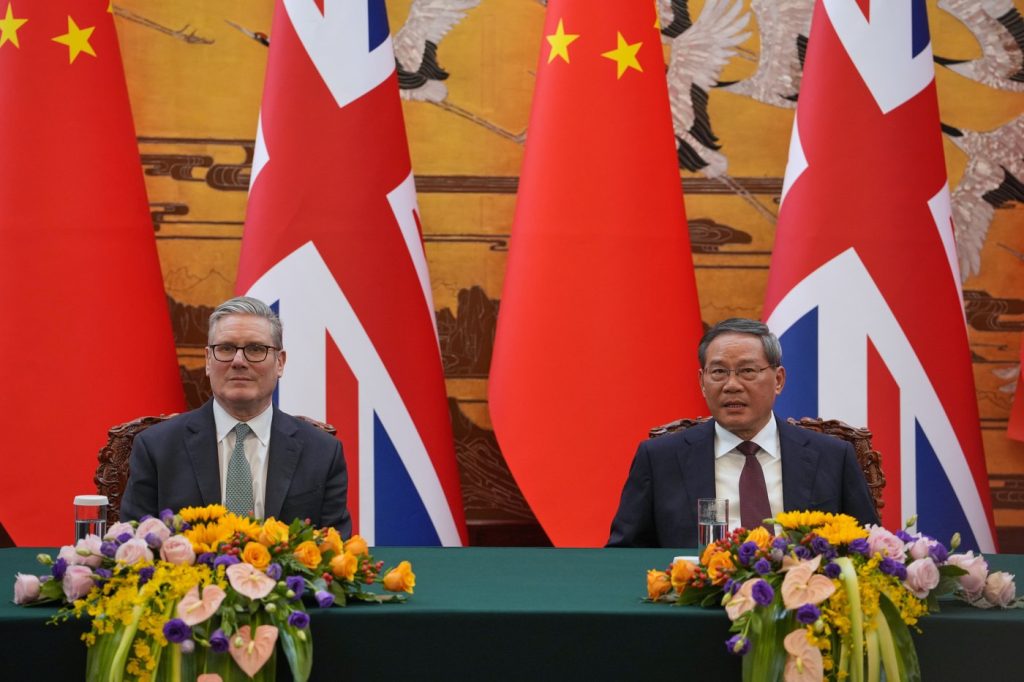
In Beijing, the leaders of the United Kingdom and China convened on Thursday to advocate for a "long-term, stable, and comprehensive strategic partnership" between their nations. This call for stability is particularly significant as a commitment made a decade ago to construct such a partnership has seen minimal progress. The emphasis on “long-term” and “stable” reflects the desire for a more reliable relationship amidst fluctuating global conditions.
Traveling approximately 1,100 kilometers (700 miles) south to Hanoi, Vietnam and the European Union similarly upgraded their diplomatic ties to a comprehensive strategic partnership on the same day. This upgrade positions Vietnam on equal diplomatic standing with major global powers, including the United States, China, and Russia, which underscores its growing importance in the international arena.
In New Delhi, just days prior, the European Union and India successfully finalized a major free trade agreement, following years of stalled negotiations. This agreement encompasses a wide array of sectors, including textiles and pharmaceuticals, and is set to lower India's high tariffs on European goods such as wine and automobiles. This deal signals increasing collaboration between India and Europe amidst a shifting global trade landscape.
While Donald Trump may not have been the sole reason for these developments, the shake-up of the global order attributed to his administration is prompting nations to reconsider their economic dependencies. His imposition of import tariffs has led several countries to seek out new markets, reducing their reliance on the American consumer. Such economic strategies align with broader concerns regarding the stability of international relations.
The responses from world leaders regarding these new agreements highlight a shared anxiety stemming from the unpredictability introduced by Trump’s foreign policies. Many of these leaders have articulated their concerns, framing the current international system as being under strain, a system that has been in place since the conclusion of the Cold War and, in some instances, since World War II.
British Prime Minister Keir Starmer has emphasized the importance of collaborating with China to promote global stability during a time of upheaval. Chinese leader Xi Jinping characterized the international landscape as "complex and ever-changing," reflecting the anxiety that many nations feel about current global dynamics. Similarly, Indian Prime Minister Narendra Modi articulated that the newly established partnership with the EU would work to bolster stability within the international system, particularly amid "turmoil in the global order."
In addition, European Council President António Costa voiced his concerns in the Vietnamese capital, urging unity in the face of threats to the international rules-based order. He highlighted the necessity for nations to "stand side by side as reliable and predictable partners" to navigate these turbulent times. This collective sentiment underscores a significant shift in international relations, with countries forming tighter bonds as they strive to cope with the complexities of an evolving geopolitical landscape.








