

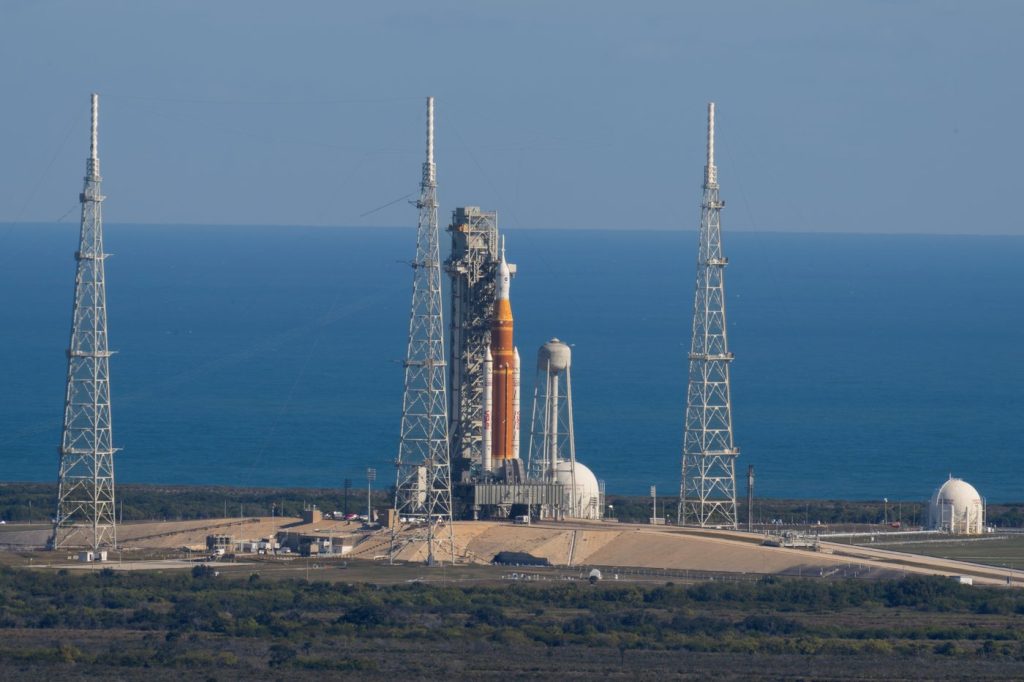
CAPE CANAVERAL, Fla. — NASA initiated a critical two-day practice countdown on Saturday, marking a key step toward the fueling of its new moon rocket. This crucial test will determine the timing of a lunar flyby mission involving four astronauts who are set to become the first humans to launch toward the moon since 1972.
Commander Reid Wiseman and his crew are currently in quarantine to prevent exposure to germs. They will monitor the dress rehearsal from their base in Houston, Texas, before proceeding to the Kennedy Space Center in Florida, once the rocket receives clearance for flight.
The Space Launch System (SLS) rocket, which stands at an impressive 322 feet (98 meters), was moved out to the launch pad two weeks ago. If the fueling test, scheduled for Monday, proves successful, NASA aims to attempt a launch within the subsequent week. As part of the process, teams will fill the rocket's tank with over 700,000 gallons of super-cooled fuel, stopping just half a minute before the engines are set to ignite.
Originally planned for an earlier date, the fueling demonstration was postponed by a bitter cold spell, resulting in a revised launch window. The earliest potential launch date is now set for February 8.
Once launched, astronauts aboard the Orion capsule, mounted atop the SLS rocket, will embark on a mission that will take them around the moon and back to Earth, culminating in a splashdown in the Pacific Ocean. The entire mission is expected to span nearly 10 days.
NASA's Apollo program, which ran from 1968 to 1972, saw a total of 24 astronauts journey to the moon, with 12 of them actually walking on its surface. The upcoming Artemis II mission marks another significant milestone in the United States' ongoing efforts to explore lunar and planetary bodies.
This countdown and upcoming mission represents a renewed commitment to human space exploration, building on the legacy of past lunar missions while looking forward to future endeavors in deep space exploration.








