

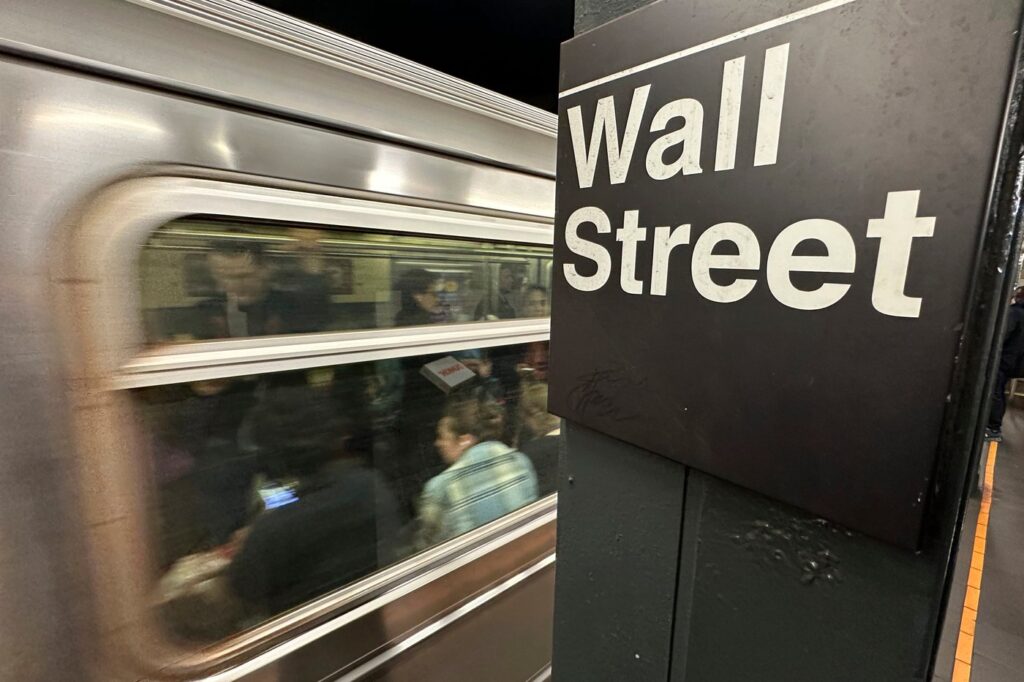
HONG KONG (AP) Asian stocks faced a decline on Tuesday, mirroring losses on Wall Street as U.S. stocks experienced a retreat from their record highs. Oil prices also saw a decrease after earlier rising due to escalating tensions in the ongoing conflict between the United States and Iran.
Despite a slight gain in U.S. futures, which edged 0.1% higher, regional trading activity was muted. Markets in Japan, South Korea, and mainland China were closed for holidays, contributing to the lower trading volumes across Asia.
In Hong Kong, the Hang Seng Index fell by 1.1%, closing at 25,805.98. Meanwhile, Australia’s S&P/ASX 200 declined by 0.5%, finishing at 8,649.80. Taiwan's Taiex also saw a minor drop of 0.2%, ending the day at 40,626.22.
The fragile ceasefire between the U.S. and Iran was tested on Monday when the U.S. military reported that it had sunk six Iranian small boats that were targeting civilian ships. Notably, two U.S.-flagged ships managed to pass through the strategic Strait of Hormuz, a crucial waterway for oil and gas transport which remains largely closed due to persistent tensions.
The United States had previously issued demands for Iran to reopen the strait and imposed a sea blockade on Iranian ports. President Donald Trump's "Project Freedom" plan, which aims to assist in guiding stranded ships through the Strait of Hormuz, began implementation on Monday.
Brent crude oil, the international benchmark, decreased by $1.22, settling at $113.22 per barrel after peaking above $114 on Monday, where it had gained nearly 6%. In contrast, benchmark U.S. crude slipped $2.08, ending the day at $104.34 per barrel. Prior to the outbreak of war in late February, oil prices were approximately $70 per barrel.
Negotiations aimed at achieving a permanent resolution to the war have stalled, particularly following heightened tensions when the United Arab Emirates (a U.S. ally) reported being attacked by Iran for the first time since the ceasefire was established last month. Analysts from ING Bank, Warren Patterson and Ewa Manthey, noted signs of the ceasefire deteriorating and warned that the continuation of "Project Freedom" could lead to further escalation of the situation in the Persian Gulf.
On Wall Street, the benchmarks closed lower on Monday. The S&P 500 fell by 0.4% from its most recent record high, finishing at 7,200.75. The Dow Jones Industrial Average dropped 1.1%, ending at 48,941.90, while the Nasdaq composite, dominated by technology stocks, decreased by 0.2% to close at 25,067.80.
Notably, shares of GameStop experienced a significant decline, dropping by 10.1% after the company announced its intention to acquire eBay, which boasts a market value approximately four times that of GameStop.
The U.S. dollar showed slight upward movement, rising to 157.27 Japanese yen from 157.25 yen. The euro was trading at 1.1687, a decrease from $1.1689.
This snapshot of the markets reveals a challenging environment for investors, with geopolitical tensions weighing heavily on economic prospects and market dynamics across Asia and beyond.








