

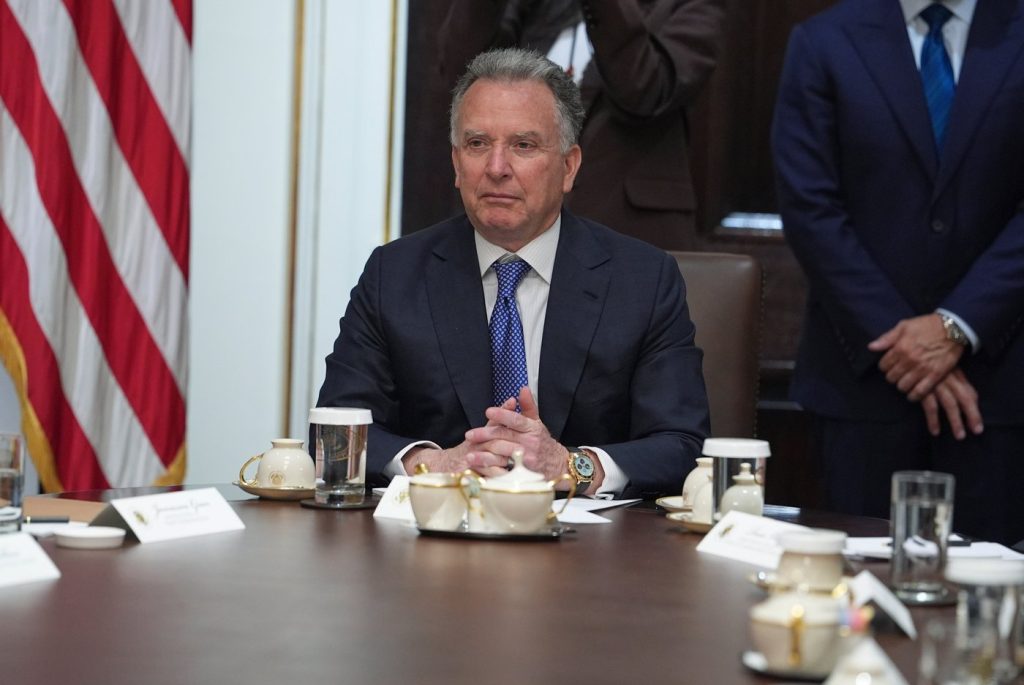
DUBAI, United Arab Emirates (AP) – Iran and the United States are set to engage in discussions on Friday in Oman, marking yet another round of talks centered around Tehran's nuclear program. This follows a significant escalation in tensions, highlighted by Israel's 12-day military campaign against Iran in June and the subsequent brutal suppression of nationwide protests by the Islamic Republic.
U.S. President Donald Trump has maintained pressure on Iran, hinting at possible military action in response to the killing of protesters or an increase in executions related to the unrest. Following the June conflict, discussions that had previously taken place in Rome and Muscat, Oman, were disrupted, prompting Trump to refocus attention on Iran's nuclear ambitions.
The dialogue between the U.S. and Iran was initiated by Trump, who sent a letter to Iran's 86-year-old Supreme Leader Ayatollah Ali Khamenei on March 5, 2025, in which he conveyed his hope for negotiations, warning that military intervention would have disastrous consequences. This letter was acknowledged in a subsequent television interview by Trump, where he emphasized the need for talks to prevent military action.
Despite previous tensions, including an angry response from Khamenei to Trump's earlier correspondences, the diplomatic efforts seem increasingly critical. Trump's initial outreach to North Korean leader Kim Jong Un resulted in unprecedented face-to-face meetings, although those dialogues did not culminate in any agreements. To facilitate further discussions, Oman has played a mediating role, helping to arrange meetings between U.S. Mideast envoy Steve Witkoff and Iranian Foreign Minister Abbas Araghchi.
The negotiations, however, have faced challenges. Witkoff made comments suggesting a possible agreement on Iran's uranium enrichment at a level of 3.67%, consistent with the 2015 nuclear deal made under former President Barack Obama. Yet, U.S. officials have taken a firm stance, insisting that Iran should not have any enrichment abilities, a demand that Tehran adamantly rejects.
The backdrop of these discussions includes Israel's military actions earlier this year, which included bombings of Iranian nuclear facilities. Iran acknowledged the significant impact of this military campaign, ceasing all uranium enrichment activities as of November 2025, although access to the bombed sites by International Atomic Energy Agency inspectors remains restricted.
Amidst these geopolitical tensions, Iran has faced domestic upheaval, with widespread protests igniting in late December 2025 owing to the country’s faltering economy and the collapse of its currency, the rial. In response, the Iranian government implemented a violent crackdown, resulting in thousands of deaths and detaining tens of thousands of protesters.
For decades, Iran has asserted the peaceful nature of its nuclear program. However, the Iranian government has escalated its rhetoric about pursuing nuclear weapons, especially as it currently enriches uranium to levels close to weapons-grade at 60%. The 2015 nuclear agreement had allowed Iran to enrich uranium up to 3.67% while maintaining a smaller stockpile, but current assessments show Iran's stockpile has surged to around 9,870 kilograms (21,760 pounds), with a portion enriched to 60% purity.
U.S. intelligence estimates indicate that while Iran has not begun an active weapons program, it is engaged in activities positioning itself to develop a nuclear device if it chooses. Relations between Iran and the United States have been marked by decades of tension, peaking with the 2015 nuclear deal, which Trump unilaterally withdrew from in 2018, fueling ongoing conflicts in the Middle East.








