

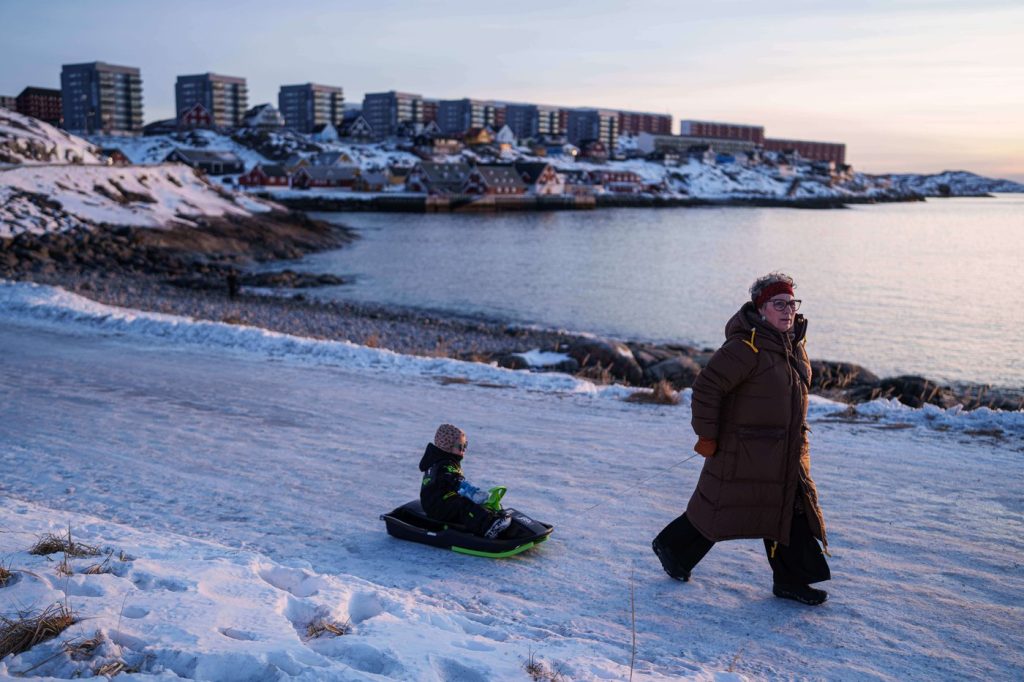
The establishment of a new Canadian consulate in Nuuk, Greenland, has sparked optimism for increased collaboration on critical issues such as climate change, Inuit rights, and defense strategies amid escalating tensions surrounding U.S. President Donald Trump's annexation threats. Foreign Affairs Minister Anita Anand is scheduled to officially inaugurate the consulate on Friday, February 5, 2026. The consulate has already been operational for several weeks, albeit quietly.
Aaju Peter, an Inuit lawyer and artist from Iqaluit, underscored the historical significance of this diplomatic move, stating, “This should have happened 300 years ago.” She expressed the potential for valuable exchanges and collaborations between Inuit communities in Canada and Greenland, particularly in improving living standards.
Peter emphasized the consulate's crucial role in demonstrating solidarity with Greenland, which faces unprecedented threats due to Trump's claims for U.S. control over the territory. “It’s a real threat,” she commented, noting the psychological impact on residents, especially children, who worry about their safety amidst such discussions.
The anxiety in Greenland heightened after Trump's aggressive rhetoric concerning the territory, prompting urgent high-level diplomatic meetings in Europe. His claims at the World Economic Forum in Davos, Switzerland, further fueled discussions on the implications of such threats, including concerns about the viability of the NATO military alliance.
In a bid to secure Greenland's territorial integrity, Canada had planned the consulate's establishment before Trump's provocative remarks. The Greenlandic government has announced plans to open a diplomatic office in Canada by February 2024, likely within the Danish embassy in Ottawa. In December 2024, Prime Minister Justin Trudeau pledged to increase Canada’s Arctic presence by opening additional consulates, including ones in Nuuk and Anchorage, Alaska.
Canada's Arctic foreign policy recognizes the need for vigilance as climate change opens new shipping routes and increases accessibility to valuable minerals and gas reserves. Trump’s baseless assertions about Chinese and Russian presence in Greenland have been debunked, with analysts noting ongoing strategic interests are concentrated elsewhere.
The launch of the consulate, initially set for November but postponed due to inclement weather, will be attended by prominent dignitaries, including Gov.-Gen. Mary Simon and Canada’s Arctic Ambassador Virginia Mearns, both of whom are Inuit. Canadian coast guard vessels will be present to signify Canada’s commitment to Greenland’s security.
Peter highlighted potential collaborations in education and information dissemination, noting Greenland's advanced educational system and robust broadcast media that keep its populace informed about national issues. She remarked on how Inuit in Canada could learn from these approaches, while also suggesting that Canadian Rangers could work alongside Greenlandic fishermen as a protective measure in the Arctic region.
Further, Natan Obed, president of Inuit Tapiriit Kanatami, pointed out that Greenland surpasses Canada in the number of doctors per capita in the Arctic and uses its Indigenous dialect as the primary language in schools—contrasting with the limited usage of Inuktitut in Canadian education systems. “We see more indicators of equity—especially social equity—and signs of sustainable communities in Greenland,” said Obed, while also acknowledging the strong preservation of cultural traditions among Inuit in Canada.
Denmark’s Ambassador to Canada, Nikolaj Harris, expressed optimism regarding the prospects of “concrete co-operation” that could benefit both Canada and Greenland. He highlighted potential knowledge-sharing opportunities in areas like building hydroelectric lines and developing infrastructure in remote regions.








