

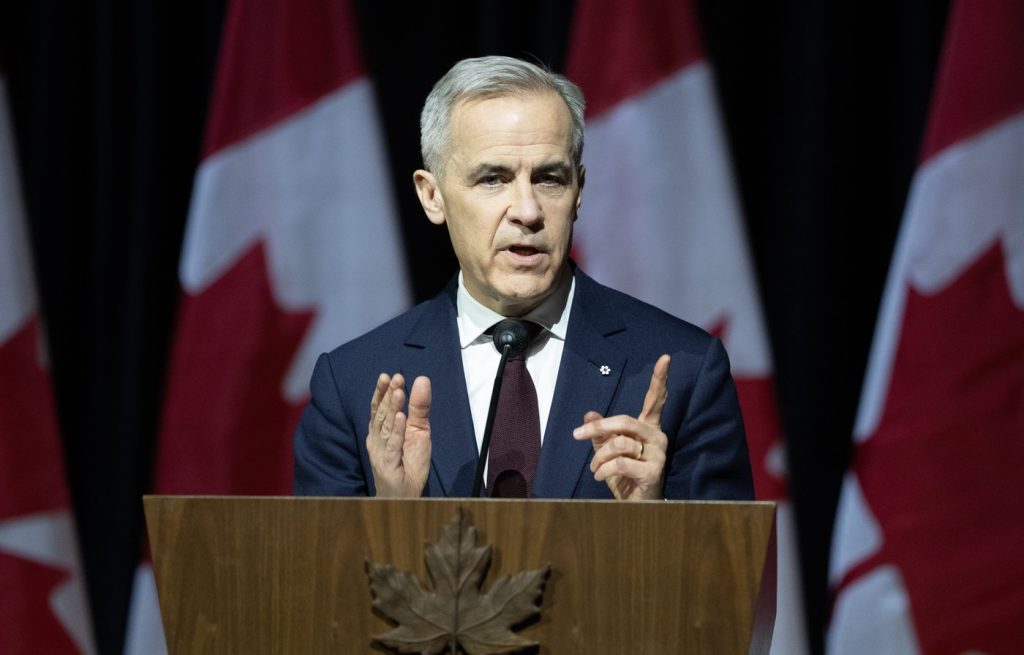
OTTAWA — On February 4, 2026, Prime Minister Mark Carney addressed an audience at an event celebrating 30 years of Black History Month in Canada, highlighting the profound narrative of Black Canadians as one characterized by "injustice met with resilience." The event took place at the Canadian Museum of History located in Gatineau, Quebec, where Carney emphasized the importance of acknowledging both the strides made and the challenges faced throughout Canadian history.
Carney recognized the historical existence of slavery within the colonies that would eventually form Canada and pointed out that even after this dark chapter ended, there were still lingering practices of segregation. His remarks drew attention to the ongoing struggles faced by Black communities in Canada, asserting, "It's a story that must reckon with both the shadow and the light." He underscored that the lessons learned from Black history are not just relevant to other countries, but are an integral part of Canada’s own narrative.
Celebrating pivotal figures in Black Canadian history, Carney acknowledged trailblazers such as activist Kay Livingstone and journalist Carrie Best, both of whom broke barriers and contributed significantly to the nation’s story. He addressed the current challenges, stating that "inequalities persist," including the underrepresentation of Black entrepreneurs in Canada and the alarming statistic that one in three Black Canadians experiences food insecurity. His administration's commitment to addressing these disparities was evident as he referenced financial measures included in the fall federal budget designed to support Black entrepreneurship and mental health initiatives targeted at Black Canadians.
At the federal government's official reception for Black History Month, which honors "Black brilliance across generations," Jean Augustine, the first Black female Member of Parliament in Canada, took the stage before Carney. Augustine, who was instrumental in introducing the legislation that established February as Black History Month, urged attendees to "carry forward the legacy of inclusion and justice." She reflected on the early perception of Black History Month as merely symbolic and argued that its significance lies in its capacity to influence public perception and values.
Augustine asserted, "A country's calendar is a statement of values," indicating that recognizing February as Black History Month serves to affirm the importance of Black stories in Canada's broader historical context. She emphasized that the acknowledgment of these narratives is not solely for Black individuals but is essential for all Canadians. Augustine concluded her address by proclaiming that Black history is fundamentally Canadian history and should be celebrated not just in February, but throughout the entire year.
Carney's closing remarks mirrored Augustine's sentiments, as he expressed gratitude for the collective mission of empowerment and resilience within Black Canadian communities. Quoting Livingstone, he encouraged the audience with the phrase, "Onwards, upward, together we climb," fostering a sense of unity and shared purpose.
This significant event marks a notable moment in Canadian history, as it seeks to highlight the contributions and ongoing struggles of Black Canadians while reaffirming the nation's commitment to diversity and inclusion. Through such gatherings, leaders hope to inspire future generations to appreciate and advocate for the richness of Black history in shaping the collective Canadian identity.








