

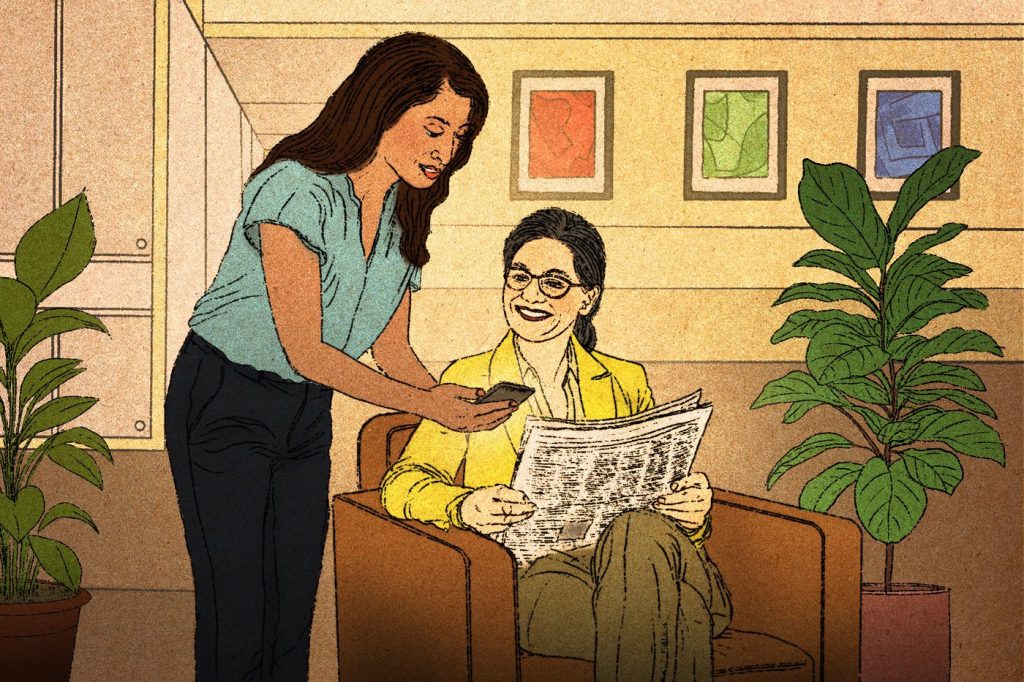
Barbara Goldberg, the CEO of a Florida public relations firm, brings a stack of newspapers to the office daily, expressing her fondness for the tactile experience of holding printed material. She actively searches for news developments relevant to her clients, emphasizing her preference for traditional media over digital sources. In contrast, her Generation Z employees, who have grown up with smartphones, do not share her devotion to newspapers and are more attuned to trends emerging on platforms like TikTok and Instagram.
This generational divide in media consumption habits becomes apparent during weekly Monday staff meetings, which were initially organized to discuss current news and its implications for the firm's clients. Instead, these meetings frequently shift focus to contemporary slang, digital tools, and memes. Goldberg notes the value of this shift, realizing that her younger colleagues possess insights into cultural conversations that she may overlook.
The U.S. workforce currently encompasses at least five generations, leading to potential misunderstandings due to differing approaches to tasks shaped by age. Some organizations are transforming these generational divides into assets through reverse mentoring programs. Unlike traditional mentorship models where older employees impart knowledge to younger ones, reverse mentoring allows less experienced staff, often from younger generations, to educate seasoned colleagues on current trends and technologies.
Goldberg regards the differences in generational perspectives as leverageable assets, referring to them as a "superpower" that fosters innovation and collaboration. Companies like Estée Lauder have implemented similar reverse mentoring initiatives to stay competitive in rapidly changing markets. Peri Izzo, an executive director at Estée Lauder, shared that the program, which began a decade ago, now boasts about 1,200 participants. In this initiative, millennials and Gen Z mentors guide baby boomers and Generation X mentees through the evolving landscape of consumer behavior influenced by social media.
Interactions in the program often start with icebreaker activities, such as quizzes on Gen Z vocabulary, which illustrate the generational gap in language and context understanding. Madison Reynolds, a 26-year-old product manager at Estée Lauder, highlights the exchange of knowledge that occurs when she teaches her older colleagues contemporary phrases and expressions.
In another example of cross-generational mentorship, 81-year-old Bruce Haines, the managing partner of the Historic Hotel Bethlehem, utilized local college students to introduce new marketing strategies. The interactions aided the hotel in transitioning its marketing focus from Facebook to Instagram and YouTube, catering to a younger audience. Suggestions that emerged from these student partnerships, such as offering prepackaged ice cream pints, led to an uptick in sales for the hotel.
Carson Celio, a 26-year-old account supervisor at Goldberg's firm, illustrates the reciprocal nature of learning in a multigenerational workplace. With her background of extensive online interaction, she sought Goldberg's guidance on in-person networking, which she found daunting after the pandemic shifted many communications online.
Similarly, Dr. Alexa B. Kimball, CEO of Harvard Medical Faculty Physicians, adopts different communication styles depending on the age groups of her colleagues. She identifies the need for adaptable communication, especially when dealing with long email chains or short text messages from younger employees. A reverse mentoring program helped her team navigate diverse communication preferences as they embraced new technologies.
At Abbott, a healthcare technology company, Robert Poole, aged 62, and Shahad Almahania, aged 33, collaborate closely. As Poole approaches retirement, Almahania is learning the intricacies of the equipment that Poole has operated for decades. This partnership not only facilitates knowledge transfer but also allows Poole to gain insights into modern communication tools, such as group chats and emojis.
Leena Rinne, a vice president at an online learning platform, emphasizes that every age group seeks similar workplace aspirations: supportive leadership, opportunities for growth, and mutual respect. The implementation of reverse mentoring exemplifies how organizations can bridge generational gaps while fostering a collaborative and innovative work environment.








