

NEW DELHI (AP) - A coalition of major trade unions and farmers' groups in India initiated a nationwide strike on Thursday to protest against an interim trade deal with the United States that they argue undermines the interests of farmers, small businesses, and workers.
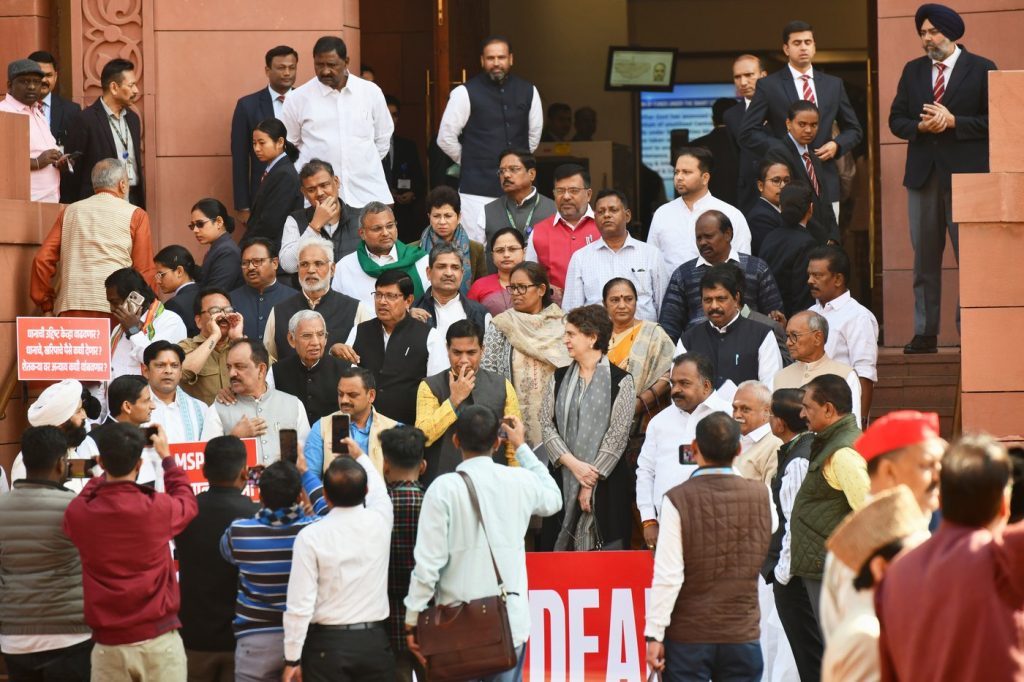
In the Indian Parliament, lawmakers from opposition political parties strongly criticized Prime Minister Narendra Modi, demanding that the government scrap the trade deal. They chanted slogans such as "Narendra Modi, surrender Modi," highlighting the discontent over the agreement.
The one-day strike resulted in partial disruptions of public services and manufacturing activities, which served to emphasize the growing resistance to Modi's reform agenda and the political risks associated with promoting market-oriented policies ahead of key state elections later this year.
Amarjeet Kaur, the general secretary of the All India Trade Union Congress, a prominent union participating in the strike, expressed concerns about the trade deal with Washington. She stated that it would allow subsidized agricultural products from the U.S. to flood the Indian market, thus threatening the livelihoods of millions of small farmers. "Cheap American farm produce will be dumped in India, making it difficult for our farmers and small businesses to compete," Kaur asserted.
The Indian government, however, has defended the interim trade pact as a necessary step towards expanding exports, attracting investments, and strengthening strategic ties with the U.S. Indian Trade Minister Piyush Goyal recently stated that the interests of farmers in the agriculture and dairy sectors were being protected under the terms of the new agreement.
Earlier this month, India and the U.S. announced progress towards a formal trade pact, unveiling an interim framework intended to lower tariffs and deepen economic relations. A fact sheet issued by the White House indicated that the reciprocal tariff on Indian goods would decrease from 25% to 18%, while an additional 25% penalty tariff on India’s purchases of Russian oil would be lifted in exchange for India halting its Russian oil purchases and committing to buy $500 billion worth of U.S. goods, including energy, along with reducing taxes and non-tariff barriers.
In addition to opposing the trade deal, the protesters voiced their disapproval of Modi's plans to privatize state-run companies and implement new labor codes. They described these sweeping changes as "deceptive fraud" against workers. In defense of these labor reforms, Indian officials have argued that such changes are essential to enhance efficiency and create jobs in the long run.
As the strike unfolded, it underscored the significant tensions present in India regarding economic policy and reform. The contrasting views of the government and the opposition reveal a deep divide over how best to address the needs of farmers, workers, and the broader economy in the context of globalization and market dynamics.








