

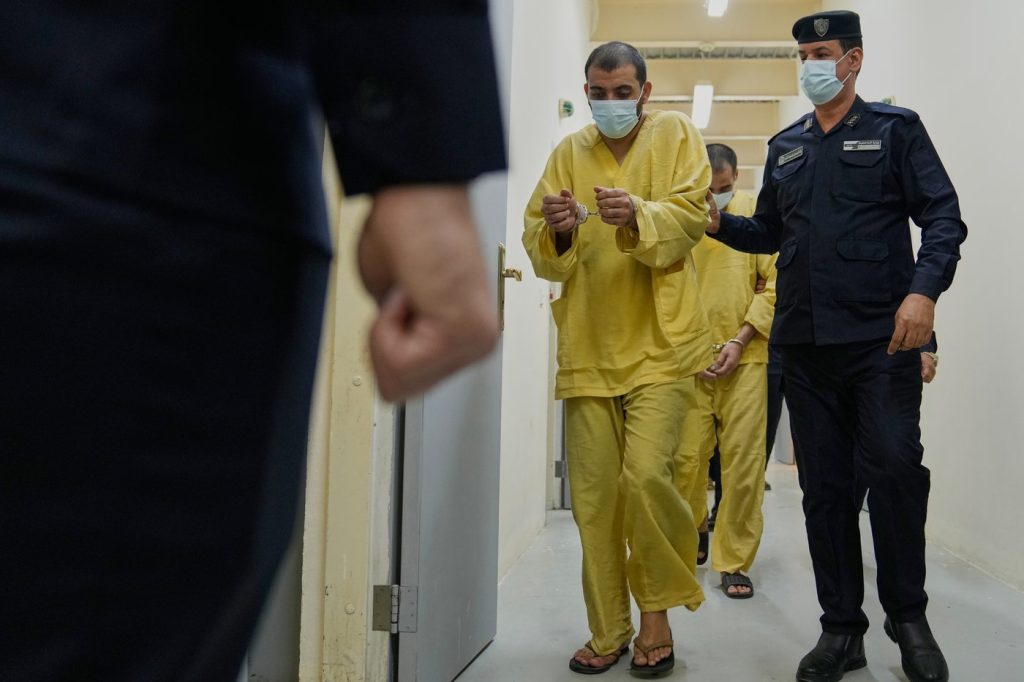
BAGHDAD (AP) – Inside a highly secured detention facility in Baghdad, Iraqi officers are interrogating men from numerous countries who are suspected of being affiliated with the Islamic State (IS) group. These individuals were recently transferred from Syria to Iraq at the request of Baghdad, a move that has been positively received by the U.S.-led coalition which had been combating IS for several years.
Over the span of several weeks, U.S. military escort teams facilitated the transfer of more than 5,000 IS detainees from 60 different nationalities, originally held in prisons operated by the U.S.-backed and Kurdish-led Syrian Democratic Forces (SDF) in northeastern Syria, to Baghdad. The primary aim of these transfers is to mitigate the fears that the ongoing conflict in Syria could lead to IS prisoners escaping detention camps and regrouping to conduct attacks in Iraq and Syria.
On Thursday, the Associated Press received rare access to the vast detention facility in western Baghdad, known as Al-Karkh Central Prison—commonly referred to as Camp Cooper since the 2003 U.S.-led invasion that toppled Saddam Hussein. This facility is currently the site of extensive interrogations.
The need for a legal framework is pressing as Iraq aims to put on trial many of the thousands of IS detainees who spent years in Syrian detention without legal representation or judicial processes. Iraqi Judge Ali Hussein Jafat, who leads the committee interrogating the incoming IS detainees, described the situation as challenging due to the overwhelming number of prisoners, which include individuals from 14 Arab nations and 46 others worldwide.
Notably, many of these detainees are suffering from respiratory diseases; thus, a medical center has been established within the facility to address their health issues. In anticipation of the new arrivals from Syria, thousands of long-term inmates were relocated to other prisons throughout Iraq to make space.
The interrogation process is systematic yet staggered, with detainees being brought in handcuffed and dressed in yellow or brown uniforms while wearing medical facemasks. Once inside, they are ushered into interrogation rooms where their details are meticulously documented. Observations from the AP indicated that while questioning occurred, it was difficult to ascertain whether the detainees were under any pressure or duress during these sessions. Some detainees were taken to the medical center for health evaluations.
This transfer initiative gained momentum following Syria's new government, which ousted strongman Bashar Assad in December 2024, commencing military offensives in January to reclaim territory from the Kurdish-led SDF. Subsequently, a ceasefire was established, facilitating the withdrawal of SDF forces. These developments coincided with an announcement from the United States regarding the transfer of nearly 9,000 detainees held across Syrian detention centers to Iraq, with 5,383 of these IS suspects already relocated.
The Islamic State's dark past stems from its declaration of a self-styled caliphate that spanned significant areas of Syria and Iraq in 2014. This local stronghold attracted extremists globally, who orchestrated widespread attacks that resulted in numerous fatalities across Europe, Arab countries, and Asia. Furthermore, during its reign, IS committed heinous acts including enslavement, executions, and public executions of perceived enemies, resulting in substantial human suffering.
Despite the international campaign led by a U.S.-led coalition that defeated IS in Iraq in 2017 and in Syria in 2019, concerns about the current detainees remain high. Judge Jafat indicated that some of these individuals pose significant dangers, mentioning detainees from diverse nations including Australia, Canada, Turkey, Germany, Britain, and former Soviet states, with even an Israeli-Arab among them. Many nations are hesitant to repatriate their nationals. Judge Jafat emphasized that those who violated laws in Iraq will be tried there, with proceedings open to the public.








