

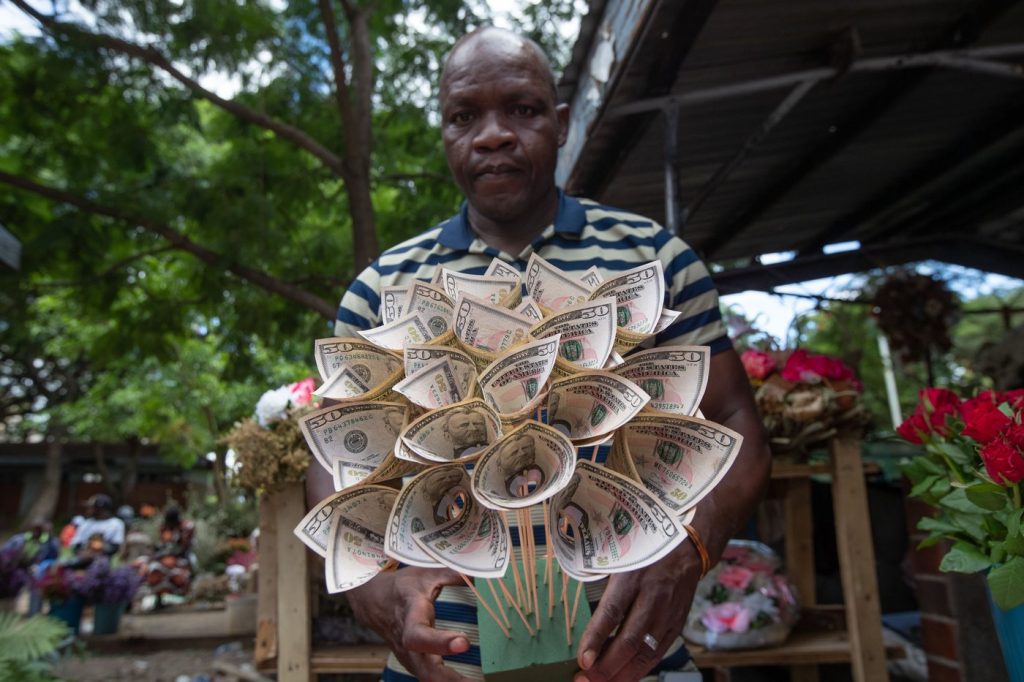
HARARE, Zimbabwe (AP) – In Zimbabwe, love and creativity intertwine as locals craft inventive gifts for Valentine’s Day, reflecting the nation's economic challenges and a growing focus on sustainability. Amid rising inflation and a cash-centric economy, traditional expressions of affection are morphing into practical and resourceful alternatives.
As Valentine's Day approaches, florists are experiencing a surge in demand for unique "money bouquets," which are becoming increasingly popular as symbols of romantic appreciation. In Harare, Tongai Mufandaedza, a seasoned florist, assembles these arrangements skillfully, combining rolled and pinned $50 notes with fresh roses. Mufandaedza has noticed a significant improvement in business due to the popularity of these creative bouquets, stating, “Everyone wants to impress.” Prices for these money bouquets range widely; for example, a $10 bouquet in cash can cost around $25, surprisingly making them cheaper than traditional floral arrangements.
As Generation Z leads this trend, the appeal of money bouquets extends to various age groups. Mufandaedza mentioned that some parents are even purchasing these bouquets for their daughters to protect them from unsavory relationships. Customers like Kimberleigh Kawadza appreciate the shift in gifting culture, expressing admiration for the trend and its emphasis on practicality. In today’s economic climate, where survival takes precedence, combining cash with the gesture of gifting flowers enhances the emotional value of the gift.
The U.S. dollar, which has been a dominant currency in Zimbabwe since hyperinflation led to the abandonment of the local currency in 2009, remains highly regarded. Despite the reintroduction of a local currency, economic realities dictate that cash holds more immediate significance than luxury items. Crisp banknotes are a rarity, as worn ones are often insufficient for decorative use, prompting inventive traders to supply clean notes for bouquets.
Across other African nations, the concept of money bouquets is gaining traction as well. For instance, in Kenya, where strict regulations on the modification of currency were recently implemented, arguments surrounding the legality of money bouquets sparked significant online discourse. In Zimbabwe, however, there are no such legal restrictions in place, allowing for further exploration of this trend.
In addition to cash-centric gifts, some Zimbabweans express their affection through creativity by transforming scrap materials into meaningful keepsakes. At Simpli Simbi, a gift shop in Harare, items made from recycled aluminum, such as key rings and jewelry, are on display. The shop's founder, Stephanie Charlton, emphasizes the beauty in recycling, stating that these creations tell a significant story and offer a more enduring alternative to fleeting gifts like flowers and chocolates.
Charlton’s shop, which originally catered to tourists, has seen a growing local customer base motivated by increasing environmental consciousness. By turning discarded materials, like car parts, into attractive gifts, Charlton and her team provide a sustainable option that resonates with the values of modern consumers. As she puts it, these gifts, which could have ended up in a landfill, now symbolize appreciation and the potential for renewed beauty.
Overall, the innovative ways in which Zimbabweans are celebrating love—whether through money bouquets or recycled gifts—illustrate a unique blend of affection and practicality, reflecting the challenges and creative solutions present in the economy today.








