

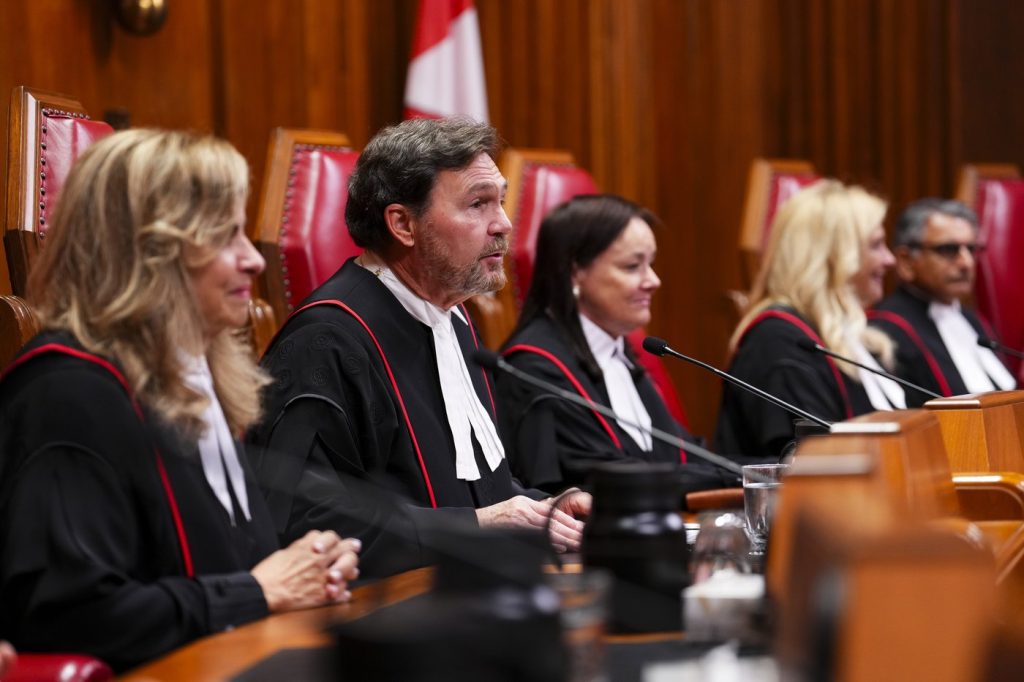
OTTAWA — The Supreme Court of Canada commenced hearings regarding the potential overturning of the results from the recent federal election held in the spring of 2026 for the Montreal-area riding of Terrebonne. This case centers around the narrow victory of Liberal candidate Tatiana Auguste over Bloc Québécois candidate Nathalie Sinclair-Desgagné, who is contesting the validity of the election outcome.
During the proceedings, Julius Grey, acting as the legal representative for Sinclair-Desgagné, emphasized the Supreme Court's crucial role in ensuring that the rightful representative occupies a seat in the House of Commons. This case arose following the judicial recount of the Terrebonne riding, where the results indicated that Auguste won by only a single vote after the April 28 general election returned the Liberals to power with a minority government.
The controversy primarily stems from an incident involving a voter who claimed she had mailed her ballot for the Bloc. However, this ballot was allegedly not counted due to a mistake regarding the address on the envelope. The implications of this incident have prompted legal scrutiny, as it raises questions about the integrity of the electoral process in Canada.
In a previous ruling in October, a Superior Court judge dismissed Sinclair-Desgagné’s request for a new election, asserting that the "human error" related to the address issue did not compromise the integrity of the electoral system as a whole. This decision has been a point of contention leading to the Supreme Court's involvement.
As part of the ongoing hearings, the justices will later hear counterarguments from Auguste's legal team, which is poised to argue that categorizing a straightforward clerical mistake as an election irregularity could lead to a problematic precedent. Such a ruling, they contend, might open a "Pandora's box" of challenges to electoral outcomes, complicating future elections and potentially undermining public trust in the electoral system.
The Supreme Court's inquiry into this matter comes at a critical time in Canadian politics, highlighting the delicate balance between maintaining electoral integrity and minimizing the potential for frivolous challenges that could disrupt governance. The stakes are high, as the outcome will not only affect the current representation of the Terrebonne riding but could also set significant legal precedents regarding electoral disputes in Canada.
The justices are expected to deliberate thoroughly before arriving at their decision, as the implications of their ruling may extend beyond this particular case, influencing how similar situations are approached in the future. As such, all eyes will be on the Supreme Court as they weigh the arguments presented by both parties in this significant electoral dispute.








