

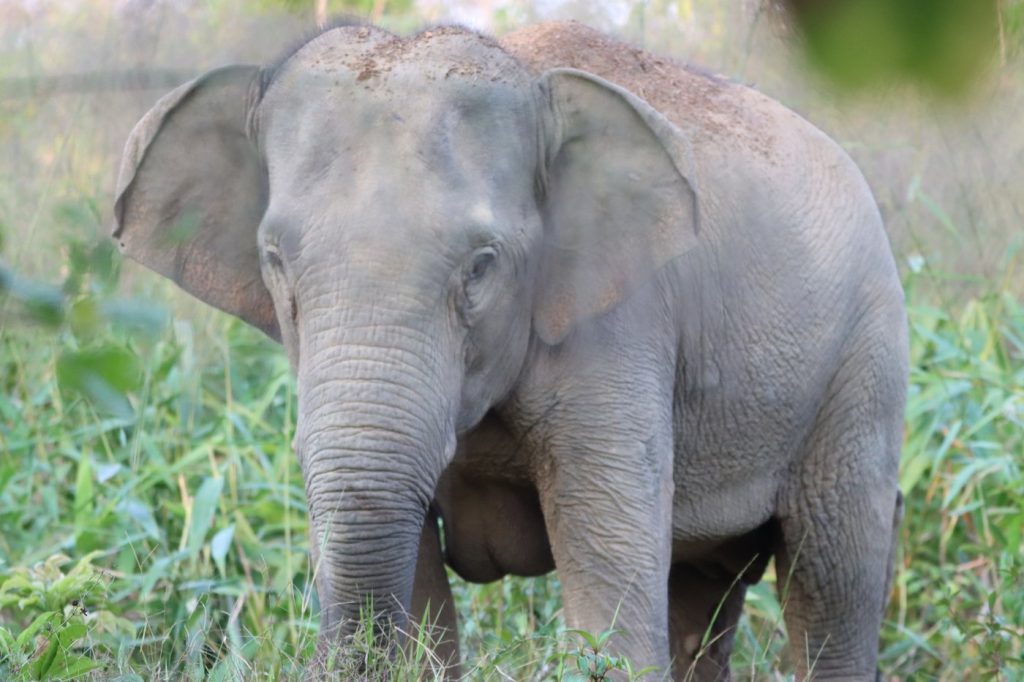
BANGKOK (AP) — Thailand has initiated a groundbreaking program utilizing a birth control vaccine aimed at wild elephants to tackle the escalating conflict between humans and elephants. This challenge has intensified as agricultural activities expand into forested areas, resulting in the encroachment of human and elephant territories.
The initiative seeks to mitigate confrontations that have led to fatal outcomes. As farmland expands, elephants are increasingly forced out of their dwindling habitats in search of food. Official statistics reveal that last year, wild elephants in Thailand were responsible for the deaths of 30 individuals and the injuries of 29 others, alongside over 2,000 recorded incidents of property damage to crops.
Sukhee Boonsang, the director of Thailand's Wildlife Conservation Office, emphasized the pressing need for population control amid a steep increase in the number of elephants inhabiting residential areas. In a previous trial conducted over two years, the office administered 25 doses of a U.S.-manufactured vaccine to domesticated elephants, where seven doses were successfully utilized, yielding promising results. The vaccine functions by preventing fertilization of the eggs without halting ovulation in female elephants.
As of late January, the vaccine has been administered to three wild elephants in Trat province, and authorities are in the process of identifying additional target areas in light of the remaining 15 doses. The vaccine is effective in preventing pregnancy for a span of seven years, after which the elephants can reproduce if they do not receive a booster. Experts will monitor the vaccinated elephants throughout this period.
This vaccination effort has faced criticism, with concerns raised about its potential impact on conservation initiatives. Elephants hold a significant place in Thai culture, having been integrated into farming and transport for centuries and being recognized as a national symbol. Sukhee indicated that the program specifically targets wild elephants in regions experiencing acute human-elephant conflict, where the birth rate of wild elephants is reported to be around 8.2% per year — more than double the national average of approximately 3.5%.
Within the regions identified as conflict hotspots, about 800 of Thailand's estimated 4,400 wild elephants reside. Sukhee pointed out that without proactive measures, the human-elephant conflict will continue to escalate, posing increasing risks to local communities.
In addition to the contraception vaccine, various strategies have been implemented to further alleviate human-elephant conflicts. These measures include establishing additional water and food sources within elephant habitats, constructing protective barriers, and deploying rangers to guide elephants that venture into populated areas back to their natural environments.
Recently, a court-ordered relocation effort in northeastern Khon Kaen province aimed at relocating wild elephants that had clashed repeatedly with local residents incited a public outcry following the death of one elephant during the relocation process. An initial autopsy indicated the elephant succumbed to choking after undergoing anesthesia prior to being moved. Athapol Charoenshunsa, the director general of the Department of National Parks, Wildlife and Plant Conservation, expressed sorrow over the incident while maintaining that proper protocols had been followed and confirmed an investigation is underway to prevent similar occurrences in the future.








