

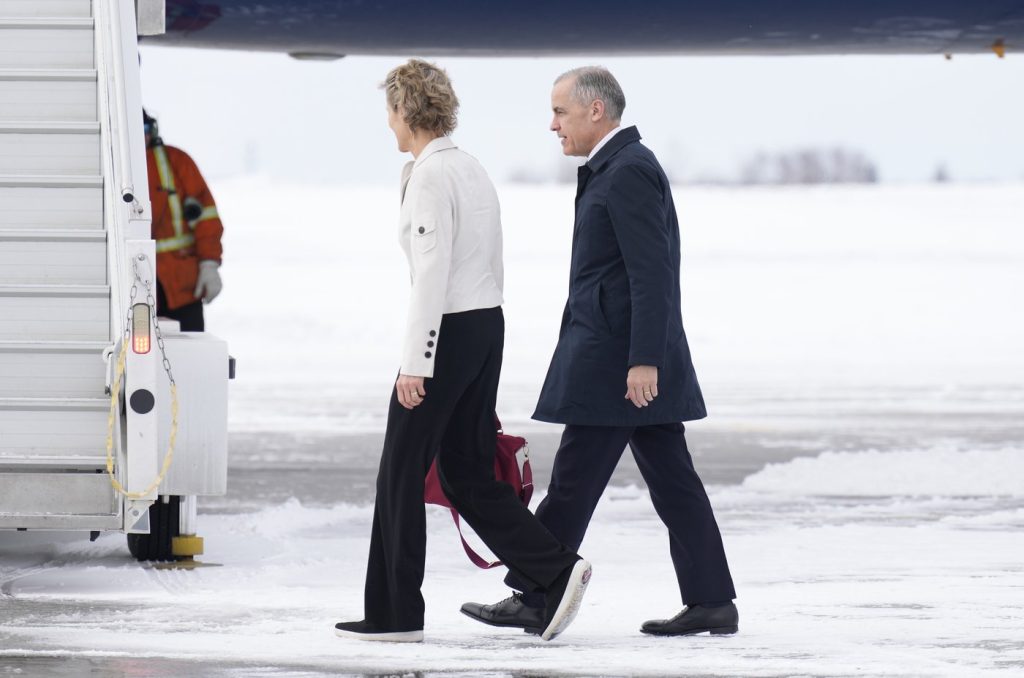
Prime Minister Mark Carney has arrived in India as part of his ongoing Asia trip, which aims to reset the diplomatic relationship between Canada and India, particularly with Prime Minister Narendra Modi’s administration. Both leaders are looking to reduce their nations' reliance on trade with the United States amid the current administration led by President Donald Trump. Carney has been actively traveling across the globe since taking office, advocating for stronger international relationships, particularly highlighted during his recent speech at the World Economic Forum in Switzerland. The Prime Minister's agenda includes navigating the complexities of India's recent trade pact with the European Union, one of the largest deals in history, impacting approximately two billion people. Carney is scheduled to spend two days in Mumbai starting February 27 before moving to New Delhi on March 1 for discussions with Modi.
Meanwhile, Alberta’s finance minister, Nate Horner, is poised to address the budget concerns in Calgary, following the recent presentation of a provincial budget that features significant spending while also revealing a daunting deficit exceeding $9 billion. Horner is set to engage with business leaders at the Calgary Chamber of Commerce, emphasizing the necessity of continued spending in light of low oil prices and a growing population that has strained the province's finances. Opposition parties, particularly the NDP, have criticized Premier Danielle Smith's United Conservative government for alleged economic mismanagement, claiming that past oil profits have been squandered, leaving future generations with significant debt. While the mayors of Alberta's two largest cities show differing opinions on the educational property tax increases, with Calgary's Jeromy Farkas opposing the hike, Edmonton's Andrew Knack has expressed understanding of the need for additional funds for schools.
In economic news, Statistics Canada is set to release data on January 30 regarding the economy's performance at the end of 2025. A Reuters poll indicated economists expect the real gross domestic product (GDP) to remain flat in the fourth quarter. Previous estimates suggested a slight GDP increase of 0.1% in December after a sluggish manufacturing sector caused an economic stall in November. However, there are concerns that significant shifts in trade balances could paint a more optimistic overall picture for the nation's economic performance than indicated by earlier monthly estimates.
On the commemoration front, Canadian veterans of the Persian Gulf War are still seeking recognition for their service, marking 35 years since the conflict concluded. One veteran, Denis Cote, who served as an aircraft technician in Doha, Qatar, recalls the anxiety of entering a war zone without any idea of what was to come. Approximately 4,500 Canadians participated in the U.S.-led operation to liberate Kuwait, marking a significant involvement for the Canadian military since the Korean War in 1953. Veterans are advocating for their service to be officially recognized as wartime service rather than being categorized as "special duty" by the federal government, aiming for greater acknowledgment of their sacrifices.
In health news, the Canadian Paediatric Society is recommending universal cholesterol screening for children aged two to ten. The society's recent position statement highlights that atherosclerosis, characterized by plaque buildup including cholesterol, can begin in childhood and is a significant contributor to heart disease and stroke later in life. Dr. Michael Khoury, the lead author and a pediatric cardiologist, noted that about one in 300 individuals has high cholesterol due to hereditary conditions. He advocates for early detection through blood tests, which can facilitate timely interventions involving lifestyle modifications and, in some severe cases, medication starting from the age of eight.








