

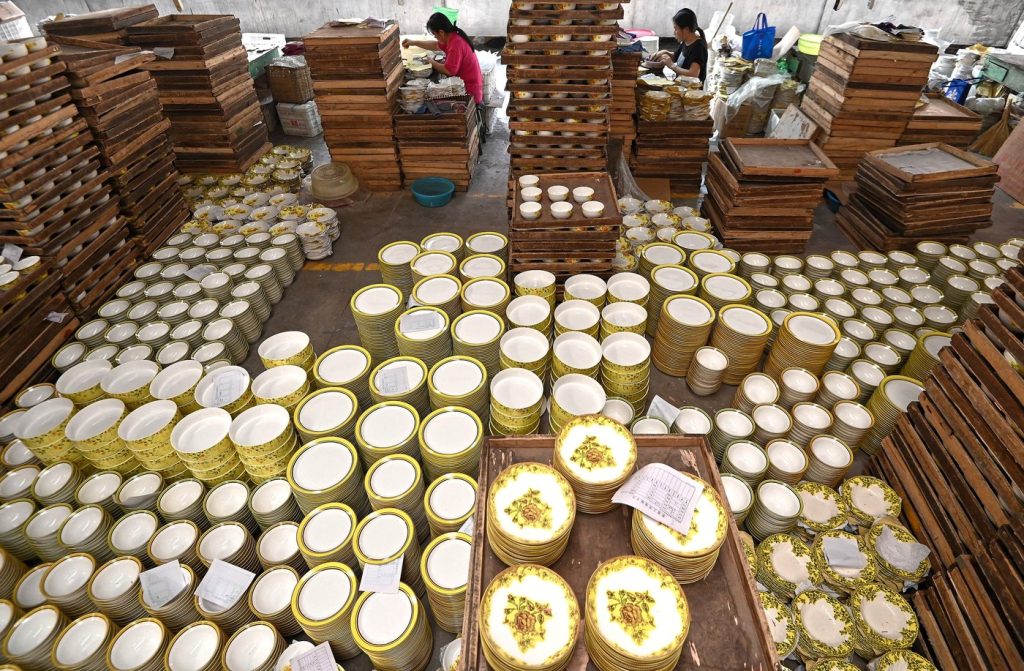
HONG KONG (AP) – China's factory activity contracted for the second consecutive month in February 2023, signaling ongoing challenges in the manufacturing sector. The official manufacturing purchasing managers index (PMI) dropped to 49, down from 49.3 in January, marking a four-month low. This index, reported by the National Bureau of Statistics, operates on a scale of 0 to 100, indicating contraction when below the 50 mark.
In December 2022, the manufacturing PMI recorded a slight rebound at 50.1, breaking an eight-month streak of contraction. However, the return to negative territory in February indicates persisting weakness in manufacturing, largely attributed to sluggish domestic consumption and demand. Huo Lihui, a chief statistician at the National Bureau of Statistics, noted that seasonal factors, including the Lunar New Year holiday—which lasted nine days in mid-February—contributed to the weaker manufacturing data.
Contrastingly, a separate private sector PMI survey by RatingDog, a Chinese credit research and analysis firm, revealed a more optimistic outlook. The private PMI reading for February reached 52.1, a significant increase from January's 50.3, remaining well within the expansion territory and marking the sharpest growth since December 2020. This private survey is generally more reflective of trends among smaller and export-focused private enterprises.
According to Yao Yu, the founder of RatingDog, overseas demand has strengthened, indicating a rebound in exports. This uptick in new export orders suggests that external factors continue to influence China's manufacturing landscape positively. Lynn Song, chief economist for Greater China at ING Bank, remarked that the mixed manufacturing PMI data mirrors trends observed previously, with resilient external demand propelling growth while domestic demand remains disappointingly soft.
A recent Supreme Court ruling against former President Donald Trump's reciprocal tariffs is also anticipated to provide a modest boost to exports and manufacturing activities in the coming months. Zichun Huang, a China economist at Capital Economics, noted that this reduction in U.S. tariffs could have a favorable impact. Additionally, a planned meeting between President Trump and Chinese leader Xi Jinping in April may further extend the truce in trade relations, potentially benefiting Chinese manufacturers.
Despite this positive outlook on exports, experts caution that domestic demand issues will likely persist. Analysts highlight concerns regarding a prolonged downturn in China's real estate sector, which continues to stifle consumption and investment within the economy. These internal challenges will need to be addressed for sustainable growth moving forward.
In a related development, China is set to announce its economic growth target during its upcoming annual national congress, commencing this Thursday. Economists are predicting a growth target of 4.5% or higher, reflecting optimism about potential recovery strategies. Moreover, the congress will seek to approve Beijing's five-year policy blueprint for 2026-2030, focusing on enhancing technological advancements and promoting self-reliance.
This period of economic turbulence underscores the complexities China faces as it navigates both external pressures and internal economic challenges. The mixed signals from manufacturing data illustrate the need for balanced growth strategies that stimulate domestic demand while capitalizing on opportunities for export expansion, thus addressing the dual pressures faced by the Chinese economy.








