

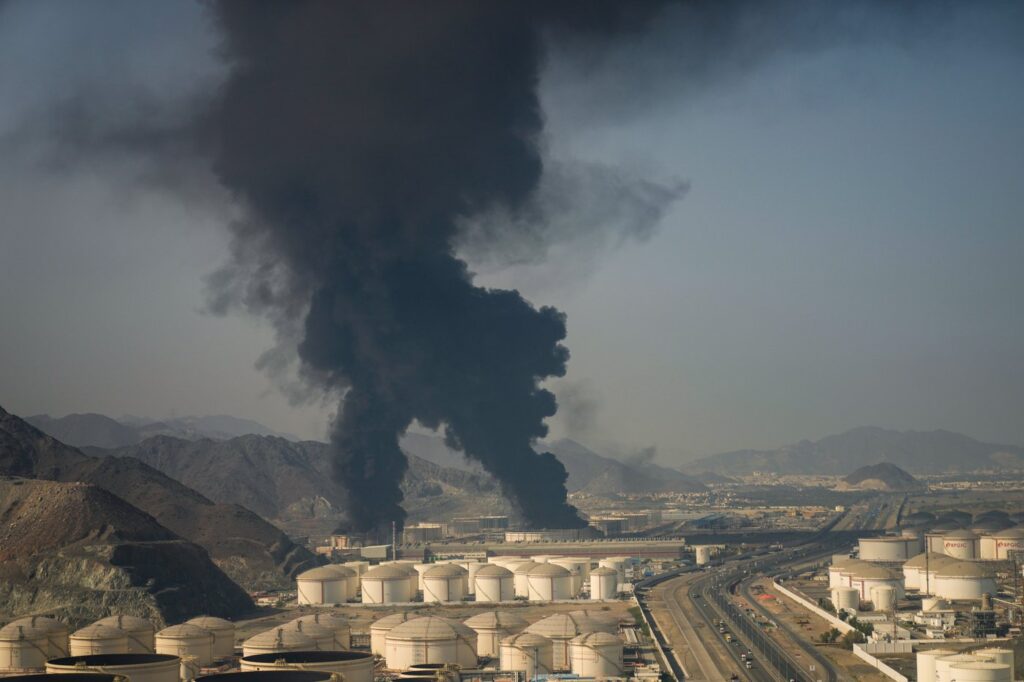
U.S. President Donald Trump expressed his hopes that allies would dispatch warships to ensure the security of the crucial Strait of Hormuz. This statement coincided with an alarming call from Iran, urging citizens to evacuate three major ports in the United Arab Emirates (UAE) amidst the ongoing conflict between Iran and the United States, as well as Israel. Iran's request marked a pivotal moment, as it constituted the first time the country has explicitly threatened assets of a neighboring country that are not associated with the U.S.
Tehran accused the United States of employing UAE ports, docks, and other facilities as launch points for strikes on Kharg Island, which houses the principal terminal managing Iran's oil exports. However, Iran did not present any evidence to corroborate this claim. The regional tensions have escalated dramatically, with Iran's actions intensifying fears of broader conflict involving its nearby neighbors.
In parallel, the conflict involving Israel and Hezbollah has exacerbated the humanitarian situation in Lebanon, resulting in approximately 800 fatalities and the displacement of more than 850,000 residents. This tragic toll highlights the severe consequences of the ongoing warfare in the region.
On Sunday morning, the United Arab Emirates reported a missile attack, prompting local authorities to advise residents to stay in safe locations. This incident was part of a series of military actions that have provoked international concern and raised alarms about regional security.
In a separate incident, on Saturday, the U.S. Department of Defense confirmed the identities of six U.S. service members who lost their lives when a military refueling aircraft crashed on Thursday while conducting operations against Iran in Iraq. The deceased personnel included Maj. John A. Klinner, 33; Capt. Ariana G. Savino, 31; Tech. Sgt. Ashley B. Pruitt, 34; Capt. Seth R. Koval, 38; Capt. Curtis J. Angst, 30; and Tech. Sgt. Tyler H. Simmons, 28, as reported by U.S. officials. This tragic crash occurred in western Iraq after an unspecified incident involving two aircraft within what was described as “friendly airspace,” although the other aircraft involved landed safely.
Additionally, Israel’s military reported that Iran launched another series of missiles targeting Israel early Sunday, which set off sirens in Tel Aviv and resulted in loud explosions being heard throughout the city. These developments indicate an escalating round of hostilities, as the conflict continues to evolve and affect the entire region.
As tensions mount and military actions intensify, both regional and international actors are faced with a critical and rapidly changing situation that could have far-reaching implications for stability in the Middle East.








