

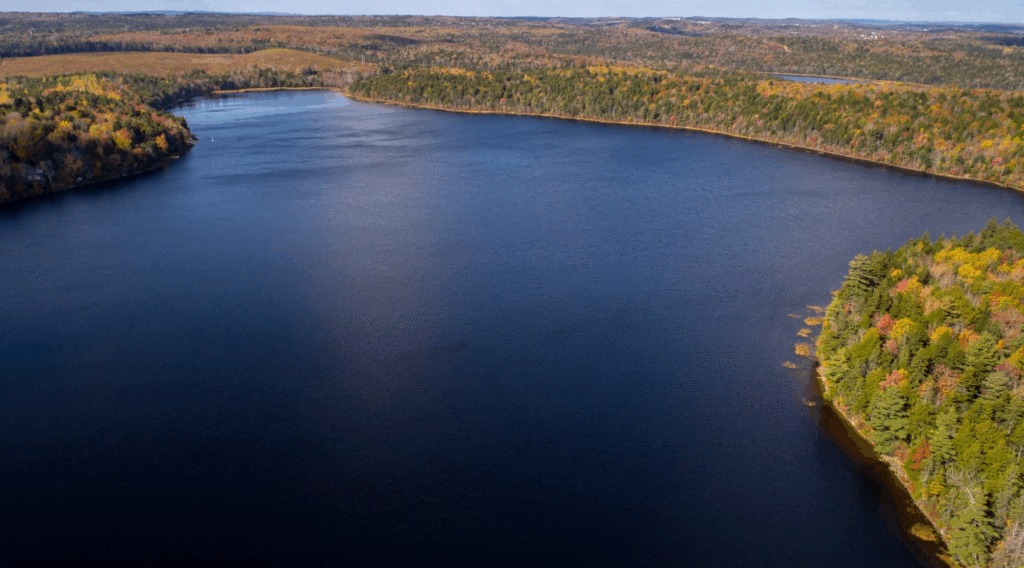
A Halifax ecological group has expressed concerns regarding the environmental sustainability of a proposed Highway 101 connector, suggesting that an environmental assessment will reveal the irreversible damage the project could inflict on local wildlife. Jillian Ramsay, the sustainable cities co-ordinator at the Ecology Action Centre, emphasized that any development near Sandy Lake—located at the proposed connector's edge—poses significant environmental risks.
Ramsay highlighted that Sandy Lake is home to 15 rare and endangered species, including the Atlantic salmon, which is particularly vulnerable to pollution and any disruption that might affect water quality. She explained that siltation or runoff could change the water's pH, adversely impacting these sensitive ecosystems.
On Monday, the government announced it is soliciting proposals for engineering services to prepare for an environmental assessment of the project. This assessment aims to identify measures to avoid or mitigate potential effects on wetlands, wildlife, and local communities. The proposed five-kilometre link will connect Hammonds Plains Road with exit 2 on Highway 101.
Ramsay also noted that the area designated for this project contains pockets of old-growth forest, which are critically important to preserve. She pointed out that less than one percent of all woodland in Nova Scotia is over 100 years old, making such old-growth sites invaluable from both ecological and historical perspectives.
According to Ramsay, it is essential to protect the area not only for the beauty of its wildlife but also for the ecosystem services these species provide, which benefit residents in Halifax Regional Municipality (HRM) and neighboring areas. The region is increasingly facing issues like floods and wildfires exacerbated by climate change. Ramsay mentioned that wetlands and forests serve as crucial carbon-capturing systems that help mitigate climate change by absorbing greenhouse gases.
While the Houston government promotes the connector project as a means to alleviate traffic congestion, Ramsay remains skeptical about its effectiveness. She questions whether this connector will genuinely reduce traffic or simply serve as an on-and-off ramp for a new community development.
The proposed area is designated for new community development, one of nine locations identified for accelerated housing projects across the province, with the goal of constructing up to 22,600 new residential units. Notably, 6,000 of these are planned for the Sandy Lake-Sackville River area near Bedford.
Advocates have voiced strong opposition to the connector project, arguing that it threatens the old-growth forests surrounding Sandy Lake. Ramsay clarified that her organization is not against development; rather, the Ecology Action Centre advocates for development that prioritizes environmental health and community well-being in decision-making processes.
In summary, while development is inevitable in the region, the Ecology Action Centre insists it must occur in an environmentally responsible manner, ensuring that existing ecosystems and rare wildlife are considered in the planning and execution of projects like the Highway 101 connector.








