

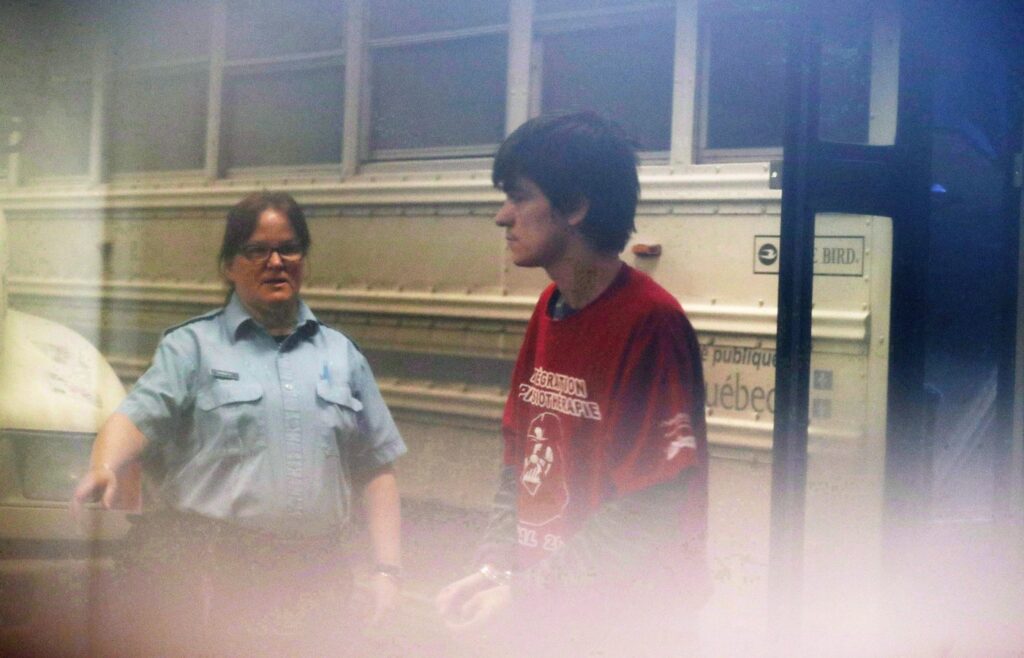
MONTREAL – Alexandre Bissonnette, the shooter responsible for the Quebec City mosque attack, has formally requested a transfer from a maximum-security prison to a medium-security facility. This appeal was filed by his lawyer at the Montreal courthouse in April, where concerns regarding Bissonnette's safety and mental health were highlighted.
Currently, Bissonnette is serving a life sentence after pleading guilty to six counts of first-degree murder and six counts of attempted murder for the tragic incident that occurred in January 2017, where he opened fire on worshippers at a mosque in Quebec City.
His lawyer, Sylvie Bordelais, asserts that despite several assessments deeming him suitable for a medium-security environment, Bissonnette remains incarcerated at the Port-Cartier maximum-security prison located on Quebec's North Shore. Bordelais articulates that Bissonnette's mental health is fragile and has deteriorated, exacerbated by his isolation from family and the presence of violent inmates who may pose a threat to his life.
The court documents submitted by Bordelais claim that the current conditions of Bissonnette's imprisonment amount to cruel and unusual punishment. Thus, she is petitioning the Quebec Superior Court to review the circumstances surrounding her client's detainment.
According to Correctional Service Canada, maximum-security prisons are intended for the most dangerous offenders, with stringent restrictions on their movement, associations, and privileges. In contrast, medium-security facilities impose moderate restrictions and are structured to transition inmates toward minimum-security institutions.
This report underscores the ongoing legal and mental health challenges facing Bissonnette as he navigates the complexities of his incarceration following a heinous act that deeply impacted the community.








