

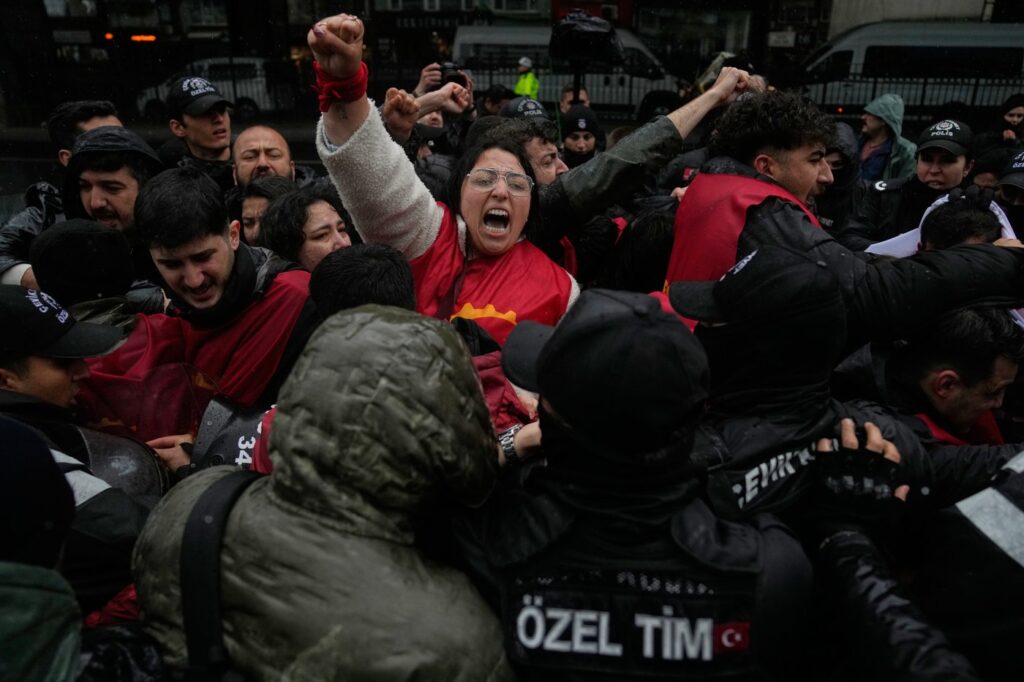
On May Day, which is celebrated as International Workers' Day, Turkish authorities detained over 500 demonstrators in Istanbul for attempting to march in areas designated as off-limits. The protests, which are a national holiday in Turkey, often lead to clashes with the police force. The Istanbul governor’s office has declared Taksim Square a no-go area for protesters, citing security concerns. Historical incidents, such as the violence that resulted in the deaths of more than 30 people during the May Day protests in 1977, contribute to this stringent enforcement.
On Friday, a series of small groups of protestors emerged around Taksim Square, aiming to bypass the police barricades. These groups were seen holding union banners and chanting demands for the reopening of the square. The majority of the demonstrations took place in the nearby Mecidiyekoy district, where hundreds of participants were confronted with police tactics including water cannons and pepper spray, leading to mass detentions.
This year's detentions are particularly notable as they follow a recent ruling from Turkey's top Constitutional Court, which concluded that three individuals detained during May Day in 2024 had their right to peaceful assembly violated. This ruling sets an important legal precedent regarding the right to protest on May Day in Turkey.
The Istanbul governor's office stated that the public had been informed in advance about the safety measures in place. In their announcement, they described how "certain marginal groups" disregarded these safety precautions and engaged in clashes with police, an annual occurrence during May Day celebrations. By 6 PM on Friday, the number of detained individuals had risen to 575.
As tensions continue to mount each year during these protests, the significance of May Day events in Turkey remains a contentious issue, reflecting broader societal struggles surrounding workers' rights and civil liberties. The heavy-handed police response to demonstrators juxtaposes with the citizens' calls for their rights, showcasing an ongoing civil discourse in the face of governmental limitations on public assembly.








