

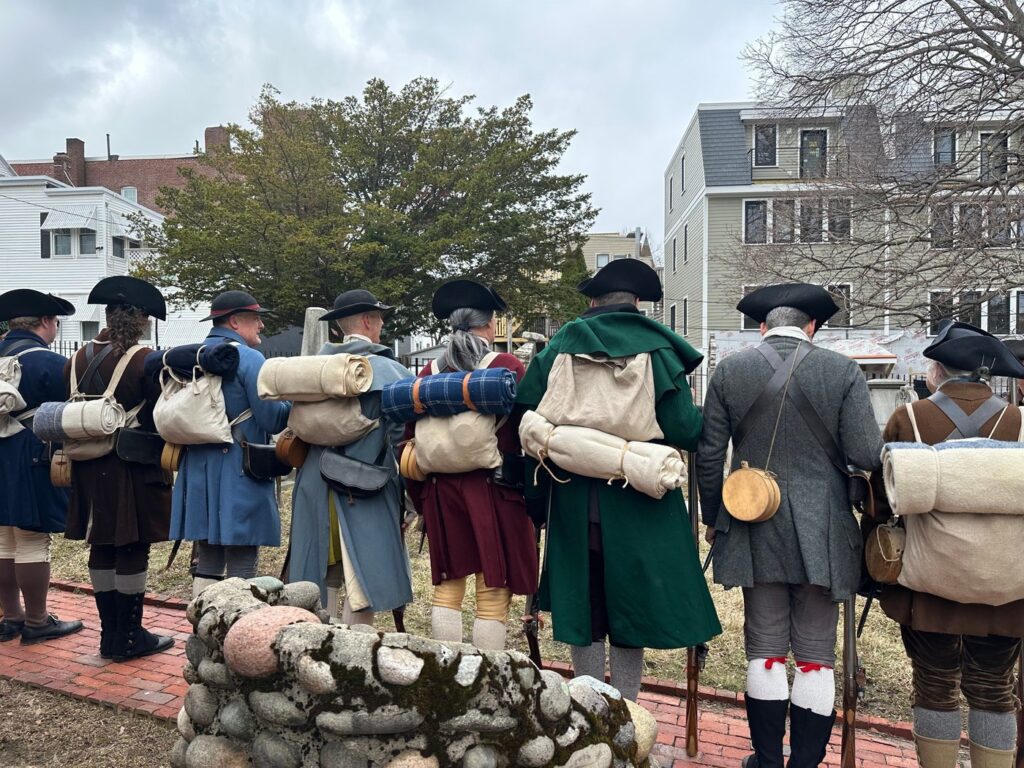
BOSTON (AP) On March 17, 2026, reenactors donned in 18th-century military coats and tricorn hats commemorated the 250th anniversary of the pivotal day when British forces evacuated Boston. The event took place at one of the nation's oldest Catholic churches, St. Augustine Chapel, and featured a lively procession marked by firing muskets and marching through the streets of South Boston.
The morning was alive with activity as men, horses, and even cattle moved across the hills, while local residents, some still in their pajamas and wrapped in blankets, watched the spectacle unfold from their stoops. Many appeared to have been stirred from their sleep by the resonant sounds of drums and bagpipes.
This day's significance lies in its historical context. Evacuation Day recalls March 17, 1776, when British troops relinquished their hold on Boston after enduring a prolonged siege by colonial forces. The turning point in this struggle came when General George Washington, along with his troops, fortified Dorchester Heights using artillery transported from Fort Ticonderoga by Colonel Henry Knox. This strategic positioning gave the Continental Army a tactical advantage over the harbor, compelling the British to abandon the city.
Evacuation Day represents not just a singular event but a vital victory for the Continental Army in the Revolutionary War. The withdrawal of British troops concluded an 11-month siege of Boston, thereby solidifying the city's allegiance to the American Revolution.
The commemorative ceremony commenced at St. Augustine Chapel and Cemetery, where participants gathered for a mass service. Following the mass, they formed a procession that made its way through South Boston towards Dorchester Heights, the location where colonial forces had stationed their artillery to oversee the harbor.
Among the reenactors was Ronald White from Milton, who, dressed in traditional colonial attire, participated in firing replica muskets within the church’s graveyard. As a member of the New Hampshire Sons of the American Revolution, White could trace his lineage directly to an ancestor who fought in the Revolutionary War. He expressed a deep emotional connection to the anniversary, stating that thinking back to the courage displayed by figures like Henry Knox evokes a strong sense of pride and inspiration.
White conveyed his sentiments with a voice thick with emotion, sharing, “To think that 250 years ago Henry Knox made such a courageous stand, I get choked up thinking about it. They really were going up against a force it was kind of a suicidal idea to stand up against Great Britain. And we did it. Here we are remembering it.”
The reenactment and subsequent observance not only celebrated a significant historical moment but also reinforced the ongoing legacy of those who fought for American independence. Through such events, the spirit of the past is kept alive, engaging both participants and spectators in a shared reflection on the foundations of the United States.








