

In a recent announcement, President Donald Trump confirmed the postponement of his diplomatic trip to China, which was initially scheduled for the end of March. The decision comes amid heightened tensions in the Middle East, particularly concerning the ongoing war in Iran, where Trump has been urging other nations to utilize military force to ensure the safety of the Strait of Hormuz.
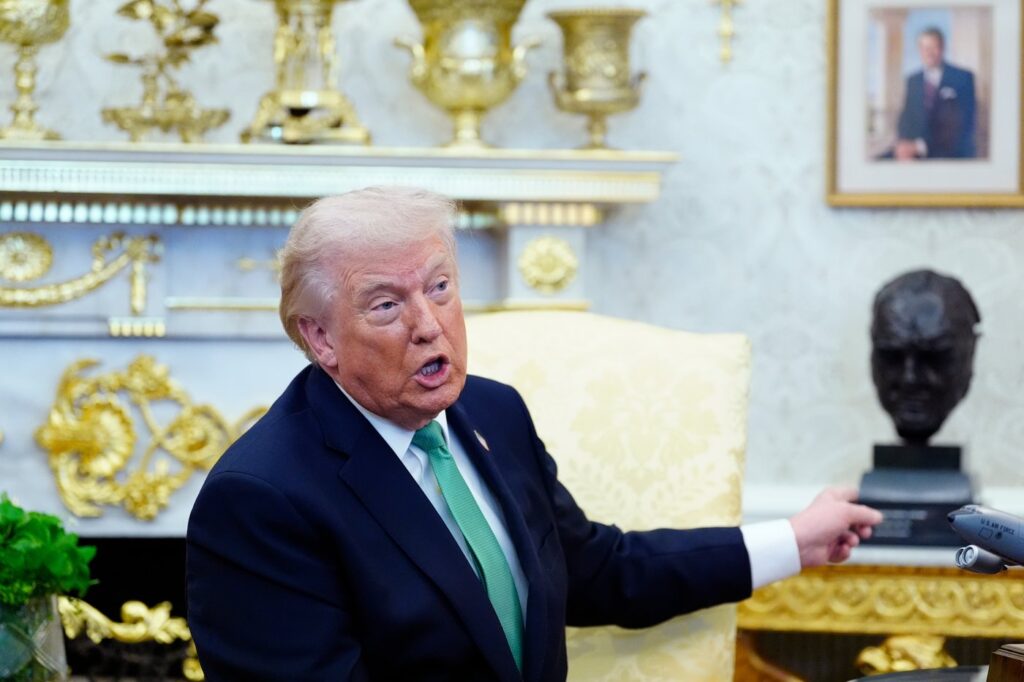
During a meeting with Irish Prime Minister Micheál Martin in the Oval Office, Trump indicated that he would now be visiting China in approximately five to six weeks. He described the need to "reset" his meeting with Chinese President Xi Jinping but did not provide further details on the changes. This visit is seen as a crucial opportunity to reinforce the fragile trade truce established between the United States and China.
The shift in Trump's travel plans comes on the heels of a critical moment where he requested that Beijing assist in securing the Strait of Hormuz, a vital artery for global oil transport. In a Sunday interview with the Financial Times, Trump expressed his desire to ascertain whether China would offer military support before his planned summit later in the month. Following this, he outlined the necessity to delay his trip due to the pressing demands of the war, stating, "I think it’s important that I be here." This suggests that the evolving geopolitical landscape is influencing his priorities.
Treasury Secretary Scott Bessent, who met with Chinese Vice Premier He Lifeng in Paris for discussions aimed at facilitating Trump's trip, clarified that any alterations to the schedule would stem from logistical concerns, rather than an intent to pressure Beijing. Trump's calls for action have focused on nations dependent on Middle Eastern oil to assist in patrolling the Strait of Hormuz, which transports about one-fifth of the world's oil. Notably, Trump has highlighted China's significant reliance on this waterway, with the country importing approximately 90% of its oil through it.
Despite Trump's appeals to allies such as Japan, South Korea, the UK, and France, there has been no firm commitment for support, with China maintaining a position of ambiguity. Trump advocated for these nations, stating, "We strongly encourage other nations whose economies depend on the strait far more than ours. We want them to come and help us with the strait."
The situation is complicated further by Trump's framing of the ongoing war as a duty that the U.S. and Israel are performing on behalf of the international community. Some world leaders have rebuffed this narrative and disagreed with the U.S.'s military approach, indicating that they do not see the same urgency or necessity to intervene.
Trump's impending trip to China holds significant geopolitical implications as both nations navigate the aftermath of a prior trade war characterized by high tariffs. Following an agreement last fall for a one-year trade truce, the potential meeting with Xi is critical for strengthening bilateral relations. China's foreign minister recently emphasized their hope for a "landmark year" in U.S.-China relations, insisting that a collaborative spirit from the U.S. would be necessary for progress.
As the war in Iran escalates, causing oil prices to soar, Trump's focus has shifted significantly in a challenging midterm climate where economic affordability remains a top issue for American voters. In addition to postponing his trip to China, the President has lifted sanctions on Russian oil and utilized the U.S. strategic petroleum reserves, both moves indicating a recalibration of his administration's energy policies.








