

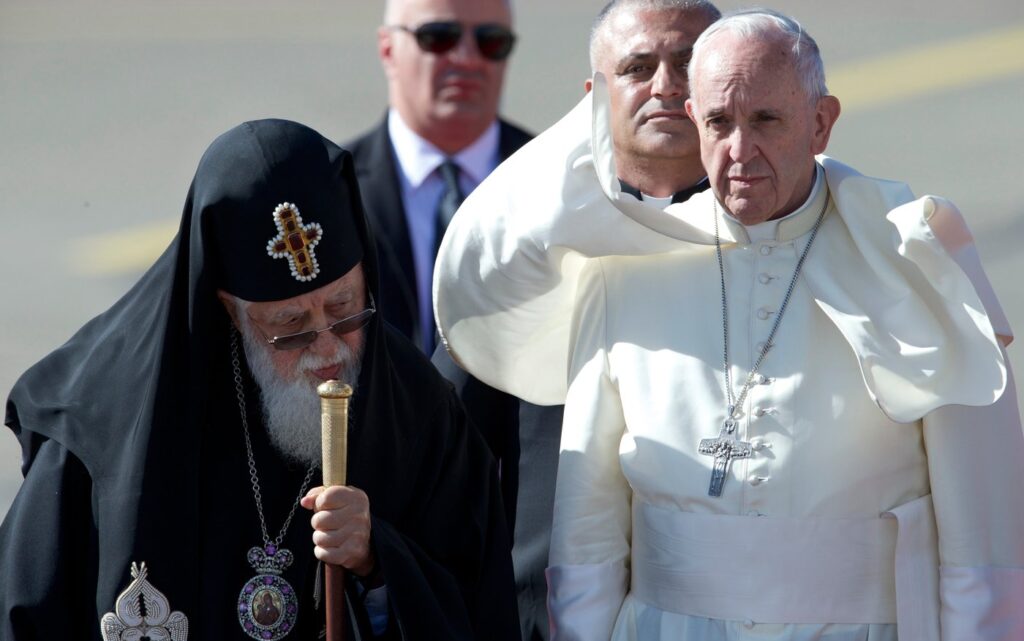
TBILISI, Georgia (AP) – Ilia II, the revered Patriarch of the Georgian Orthodox Church, has passed away at the age of 93. His death occurred late Tuesday following a hospitalization for critical internal bleeding.
Ilia II, who led the Georgian Orthodox Church for nearly fifty years, was a pivotal figure in both the spiritual and public life of Georgia. He ascended to the patriarchate in 1977, a time when Georgia was still under Soviet governance, where religious practices were heavily restricted. His leadership spanned a significant period of change, continuing to exert influence after Georgia regained independence in 1991.
The reaction to his passing reflects his monumental impact on the Orthodox Church. Shio Mujiri, who has taken on temporary leadership duties until a new patriarch is elected, referred to Ilia II as an "epochal figure" and expressed that his death is a "tremendous loss for the entire Orthodox Church." This sentiment underscores the patriarch's significant spiritual presence within Georgia and among Orthodox communities worldwide.
The process for electing a new patriarch is set to commence, with a new leader expected to be chosen within two months. The choice of a successor will be crucial for the future direction of the church at a time when religious leadership can steer the spiritual and cultural identity of the nation.
Ilia II was not just a religious leader but a prominent societal figure whose influence echoed throughout Georgian history during his lengthy tenure. He was known for his dedication to the church, working tirelessly to nurture Georgian Orthodox traditions in a time when those traditions faced challenges. His leadership bridged the pre- and post-independence eras in Georgia, and he was recognized for his role in promoting peace and unity within the nation.
The response to his death has already begun, with citizens and believers gathering in Tbilisi to honor his memory. Vigils and memorial services are anticipated as communities remember the patriarch's contributions to their lives. The news of his passing has sparked reflections on his legacy, highlighting the pivotal moments he witnessed and influenced throughout his life.
Ilia II's legacy will be felt for generations to come, and his contributions to the church and the nation will remain a focal point of discussion as Georgia navigates its future leadership in the Orthodox faith. The effects of his tenure, decisions, and public statements have left an indelible mark on the religious landscape and the cultural fabric of Georgian society.








