

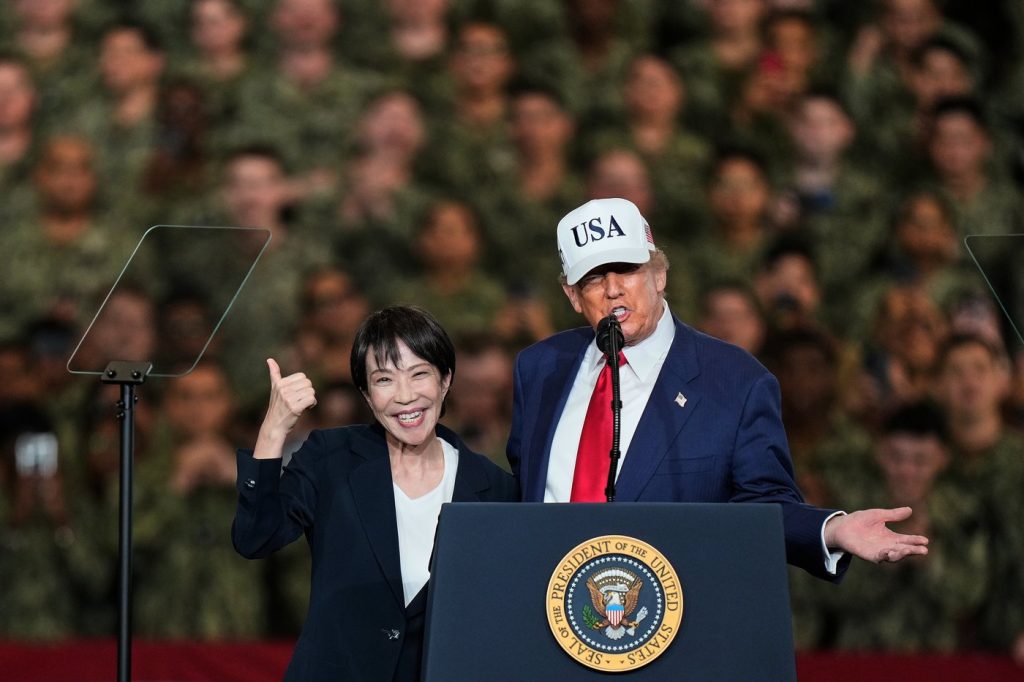
WASHINGTON (AP) - The meeting scheduled between Japanese Prime Minister Sanae Takaichi and U.S. President Donald Trump at the White House has transformed into a high-stakes discussion amid current geopolitical tensions. Initially, it was expected to serve as a platform for Takaichi to address trade and security matters with Trump before his planned visit to China. However, the escalating war in Iran has delayed Trump's trip and may overshadow the agenda of the meeting.
Trump has openly expressed his frustrations over allies, including Japan, not responding to his calls for assistance in protecting the strategic Strait of Hormuz, a crucial passageway for oil and gas shipments. Following a lack of support, Trump took to Truth Social, emphasizing that the U.S. does not require assistance from any ally, highlighting his belief in U.S. global dominance.
In anticipation of their discussions, Takaichi acknowledged the challenging nature of the meeting, understanding that Trump would likely exert significant pressure on her regarding Japan's role in the ongoing conflict. Despite Japan's constitutional prohibition against military deployment except for self-defense, there exists the possibility for Japan to contribute in non-combative ways, such as mine-sweeping operations.
As the first female Prime Minister of Japan and a protégé of former Prime Minister Shinzo Abe, Takaichi has cultivated a hardline stance, particularly regarding Taiwan and China's increasing military assertiveness in the region. Her previous interactions with Trump have focused on strengthening bilateral relations and addressing security issues, especially in the Indo-Pacific area. Prior to the meeting, Takaichi was keen to steer discussions towards trade matters and the relationship between Japan and the United States.
The context of the Iran war presents challenges for Takaichi, as she must navigate the delicate balance of maintaining Japan's security interests while also responding to Trump’s expectations. Analysts, including former U.S. deputy secretary of state Kurt Campbell, suggest that this meeting is unprecedented in its implications for U.S.-Japan relations. Campbell highlights that Takaichi must portray Japan as an ally in the new Middle Eastern strategy to leverage future discussions on vital issues, including Taiwan.
Furthermore, the shifting deployment of U.S. troops from Japan to the Middle East coincides with heightened Chinese military activity near Taiwan, raising concerns for Takaichi. Japanese officials are increasingly uneasy about the implications these troop movements have for regional security, especially as China continues to exert pressure over Taiwan, which the U.S. relies on for critical semiconductor production.
In closing, Takaichi is likely to stress Japan's need for U.S. commitment to broader security in the Indo-Pacific while addressing the implications of current military realignments. Given the evolving landscape of international relations, this meeting promises to be crucial in determining the future of Japan-U.S. ties and their mutual security strategies in the face of emerging challenges.








