

Determining which Canadian company holds the title of the oldest now that Hudson's Bay has closed its doors is a complex task. Many of the country's oldest businesses were established in the 18th century and have undergone numerous ownership changes, mergers, and interruptions in operations. Original records for these entities are often sparse, making it challenging for researchers and historians.
Founded in 1670, the Hudson's Bay Company (HBC) was the first of its kind, but the contenders for the oldest functional company in Canada emerged much later. According to various investigations by Library and Archives Canada and The Canadian Press, several businesses are in competition for this title, each with its unique history and significance.
1752: The Halifax Gazette
One of the earliest contenders for the title is The Halifax Gazette, which began operations in March 1752 under the direction of John Bushell. Originally intended as a publication following the plans of his late print shop partner, Bartholomew Green, the Gazette underwent various name changes until 1867, when it became the Nova Scotia Royal Gazette, a government publication dedicated to announcing new legislation.
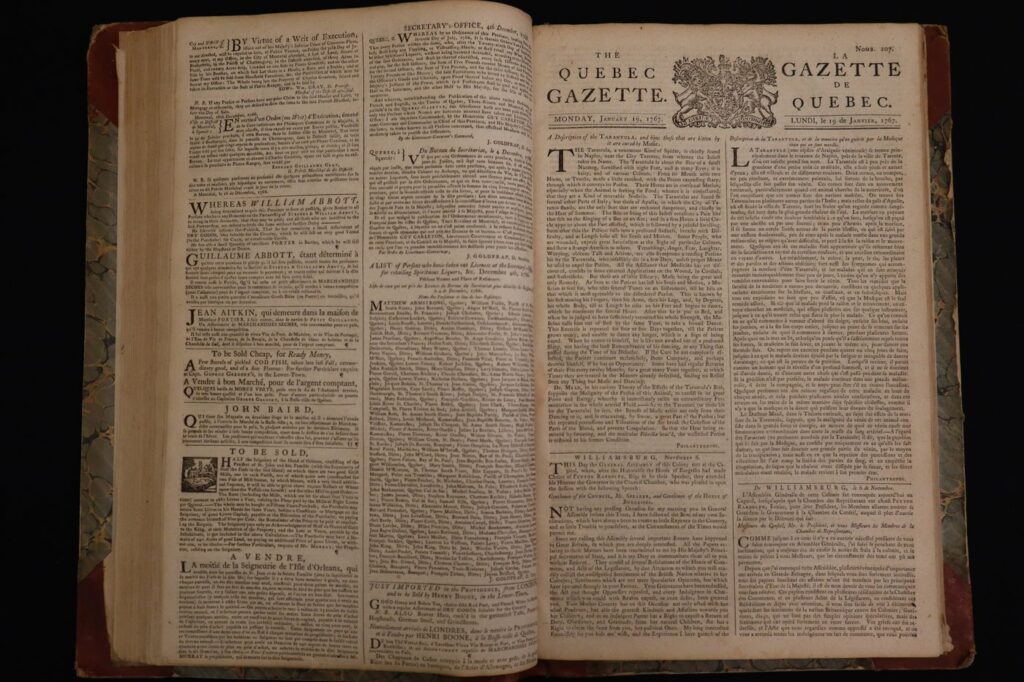
1764: Quebec Chronicle-Telegraph
Another strong candidate is the Quebec Chronicle-Telegraph, established in June 1764 by William Brown and Thomas Gilmore, who immigrated from Philadelphia. This newspaper featured four pages of French and English texts, providing updates on local and international news, government announcements, and arts. The paper faced interruptions due to political pressures, such as the 1765 Stamp Act and the American military siege in the late 1770s. Today, the Quebec Chronicle-Telegraph proudly claims to be North America’s oldest newspaper, having evolved through mergers and changes over the years.
1778: The Montreal Gazette
The Montreal Gazette is Canada’s oldest continuously published newspaper, dating back to 1778. It was founded by Fleury Mesplet, who endured governmental oppression during its early years. The paper's title transitioned to a bilingual format by 1785, and after the death of Mesplet in 1794, it continued under various publishers, ultimately establishing itself as a leading news source in Montreal.
1779: The North West Co.
Founded in 1779, The North West Company emerged as a competitor to HBC in the fur trade, primarily composed of Scottish fur traders. The North West Co. gained a significant share of the market before merging with Hudson's Bay Company in 1821. After going through several ownership changes, a revitalization occurred in the 1990s when a group of employees acquired the northern stores division of HBC, leading to a modern rebranding of the company.
1780: Baine Johnston Corp.
Dating back to 1780, Baine Johnston Corp. is a commercial real estate firm based in St. John’s, Newfoundland and Labrador, with roots in the fishing industry. Although its exact founding year is debated, historical records suggest its connection to trade in the region dates back to 1806. This company transitioned into real estate during the 1960s and still operates Leon's locations in Newfoundland today.
1786: Molson Coors
Another contender is Molson Coors, founded by Englishman John Molson in 1786. Originally established as a brewery along the St. Lawrence River, Molson diversified into banking and lumber until the early 1990s. In 2005, it merged with American rival Coors, expanding its market presence significantly. Today, the company features an extensive portfolio of beer brands, including its flagship Molson Canadian.
1790: Stelco
While the Steel Company of Canada (Stelco) incorporates parts of various companies, the oldest of these is the Montreal Rolling Mills Co., which emerged in 1868. Though Stelco claims roots back to the 1790s through an amalgamation that includes a nail plant initiated by John Bigelow, its historical narrative points to a later mid-19th century foundation. Various ownership transitions have led to its current iteration, owned by Cleveland-Cliffs Inc. since 2024.
Overall, as the debate continues among these historic enterprises, the challenge lies in verifying foundational records and outlining operational continuity through their lengthy histories.








