

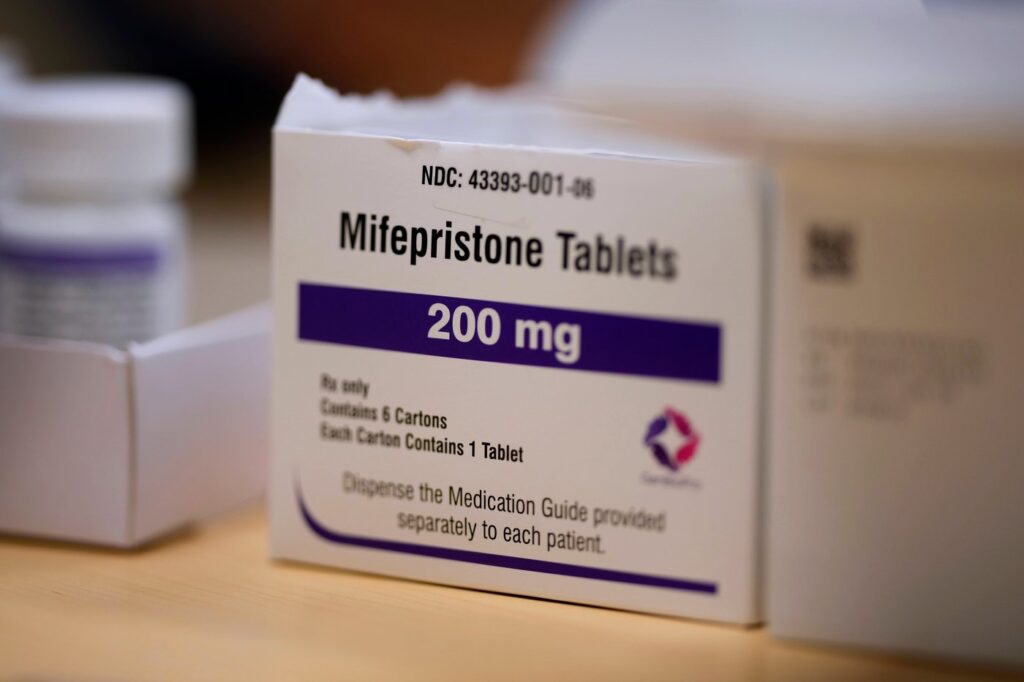
In a significant development regarding abortion policy in the United States, a federal appellate court has imposed restrictions on one of the most prevalent methods for terminating early pregnancies by blocking the mailing of mifepristone prescriptions. The unanimous ruling delivered on Friday by the 5th U.S. Circuit Court of Appeals, based in New Orleans, is a notable triumph for anti-abortion advocates who are striving to curb the distribution of abortion pills prescribed online, which they argue undermines state prohibitions on the procedure.
The appellate court's decision mandates that mifepristone can only be dispensed in person at clinics, overturning regulations established by the federal Food and Drug Administration (FDA). This ruling is likely to be appealed to the U.S. Supreme Court, potentially leading to further legal battles over reproductive rights in the country.
The implications of this ruling extend beyond states that have enacted abortion bans. Louisiana Attorney General Liz Murrill has expressed dissatisfaction with the federal government’s perceived inaction against medication abortions, prompting her to file a lawsuit against the FDA last month. In her argument, she claimed that the FDA’s regulations effectively enable out-of-state prescribers to distribute the drug to Louisiana residents in violation of the state's abortion ban.
Judge Kyle Duncan, appointed by former President Donald Trump, stated in the ruling that the regulation creates a loophole that allows the drug to reach individuals in defiance of Louisiana law. Furthermore, while FDA officials are said to be reviewing the safety of mifepristone, the appeals court emphasized that there is no timeline for when this review will conclude.
This ruling will remain in effect as the case progresses through the courts and will impact all states, including those without existing abortion restrictions. The decision marks a rare instance of a federal court overriding FDA scientific regulations, raising questions about the long-term ramifications for the dispensing of the drug.
In wake of the ruling, Murrill lauded the decision as a "victory for life," while anti-abortion advocates celebrated the reversal of regulations finalized during President Joe Biden's administration that had previously eliminated the requirement for in-person consultations to obtain the pills. Representatives for the FDA and the U.S. Department of Justice did not respond to requests for comments regarding the ruling.
Mifepristone, which was approved in 2000 and recognized as a safe and effective method for terminating early pregnancies, is typically used alongside another drug, misoprostol. The ruling does not directly affect misoprostol, but it is less effective on its own. Research indicates that the majority of abortions in the U.S. are carried out using pills, with about one in four abortions prescribed through telehealth services. This accessibility through telehealth is believed to be a contributing factor as to why abortion rates have not declined since the Supreme Court's overturning of Roe v. Wade in 2022.
Consequently, abortion pills and their prescribing from out-of-state providers have become focal points for anti-abortion activists. Some Democratic-led states have introduced laws designed to protect healthcare providers who prescribe medication via telehealth and send pills to states with abortion bans. These "shield laws" are facing legal challenges in jurisdictions like Louisiana and Texas.
Dr. Angel Foster, a telehealth provider operating in a state with protective laws, has stated that her organization, The Massachusetts Medication Abortion Project, is working closely with legal experts to assess the impact of this ruling on their operations, emphasizing their commitment to continue providing care across the nation.
The ongoing legal battles surrounding abortion policy could re-emerge as a critical issue in upcoming midterm elections, particularly as Democrats seek to reclaim control of the U.S. House and Republicans endeavor to maintain their slender majority. Recent electoral data indicate that voters advocating for abortion rights possess substantial political momentum, as evidenced by voter support for abortion access in 14 out of 17 states where the issue has been placed on the ballot since Roe was overturned.
Fatima Goss Graves, president and CEO of the National Women’s Law Center, criticized the ruling as "deeply out of step with both public sentiment and evidence-based science." The ruling has also sparked criticism among some anti-abortion activists who have expressed dissatisfaction with former President Trump's lack of direct action to restrict mifepristone distribution during his tenure.
In summary, this ruling from the 5th U.S. Circuit Court of Appeals represents a pivotal moment in the ongoing debate over reproductive rights, potentially reshaping the landscape of abortion access in the United States.








