

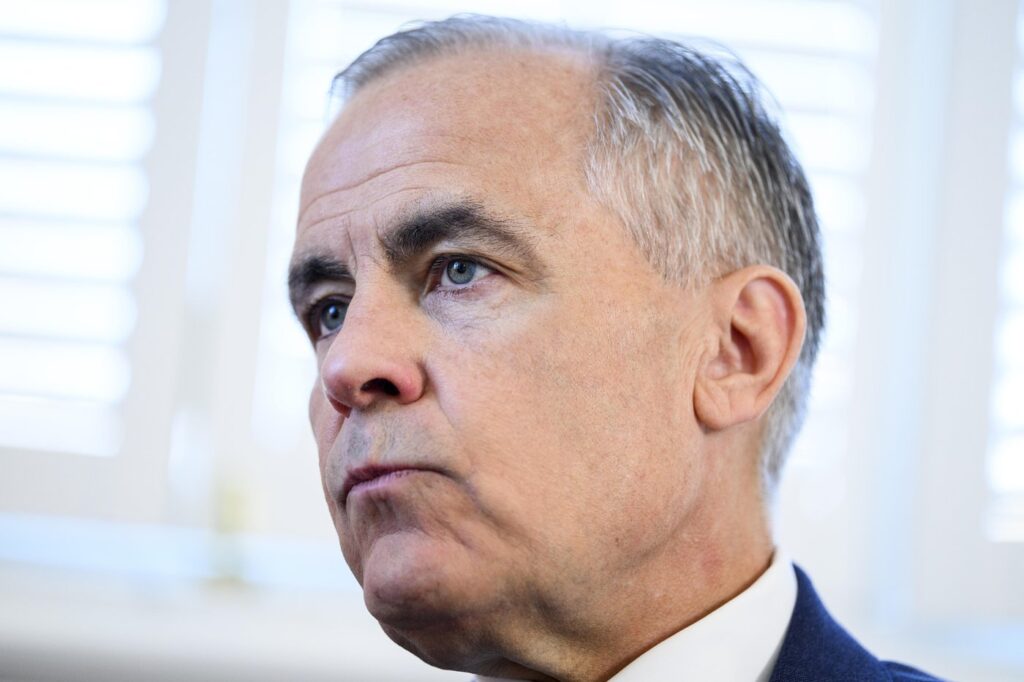
OTTAWA – Canada's initial support for the United States' military intervention in Iran evolved over a series of days as the objectives of U.S. President Donald Trump became clearer, Prime Minister Mark Carney revealed in an interview with The Canadian Press. Carney noted that at the beginning of the conflict, the scale and clarity of the U.S. objectives were not well-defined, but they have arguably developed over time.
On February 28, 2026, the day the U.S. initiated its war on Iran, Carney expressed strong support for the operation. However, a few days later, he voiced regret that the U.S. did not consult the United Nations regarding a conflict that he suggested may likely violate international law. This shift in position sparked criticism from various groups. Some of Iran's adversaries claimed that Carney had diluted a principled stance, while advocates of international law pointed out the contradiction to Carney's earlier statements at the World Economic Forum in Davos, where he denounced hegemonic behavior by great powers.
Carney commented, "Our first comment was within hours of it beginning," emphasizing the rapidity of Canada’s response. The Prime Minister reiterated Canada's long-held position that Iran is the "largest exporter of terror, state-sponsored terror, in the world," noting that the regime has directly harmed hundreds of Canadians. He stressed that the Iranian regime must not be permitted to acquire nuclear weapons, asserting that the justification for military action lies in its potential to reduce such threats.
Despite this, Carney acknowledged the complex nature of the objectives and the methods employed to achieve them, referring to the importance of ensuring these approaches align with international law. Although Canada has not engaged in the military conflict, Carney hinted at the possibility of providing support for restoring navigation in the Strait of Hormuz, contingent upon a functional ceasefire. His government is actively seeking investment from Gulf nations to bolster economic ties in the region.
The Prime Minister is scheduled to attend the European Political Community summit in Armenia this weekend, where discussions will center on political, security, and infrastructure coordination among countries from Iceland to Azerbaijan in response to Russia's full-scale invasion of Ukraine. He emphasized, "one of the reasons" for his attendance as the only non-European leader is to collaborate with peers who have committed to providing assistance once a sustainable ceasefire is achieved.
Carney further clarified that despite U.S. assertions that a pause in hostilities has been initiated, the situation does not currently reflect a "durable" ceasefire. "We’re not in that position now, to be absolutely clear," he stated, highlighting the ongoing uncertainty in the region.
This report outlines the complexities of international relations and view into Canada's diplomatic stance amid a significant military conflict in the Middle East. The evolving nature of the situation reflects the ongoing need for clarity and adherence to international law when addressing global security challenges.








