

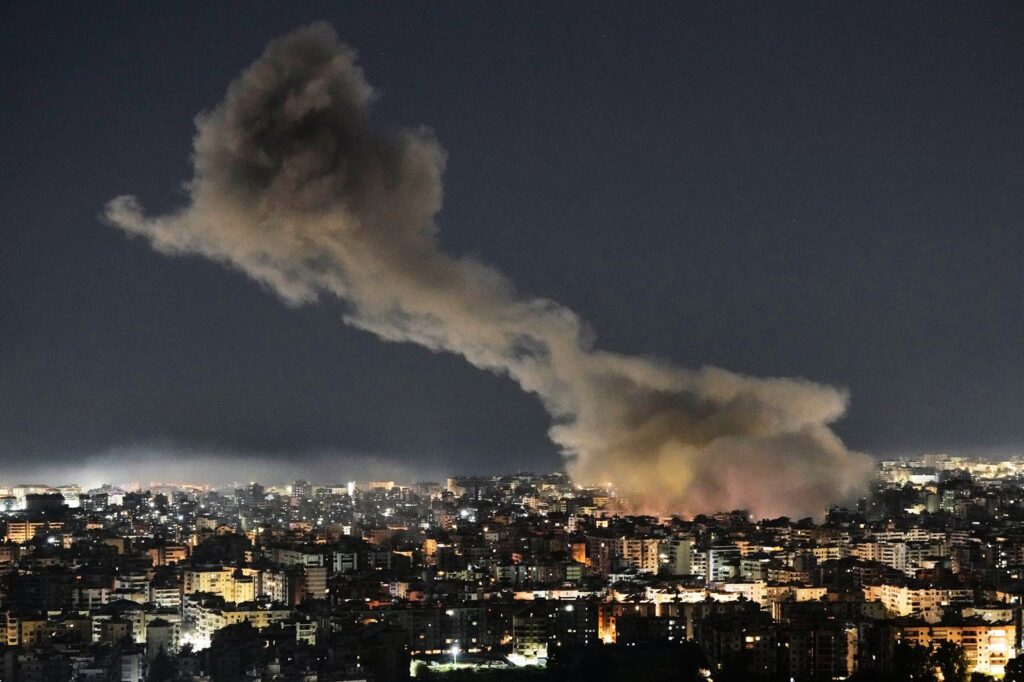
BEIRUT (AP) - An Israeli airstrike on a health center in southern Lebanon resulted in the immediate deaths of 12 medical workers, left one seriously injured, and four more were reported missing under the debris for several hours. The strike, which occurred on March 13 in the village of Burj Qalaouiyah, is one of the deadliest actions in Lebanon since the latest conflict between Israel and Hezbollah erupted on March 2. The targeted facility was operated by Hezbollah's health organization, the Islamic Health Society, which has seen a total of 24 members lost during the ongoing hostilities.
Since the onset of this war, the Israeli military has been aggressively targeting Hezbollah's military installations alongside its civilian structures. This strategy appears aimed at further weakening the Iran-backed group and alienating its supporters. Hezbollah functions as both a political party and an armed faction, utilizing its health and social services as tools to solidify its base of support over the years.
In addition to the health centers, Israeli forces have demolished multiple branches of Hezbollah’s financial arm, al-Qard al-Hasan, and caused significant damage to the group’s media outlets, including Al-Manar TV and Al-Nour radio. Israeli strikes have also hit Hezbollah-run gas stations and discount shops, known as Sajjad, that provide subsidized goods to low-income residents.
In a separate incident on Wednesday, an Israeli airstrike targeted an apartment in central Beirut, resulting in the death of Mohammed Sherri, the head of political programs at Hezbollah's Al-Manar TV, alongside his wife. Israel has alleged that Hezbollah utilizes health facilities for military purposes and claimed that al-Qard al-Hasan finances Hezbollah’s military operations, accusations that Lebanon's Health Ministry firmly denies.
Political analysts such as Hilal Khashan from the American University of Beirut have argued that this conflict represents a fundamental shift in warfare, stating, “This war will not end before Israel achieves its full objective – that is, the elimination of Hezbollah not only as a military movement but also from the Lebanese political landscape.” Under escalating pressure, Hezbollah is under both internal and external demands to disarm and perceives this round of fighting as crucial for its survival. Intense confrontations at Lebanon’s southern border have led to numerous casualties among Lebanese fighters.
Hezbollah's leader, Naim Kassem, emphasized the existential nature of the battle, vowing that the group would continue to fight and never surrender. Israel has accused the Lebanese government of failing to disarm Hezbollah according to the national plans, asserting that it will take matters into its own hands. Unlike previous conflicts, the current situation sees the Lebanese government labeling Hezbollah's military activities as illegal, resulting in arrests of group members for unauthorised weapon possession.
The resurgence of conflict has ignited criticism of Hezbollah among its opponents in Lebanon, who blame the group for initiating hostilities through rocket fire into Israel. This escalation followed the assassination of Iran’s Supreme Leader Ali Khamenei, shortly after the U.S. and Israel commenced attacks on Iran, further complicating the regional dynamics.
Israeli military responses have led to over 1,000 fatalities and displaced more than 1 million Lebanese citizens across the country, particularly from southern and eastern regions, as well as Beirut's southern suburbs. Some Lebanese politicians, like Samy Gemayel from the nationalist Kataeb Party, condemned Hezbollah's actions as a reckless “suicidal initiative” that will not alter the power balance in the region. Historical conflicts between Israel and Hezbollah, such as the 2006 war, concluded without decisive resolutions, while the recent escalation since October 2023 has severely impacted Hezbollah’s leadership.
As airstrikes intensified, public dissent grew, resulting in protests that forced Hezbollah to close a prominent branch of al-Qard al-Hasan in central Beirut. The organization’s presence in the capital diminished as residents pushed back against Israeli actions, which Amnesty International has classified as potential war crimes under international law.
Despite suffering significant losses, Hezbollah’s Mahmoud Karaki reaffirmed the group's commitment to providing health services, asserting that these strikes target vital support networks for affected populations. The Israeli military has also accused Hezbollah of misusing ambulances for military logistics, claims that the group has categorically denied.
In a broader context, Iranian officials have articulated their unwillingness to accept a ceasefire that does not also include an end to Israeli strikes in Lebanon, underscoring the complexities of regional geopolitics as both sides prepare for sustained conflict.








