

During her first year at San Diego State University, Elisabeth Bradley was inspired to begin weightlifting after following a woman's fitness transformation on social media. However, she quickly found herself to be the only woman in the weight room, which made her feel out of place and intimidated by the men around her. Complaining of discomfort, she initially opted for the cardio area, reflecting a common behavior among women who often avoid free weights and machines in gyms.
Research increasingly underscores the benefits of resistance training, leading experts to suggest that gyms need to implement changes to make them more welcoming for women. Michelle Segar, a behavioral scientist from the University of Michigan, emphasizes that adjusting gym environments and increasing familiarization with weights could encourage more women to incorporate resistance training into their routines.
The National Institutes of Health recommends that both men and women engage in resistance training at least twice weekly. This type of training can include activities such as weight machines, resistance bands, and body-weight exercises, which encompass push-ups and squats. According to Brad Schoenfeld, a professor of exercise science at Lehman College in New York City, resistance training is beneficial for heart disease prevention, long-term mobility improvement, and blood pressure control. Notably, Schoenfeld added that women might experience greater benefits from weight training, especially in combating osteoporosis and mitigating age-related muscle loss.
Despite the advantages, many women remain hesitant to engage in strength training. Daisy Arauza, a 30-year-old mother of two from Menifee, California, prefers to do Pilates and cardio at home through online tutorials. She expresses a lack of confidence regarding weights and gym etiquette, revealing her self-consciousness about her body. Arauza reflects a general stigma; many women still associate fitness with slimness and worry that weightlifting will make them appear bulky. However, Schoenfeld reassures that gaining substantial muscle is quite challenging, particularly for women, who have lower testosterone levels, thus minimizing their risk of becoming overly muscular.
To combat these issues, community support and empowerment are essential. After her initial discouragement, Bradley connected with a male weightlifter in her dorm who introduced her to weightlifting fundamentals. This support inspired her to create Girl Gains, a female weightlifting club that has expanded to numerous college campuses nationwide. Bradley advocates for a holistic approach to fitness, highlighting the importance of strength not only in lifting but in enhancing performance across other exercises such as Pilates and running.
Efforts to improve female participation in strength training involve both gym management and individual action. Providing complementary introductory training sessions is one strategy, but not all implementations resonate with women. Segar notes that traditional trainer introductions often reinforce unrealistic body ideals, prompting women to focus more on perception than personal health or well-being. Finding community within weight lifting can foster motivation and shared goals among women, encouraging them to empower one another with affirmations like, “The gains look good on you.”
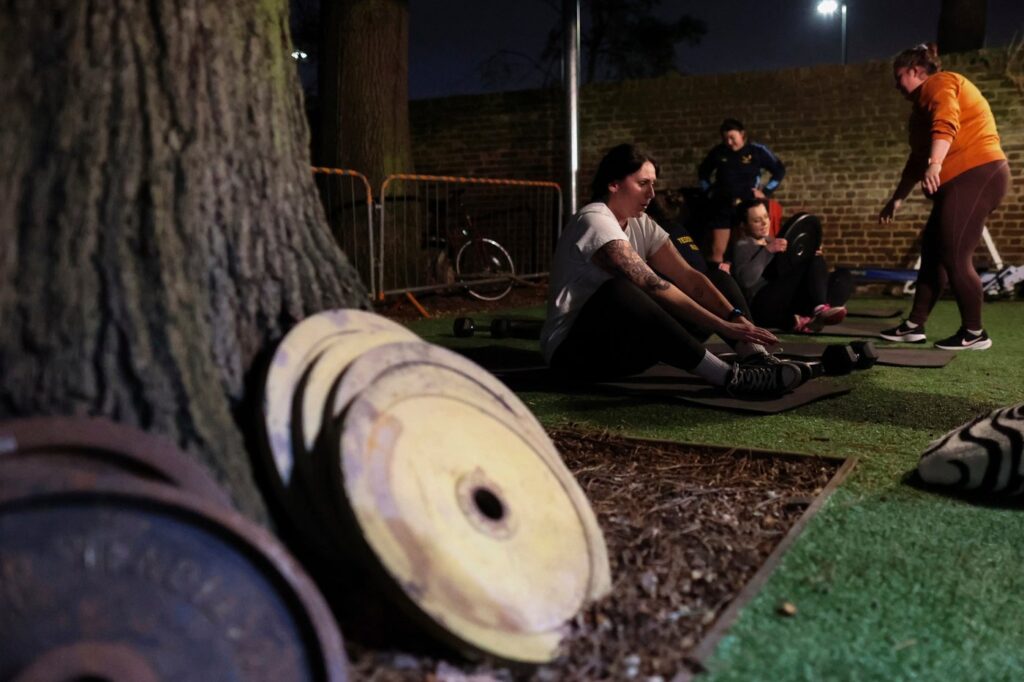
Some women, like those attending the Goddess Gym in Peterborough, England, find that women-only spaces increase their comfort levels and focus, fostering a sense of community absent in mixed-gender gyms where they’ve experienced uncomfortable or objectifying behavior. Moreover, gym amenities such as onsite childcare can also facilitate attendance among mothers like Michelle Kozak from Phoenix, who canceled her membership when her gym eliminated childcare options. Kozak reflects a desire for balance, stating, “I don’t want to make the gym my entire personality; I just want to have some time to prioritize being healthy.”








