

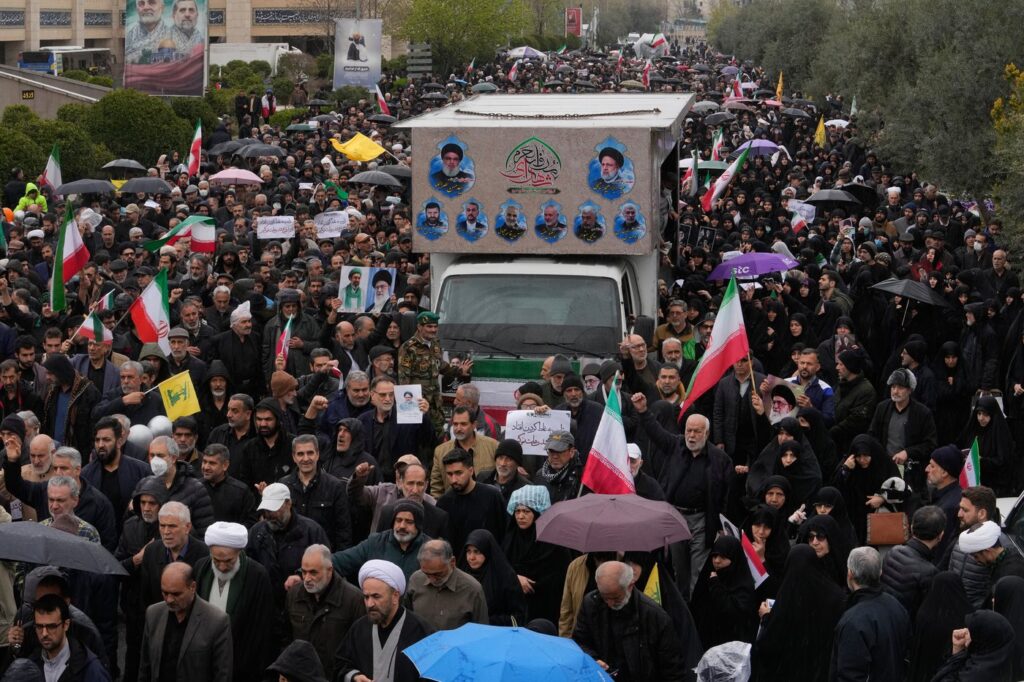
DUBAI, United Arab Emirates (AP) — On Saturday, Iran's Natanz nuclear enrichment facility was reportedly struck in an airstrike, as reported by the official Iranian news agency Mizan. Fortunately, the agency noted that there was no radiation leakage amid the ongoing conflict in the Middle East, which has now entered its fourth week.
Natanz, located nearly 220 kilometers (135 miles) southeast of Tehran, has been a key target in this conflict. Satellite imagery revealed damage to several buildings at the site following an initial airstrike in the war's first week. The United Nations’ nuclear watchdog previously indicated that "no radiological consequence" was expected from that early attack.
This recent strike coincides with U.S. President Donald Trump's announcement regarding military operations in the Middle East. On Friday, Trump stated he was contemplating "winding down" these operations, even though the United States is simultaneously bolstering its military presence in the region by deploying three additional amphibious assault ships and approximately 2,500 Marines.
Days before the strike, Trump’s social media post reflected a mix of military strategy, particularly following Iranian threats to target recreational and tourist locations globally, amidst a series of escalating airstrikes and missile attacks in the region.
Despite Trump's claims of nearing military objectives, his administration's actions contradicted these sentiments. The U.S. is seeking an additional $200 billion from Congress to support the ongoing war effort, emphasizing an increased military presence rather than a decrease.
Early reports indicate that strikes from Iran continued, with Israel stating that it had received missile fire. Saudi Arabia also reported intercepting 20 drones over its eastern region, which hosts key oil infrastructure. The ongoing hostilities have led to significant casualties, with more than 1,300 people confirmed dead in Iran and 15 fatalities in Israel from missile attacks.
Iran's Supreme Leader Ayatollah Mojtaba Khamenei has publicly praised the resilience of the Iranian people amid their struggles. However, his absence from public events raises questions regarding the country's leadership during this critical period.
The Israeli military launched a new offensive against Hezbollah militants in southern Beirut, aiming to exert pressure on Iranian-affiliated groups in Lebanon. These strikes have reportedly resulted in over 1,000 deaths and displacements of more than 1 million individuals in Lebanon, according to government reports.
The Iranian war has also affected global energy markets, with Brent crude oil prices soaring to around $106 per barrel, a steep increase from approximately $70 prior to the conflict. In a bid to mitigate rising fuel costs, the U.S. plans to pause sanctions on Iranian oil already loaded onto ships as of Friday, with this suspension set to last until April 19. However, this measure does not enhance production levels, which is crucial for stabilizing oil prices.
As the conflict continues, the implications extend beyond the immediate battlefield to impact oil supply chains and commodity prices globally, as both the U.S. and Iran continue to navigate a complex web of military and economic strategies amidst escalating tensions.








