

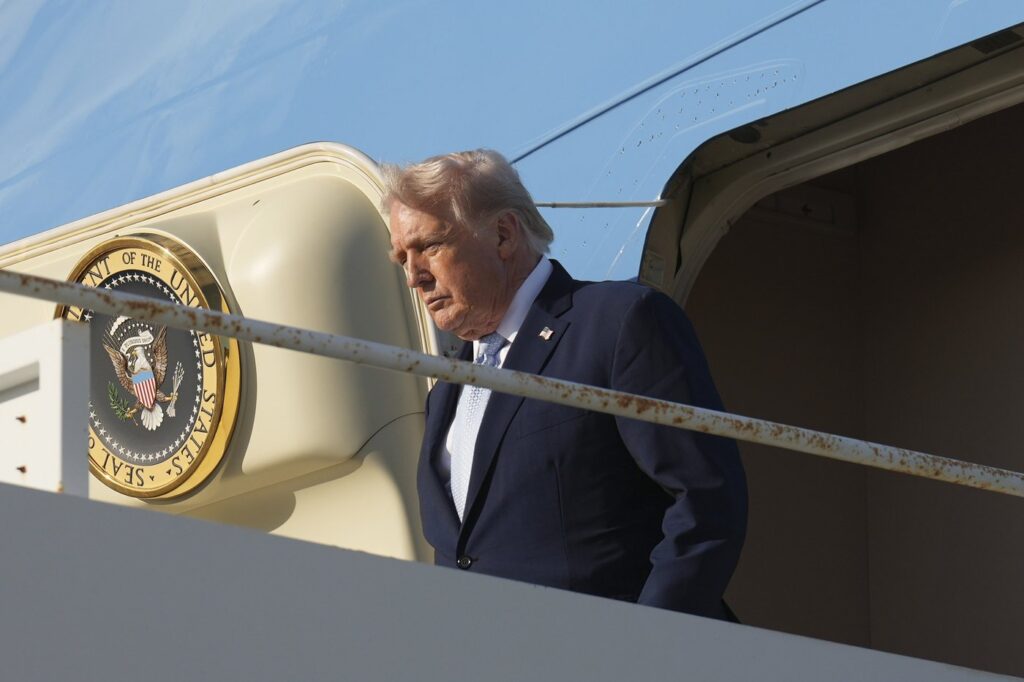
In a significant escalation of military engagement, President Donald Trump launched a war against Iran without seeking legislative approval from Congress. As the conflict unfolds, lawmakers are increasingly scrutinizing the war's objectives, timeline, and financial implications. Three weeks after the initiation of hostilities, the casualties are evident, with at least 13 U.S. military personnel reported dead and over 230 wounded. Additionally, the Pentagon has submitted a pending request for $200 billion in war funding, while oil prices soar and thousands of U.S. troops are dispatched to the Middle East with no clear endpoint in sight.
Senator Thom Tillis, a Republican from North Carolina, voiced concerns about the lack of a coherent strategy, stating, "The real question is: What ultimately are we trying to accomplish?" He emphasized the necessity of articulating strategic objectives, particularly as Congress faces consequential wartime decisions.
President Trump indicated he might be considering "winding down" military operations while simultaneously outlining new goals. However, Congress, controlled by his party, has been cautious, with Republicans generally siding with the president but soon facing critical decisions regarding the military campaign. According to the War Powers Act, Trump can conduct military operations for up to 60 days without congressional approval, and thus far, GOP members have effectively blocked attempts from Democrats to halt military actions.
Despite the challenges posed by the ongoing conflict, lawmakers express an urgent need for a comprehensive strategy from the administration or risk backlash as the Congress evaluates new funding requests. Senator Mark Warner from Virginia criticized Trump's casual remark that the war would end "when I feel it in my bones," labeling it as "crazy." Meanwhile, House Speaker Mike Johnson claimed the military operation’s initial objectives have been largely accomplished.
Johnson maintains that the goals of neutralizing Iran's ballistic missile capabilities and damage to its naval forces have been met. However, he admitted that Iran's ability to threaten maritime routes is prolonging the conflict, highlighting the complex nature of the military engagement.
Lawmakers are growing perplexed by the shifting and unclear objectives laid out by the Trump administration. Senator Warner noted that aspirations for regime change or disarmament are ambiguous without committing ground troops. He remarked, "If I'm advising the president, I would have said: Before you take on a war of choice, make the case clear to the American people what our goals are." This sentiment reflects a broader concern regarding transparency and clarity in military objectives.
Moreover, the Pentagon's request for an additional $200 billion is looming large, with significant skepticism among lawmakers regarding the feasibility of such funding. Senate Democratic leader Chuck Schumer labeled the request as "preposterous," particularly in light of existing defense appropriations exceeding $800 billion for the current year. Democrats like Senator Mazie Hirono have argued for prioritizing domestic programs, such as healthcare and food assistance for Americans, over extensive military expenditures.
As Congress grapples with the evolving situation, comparisons are being made to President George W. Bush's request for authorization following the September 11 attacks for military action in Afghanistan and Iraq. Senator Tillis acknowledged the president's latitude under the War Powers Act but cautioned that this flexibility would diminish as the conflict continues. He remarked, "When you get into the 45-day mark, you've got to start articulating one of two things—a new authorization for military force or a clear exit strategy." This highlights the urgent need for congressional oversight and explicit military objectives as the war against Iran persists.








